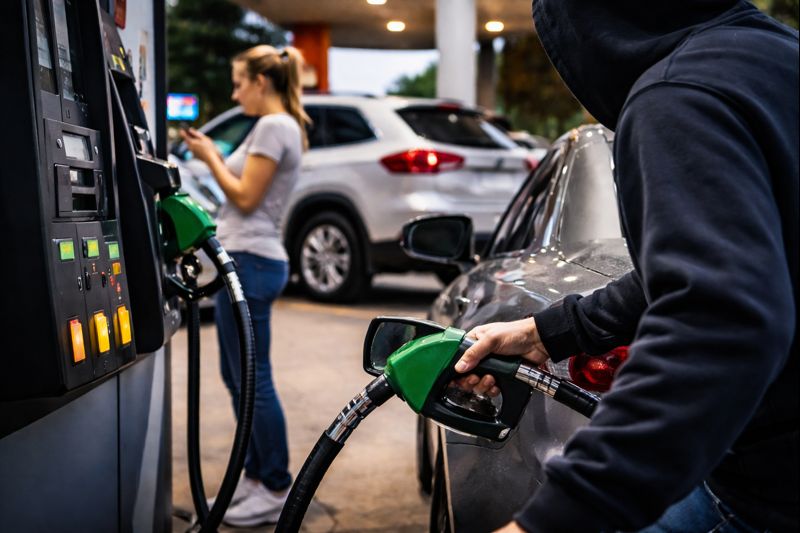
You pull into a gas station, swipe your card, lift the nozzle—and drive away thinking nothing of it. But what if the pump you paid for wasn’t actually pumping your gas? Police are now warning drivers about a growing scam that’s quietly spreading at petrol stations, and it doesn’t involve hacking, skimmers, or broken machines. It relies on distraction, timing, and one split-second assumption. By the time most victims realize what happened, their money—and their fuel—are already gone.
A Scam Hiding in Plain Sight
Law enforcement in Lower Marion Township is sounding the alarm over what they call a “pump switching” scam, a nuisance crime that’s suddenly becoming far more common. Officers say the scam has been popping up more frequently along busy corridors like City Avenue, where distracted drivers, crowded stations, and constant traffic create the perfect conditions.
Unlike high-tech fuel fraud, this scam is surprisingly low-tech—and that’s exactly why it works.
How the Pump Switching Scam Works
Here’s the basic setup, according to police:
A scammer positions themselves near multiple pumps, watching drivers as they pay at the terminal. When a victim inserts their card and authorizes payment, the scammer quickly steps in—sometimes pretending to be confused or asking a question—and switches to the activated pump.
The victim, distracted or assuming everything is normal, ends up fueling the scammer’s vehicle instead of their own.
By the time the mistake is noticed, the pump has already dispensed fuel—and the money is gone.
“It’s fast, it’s subtle, and it’s hard to spot in the moment,” one officer explained.
Why It’s Suddenly Spreading
Police say several factors are fueling the rise of this scam:
- Busy urban stations with constant turnover
- Drivers multitasking on phones
- Pay-at-the-pump convenience reducing human interaction
- Thieves exploiting confusion during peak hours
In places like City Avenue, where stations are almost always crowded, scammers can blend in effortlessly.
And because the crime doesn’t involve violence or forced entry, many victims don’t even realize they’ve been targeted until later.
Victims Often Don’t Report It
One of the biggest challenges, police say, is underreporting.
Some drivers feel embarrassed. Others assume it was their own mistake. In many cases, victims only lose one tank of gas—enough to hurt, but not enough to feel worth reporting.
That silence allows the scam to continue.
“People think it’s a one-off,” an officer said. “But when we look at patterns, it’s clearly repeat behavior.”
Why It’s Called a “Nuisance Crime”—But Feels Like More
Police classify pump switching as a nuisance crime because it usually involves smaller dollar amounts. But for victims, the impact can feel much bigger—especially with rising fuel prices.
One driver described realizing the mistake only after driving away.
“I thought the pump was slow,” they said. “Then I noticed my gauge hadn’t moved.”
For families on tight budgets, losing a full tank of gas can mean missed work, canceled plans, or unexpected financial stress.
How to Protect Yourself at the Pump
Police say avoiding this scam comes down to awareness and habit changes:
- Always double-check the pump number before fueling
- Stay with your vehicle once payment is authorized
- Be cautious if someone approaches you mid-transaction
- Cancel the transaction immediately if something feels off
- Watch the screen to confirm fuel is dispensing to your car
If someone distracts you while the pump is active, stop fueling and reset the transaction.
What To Do If It Happens to You
If you believe you’ve been a victim:
- Report it to local police
- Notify the gas station immediately
- Contact your bank or card provider if necessary
Even if the loss seems small, reporting helps police track patterns and identify repeat offenders.
Why This Scam Is Hard to Stop
Because pump switching doesn’t involve tampering with machines, stations can’t always prevent it with technology alone. Cameras help, but scammers often move quickly and target multiple stations.
Police say public awareness is currently the most effective defense.
The Warning Police Want Every Driver to Hear
This scam doesn’t target careless people—it targets normal, distracted drivers doing something they’ve done hundreds of times before.
And that’s what makes it dangerous.
As police continue to see an uptick in pump switching incidents, one question is becoming unavoidable for anyone pulling into a gas station:
If paying at the pump feels automatic… how many people are being tricked before they even realize what happened?
Most Popular!
-
 Eggs, Cholesterol, and Timing: What Actually Matters for Most People
-
When a Partner Leaves With More Than a Suitcase: Protecting Yourself From Financial Betrayal
-
When Financial Support Meets Contempt: Recognizing Exploitation Inside a Marriage
-
Why Some Sensory Toys and Household “Hacks” Do Not Belong in the Microwave
-
When Grief Clouds Judgment: Misreading Silence and the Quiet Ways People Show Care
-
When One Partner Does All the Hosting: Recognizing Imbalance Before Resentment Takes Over
-
How Many Holes Are in a T-Shirt? What a Simple Puzzle Reveals About How We See
-
The Quiet Stories Inside Secondhand Objects: When a Thrift-Store Find Carries Someone Else’s History