She thought she was doing the right thing. No luxury upgrade. No flashy renovation. Just a simple change to help her move safely around her own home. But instead of relief, a disabled retiree opened her mailbox to find something that felt like a slap in the face: a city fine. Now, as she battles City Hall and keeps losing, her case is raising a troubling question that has many homeowners watching closely — when does accessibility become a violation?
A Fix Meant for Survival, Not Style
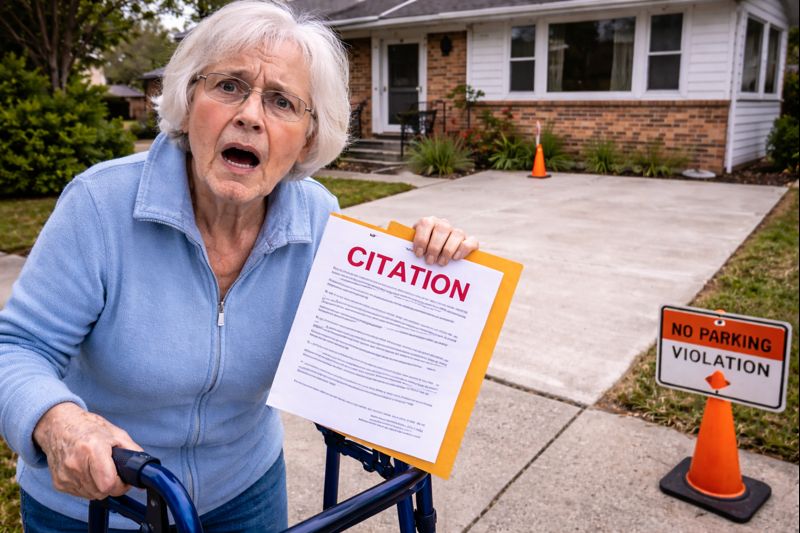
Carol Waddell is a disabled retiree living in University Heights. Like many people with mobility challenges, everyday tasks — even stepping onto her front yard — had become difficult and unsafe.
Grass was uneven. Mud formed after rain. Walking across it put her at risk of falling.
So Carol made a decision rooted in necessity, not aesthetics.
She paid a contractor $1,500 to remove the grass in her front yard and replace it with a concrete pad — a smooth, stable surface that made it easier for her to get around independently.
“I just wanted to be able to move safely,” she said.
She never imagined it would turn into a legal battle.
When the City Stepped In
Not long after the work was completed, Carol received notice from the city. Officials told her the concrete pad violated local ordinances. The fix that helped her walk more safely was now considered noncompliant.
The result: fines.
Carol appealed. She explained her disability. She explained why the concrete was necessary. She explained that this wasn’t about convenience — it was about mobility and safety.
The city didn’t budge.
She lost. And then she lost again.
Fighting City Hall — And Losing
Carol’s case highlights how rigid municipal codes can collide with real-life needs. According to city officials, front-yard concrete can violate zoning or landscaping regulations meant to preserve neighborhood appearance and drainage.
But disability advocates argue those rules should bend when accessibility is involved.
“This isn’t a decorative patio,” one advocate said. “It’s a mobility solution.”
Despite that, Carol’s appeals have repeatedly failed. Each decision reinforces the same message: the concrete must go — or the fines continue.
Why This Case Is Striking a Nerve
What’s making people angry isn’t just the fine — it’s the principle.
Carol didn’t pave her yard for resale value. She didn’t build a driveway. She didn’t ignore safety warnings. She adapted her home to survive daily life with a disability.
Yet the system treated her like a rule-breaker.
“This feels like punishment for being disabled,” Carol said.
Online, many people agree — questioning how cities balance code enforcement with compassion.
Accessibility vs. Ordinances
Experts say this conflict is becoming more common as cities enforce uniform standards without considering individual circumstances.
While federal disability laws require reasonable accommodations in many settings, applying those protections to private residential property — especially front yards — can be complicated.
Still, consumer advocates say cities should at least offer waivers, variances, or alternative solutions.
In Carol’s case, none were granted.
A Costly Situation With No Easy Exit
Removing the concrete would cost even more money — money Carol says she doesn’t have. Keeping it means continued fines. And reverting to grass could put her safety at risk.
She’s stuck.
“I’m not trying to fight anyone,” she said. “I just want to live safely in my own home.”
A Broader Warning for Homeowners
Carol’s situation is serving as a cautionary tale, especially for disabled homeowners or seniors modifying their homes.
Experts recommend:
- Checking city codes before making changes
- Requesting written approvals or variances
- Documenting medical necessity
- Consulting disability advocates early
But even then, outcomes aren’t guaranteed.
The Question That Won’t Go Away
A woman made her home safer.
She followed her physical needs.
She spent her own money.
And the city fined her anyway.
As Carol continues her fight with City Hall, her case leaves one uncomfortable question hanging in the air — not just for her, but for countless others quietly adapting their homes to survive:
If safety and accessibility aren’t enough… what exactly does the system protect?
Most Popular!
-
 Eggs, Cholesterol, and Timing: What Actually Matters for Most People
-
When a Partner Leaves With More Than a Suitcase: Protecting Yourself From Financial Betrayal
-
When Financial Support Meets Contempt: Recognizing Exploitation Inside a Marriage
-
Why Some Sensory Toys and Household “Hacks” Do Not Belong in the Microwave
-
When Grief Clouds Judgment: Misreading Silence and the Quiet Ways People Show Care
-
When One Partner Does All the Hosting: Recognizing Imbalance Before Resentment Takes Over
-
How Many Holes Are in a T-Shirt? What a Simple Puzzle Reveals About How We See
-
The Quiet Stories Inside Secondhand Objects: When a Thrift-Store Find Carries Someone Else’s History