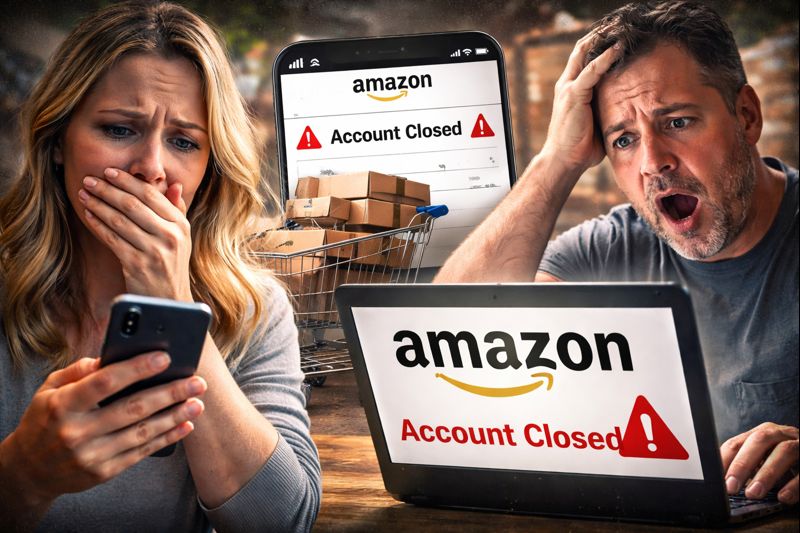
It arrives without warning. No explanation you can understand. No phone number to call. Just a short, cold message sitting in your inbox: “We’ve closed your Amazon account.” For many people, that’s the exact moment panic sets in. Orders disappear. Gift card balances vanish. Years of purchases — gone. And the most frightening part? More and more people say this is happening to them, and they have no idea why.
Amazon is banning customers at an alarming rate, and experts say ordinary shoppers could be next.
“I was really shocked and upset,” one customer said. “They just sent an email and said they closed my account. That was it. No warning.”
Another shopper, hundreds of miles away, told the same story — same email, same outcome, same helpless feeling.
Why Are Amazon Accounts Getting Banned?
Amazon says it closes accounts that violate its terms of service. But here’s the problem: many banned customers insist they followed the rules — or didn’t even know they were breaking any.
According to consumer advocates, Amazon relies heavily on automated systems to flag “risky behavior.” Once flagged, an account can be shut down in seconds.
Some of the most common triggers include:
- Too many returns
Returning items frequently — even legitimate ones — can label you as a “high-risk” customer. Shoppers who order clothing, electronics, or expensive items are especially vulnerable. - Delivery or refund disputes
Claiming that packages didn’t arrive, even when stolen or misplaced, can raise red flags. Multiple claims can look like abuse to Amazon’s system. - Suspicious activity
Logging in from different locations, using VPNs, or sharing Prime benefits with family members can be misinterpreted as policy violations. - Gift card problems
This is one of the biggest traps. If you redeem a gift card that Amazon later believes was obtained fraudulently — even if you bought it innocently — your account can be permanently banned.
The Part That Makes People Furious
What angers customers the most isn’t just the ban — it’s how little explanation they get.
Many say Amazon never clearly states what rule was violated. Appeals are often met with generic replies or silence.
“I kept emailing,” one banned user said. “Every response felt automated. No real person. No real answers.”
In many cases, Amazon tells customers the decision is final.
What You Lose When Amazon Bans You
An Amazon ban goes far beyond shopping inconvenience. Customers may lose:
- Access to Kindle books and digital movies
- Remaining gift card balances
- Prime membership benefits
- Alexa devices tied to the account
- Order history, invoices, and warranties
For people who rely on Amazon for work supplies, household essentials, or digital libraries, the impact can be devastating.
How to Avoid Getting Banned From Amazon
Experts say there’s no guaranteed protection — but there are ways to reduce your risk:
- Stop excessive returns
Think twice before ordering items “just to try.” Amazon tracks return patterns closely. - Document delivery issues
If a package is missing, gather proof and avoid making repeated claims unless absolutely necessary. - Use one account only
Multiple accounts, shared logins, or repeated Prime trials can trigger enforcement. - Be extremely careful with gift cards
Only buy gift cards from trusted retailers. Discounted cards online are often the fastest way to get banned. - Keep account behavior consistent
Sudden changes in address, payment methods, or login locations can look suspicious to automated systems. - Read Amazon’s policies
Many bans happen because shoppers unknowingly break rules they never read.
What To Do If You’re Already Banned
If you receive a ban email, don’t panic — and don’t send angry messages. Submit a calm, detailed appeal explaining your situation and provide any documentation you have. Some users report success after weeks or months, but many never regain access.
The Uncomfortable Truth
Amazon’s system is designed to protect itself — not individual customers. As shopping becomes more automated, algorithms decide who stays and who goes, often without context.
And that’s the real cliffhanger every shopper should think about:
If thousands of people say they were banned “by mistake”…
How sure are you that you won’t be next?
Most Popular!
-
 Eggs, Cholesterol, and Timing: What Actually Matters for Most People
-
When a Partner Leaves With More Than a Suitcase: Protecting Yourself From Financial Betrayal
-
When Financial Support Meets Contempt: Recognizing Exploitation Inside a Marriage
-
Why Some Sensory Toys and Household “Hacks” Do Not Belong in the Microwave
-
When Grief Clouds Judgment: Misreading Silence and the Quiet Ways People Show Care
-
When One Partner Does All the Hosting: Recognizing Imbalance Before Resentment Takes Over
-
How Many Holes Are in a T-Shirt? What a Simple Puzzle Reveals About How We See
-
The Quiet Stories Inside Secondhand Objects: When a Thrift-Store Find Carries Someone Else’s History