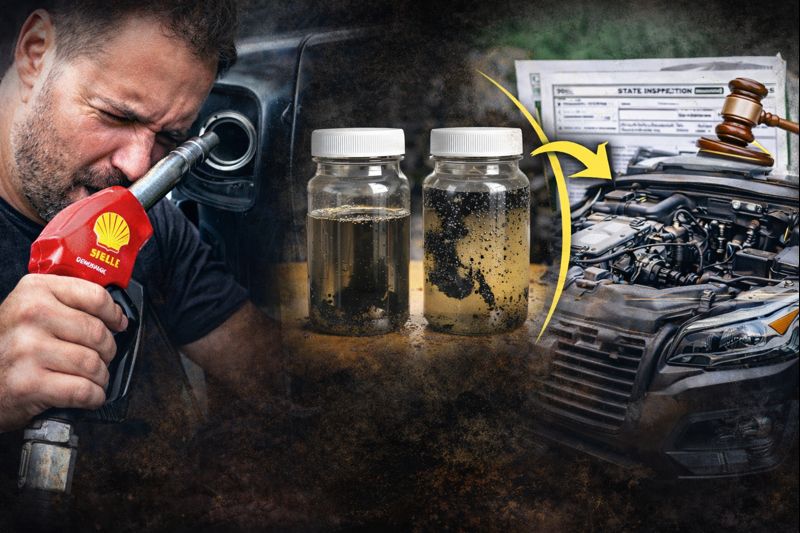
He thought it was just another stop for fuel. Nothing unusual. No warning signs. But seconds after pulling the nozzle from his truck, he noticed something that made his stomach turn. A smell — strong, foul, unforgettable — like a rotten animal. He drove away anyway. And within moments, his truck began shaking violently. What he didn’t know yet was that this single stop could end up costing him thousands of dollars… and spark a serious investigation.
A Normal Fuel Stop Turns Into a Nightmare
The incident happened at a Shell gas station in Cooper City. The customer, Colombo, says he filled up his diesel truck just like he had countless times before.
He pumped 38 gallons of diesel, spending around $180. But as he removed the nozzle, something felt off.
“That smell hit me immediately,” Colombo recalled. “It was like a rotten animal.”
At first, he brushed it off. But as soon as he left the station, his engine began running rough and unstable, something he says had never happened before.
“The Truck Just Wasn’t Right”
Within minutes, Colombo knew something was seriously wrong. The engine sputtered. The ride felt uneven. And fear set in.
Suspecting the fuel itself, he took the next step most drivers wouldn’t even know was possible — he filed an official complaint.
What happened next shocked him.
State Inspection Reveals What Was Hiding in the Fuel
According to Colombo, a state inspector arrived the very next day. What the inspector allegedly found raised immediate red flags.
The diesel fuel contained extremely high levels of sediment contamination — so much that black sediment particles were visibly floating in the samples taken from the pump.
“This wasn’t something you needed a microscope to see,” Colombo said. “You could literally see it.”
A state report later confirmed the contamination at the station’s address on Sheridan Street, and the diesel pump was shut down by the state shortly after the inspection.
For Colombo, that confirmation came with mixed emotions. Relief — and dread.
“This Could Cost Thousands”
His mechanic delivered even worse news.
Diesel contamination doesn’t just affect performance. It can damage critical components of a vehicle’s fuel system — including injectors, pumps, and filters. According to the mechanic, the entire system would need to be inspected to determine the extent of the damage.
If major parts needed replacement, the cost could climb into the thousands of dollars.
And that’s when Colombo did what most consumers would do next.
The Confrontation With the Owner
Colombo went back to the gas station to speak directly with the owner.
“I told him, you sold me contaminated fuel,” Colombo said. “And now my truck is damaged.”
The response?
“He told me, ‘I’m not paying you a penny.’”
Despite the state findings and the pump shutdown, the station owner reportedly denied any responsibility for the damage. No apology. No offer to help. No compensation.
Who Pays When Fuel Goes Bad?
Fuel contamination can happen for several reasons — water intrusion, poor tank maintenance, or corrosion. While major fuel brands are displayed on the sign, individual station owners are often responsible for maintaining their tanks and pumps.
That leaves consumers in a difficult position — facing repair bills while trying to prove where the damage came from.
What Drivers Need to Know
Consumer experts say if you suspect bad fuel:
- Stop driving immediately
- Keep your receipt
- Document symptoms
- File a complaint with your state’s consumer fuel hotline
Those steps can trigger inspections and prevent other drivers from being affected.
The Unanswered Question
The pump has been shut down. The contamination has been documented. The damage may already be done.
Yet Colombo is still left holding the bill.
And that raises the question every driver should be asking:
If the fuel is proven contaminated… why is the customer still the one paying the price?
Most Popular!
-
 Eggs, Cholesterol, and Timing: What Actually Matters for Most People
-
When a Partner Leaves With More Than a Suitcase: Protecting Yourself From Financial Betrayal
-
When Financial Support Meets Contempt: Recognizing Exploitation Inside a Marriage
-
Why Some Sensory Toys and Household “Hacks” Do Not Belong in the Microwave
-
When Grief Clouds Judgment: Misreading Silence and the Quiet Ways People Show Care
-
When One Partner Does All the Hosting: Recognizing Imbalance Before Resentment Takes Over
-
How Many Holes Are in a T-Shirt? What a Simple Puzzle Reveals About How We See
-
The Quiet Stories Inside Secondhand Objects: When a Thrift-Store Find Carries Someone Else’s History