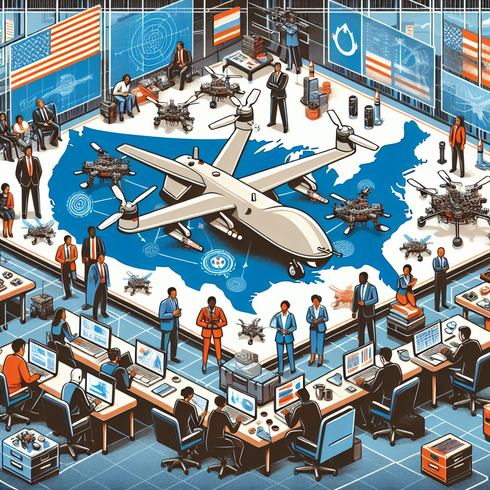
With drones becoming increasingly accessible and sophisticated, the threat they pose to national security can no longer be ignored. Once confined to military use, unmanned aerial systems are now in the hands of hobbyists, private companies, and potentially malevolent actors. Their potential for espionage, disruption, and even delivering harmful payloads makes them a serious concern for lawmakers and defense experts alike. Now, America must grapple with the question: how do we defend the sky from threats that can appear, strike, and vanish in moments?
The current framework for drone defense is a patchwork of regulations, reactive measures, and a few technologies that remain in nascent stages. Airports, military installations, and critical infrastructure are particularly vulnerable to drone intrusions, as traditional air defense systems are ill-equipped to handle these small, nimble devices. Drones often fly too low and too slow for radar-based tracking systems to detect effectively. This gap in surveillance creates an urgent need for a comprehensive national strategy that integrates detection, neutralization, and legal authority.
One promising avenue comes in the form of advanced detection and countermeasure technologies, including radio frequency jamming, net guns, and artificial intelligence monitoring systems. However, deploying these tools widely raises questions around privacy, airspace rights, and civilian drone use. Balancing the need for strong security while maintaining innovation and individual freedoms is a tightrope act. Furthermore, local law enforcement agencies lack the capabilities and legal clarity to intercept drones, which points to the need for federal coordination and law reform.
Another issue is the fragmented nature of government responsibilities. The FAA, Homeland Security, the FBI, and the Department of Defense all have a stake in drone policy, but limited coordination has slowed action. Establishing a centralized authority or task force to oversee drone threats could streamline operations and ensure rapid response. Additionally, investing in public education campaigns around responsible drone usage could help curb unintentional violations and build public trust in any new enforcement measures.
Securing the nation’s skies in the age of drone proliferation will require innovation, funding, and above all, collaboration between the public and private sectors. While the threat is real and growing, so too is the opportunity to lead the world in drone countermeasures and policy. By taking assertive and thoughtful steps today, America can ensure that its airspace remains a safe and secure domain for both innovation and defense.
Most Popular!
-
 When Family Hospitality Becomes a One-Way Street: Setting Boundaries with In-Laws Without Destroying the Relationship
-
When Strength Becomes Silence: Hidden Grief and the Distance It Creates in a Marriage
-
The One-Ring Phone Scam: Why a Single Missed Call Can Be Expensive—and How to Protect Yourself
-
When Money and Loyalty Collapse Together: Navigating Financial Betrayal in a Marriage
-
The Mattress Tag Myth: Why “Do Not Remove Under Penalty of Law” Does Not Apply to You
-
When Helping Family Puts Your Home at Risk: Protecting Yourself in Later Life
-
Feeling Drained Despite Rest: Understanding the Signs That May Point to Low Vitamin B12
-
That Strange Thing in Your Ground Beef: What It Usually Is and When to Worry