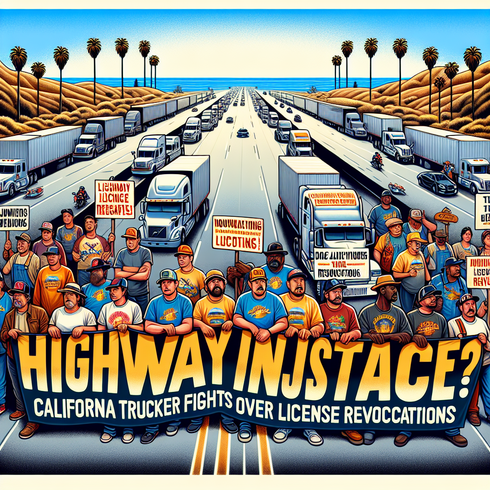
In a bold legal move shaking up the U.S. transportation industry, two prominent civil rights organizations—the Sikh Coalition and the Asian Law Caucus—have filed a lawsuit against California’s Department of Motor Vehicles. The plaintiffs allege that the DMV unlawfully revoked or suspended licenses of over 17,000 commercial truck drivers, many of whom are of South Asian descent. At the center of the case is the accusation that these actions were based not on individual safety or competency concerns, but on discriminatory and flawed processes.
Many of the affected drivers are Indian immigrants who contributed significantly to California’s trucking workforce. They claim they were stripped of their commercial driver’s licenses (CDLs) without proper hearings or sufficient justification. In some cases, drivers reported being flagged for supposed fraud or language barriers that had no relevance to their driving records. The lawsuit contends that these sweeping and opaque actions violated due process rights and deprived hard-working individuals of their livelihoods.
This case is not just about traffic laws—it’s about the systemic treatment of immigrant workers in vital industries. Trucking is the backbone of American commerce, and many of these drivers had long-standing careers delivering goods across the country. For their licenses to be revoked en masse raises serious questions about transparency, bias, and accountability in state regulatory agencies. Are overly broad fraud crackdowns unfairly targeting specific communities under the guise of public safety?
As someone who closely follows labor and immigration policy, I view this lawsuit as a necessary check on administrative power. While state agencies have a duty to uphold the integrity of licensing programs, they must not bypass fairness and legality to do so. It’s particularly troubling if these revocations were made without letting drivers defend themselves or understand the charges against them—principles that are foundational to a just legal system.
Ultimately, the lawsuit shines a light on the intersection of civil liberties and the essential roles immigrant workers play in our economy. Whether driven by error or bias, sweeping actions that jeopardize thousands of livelihoods deserve thorough scrutiny. If the case succeeds, it could set a precedent for how states treat vulnerable worker populations—not as anonymous license numbers, but as individuals deserving of dignity and due process.
Most Popular!
-
 When an Absent Parent Returns: Boundaries, Time, and the Limits of Making Amends
-
When Secrets in the Home Become Dangerous: Recognizing Control, Betrayal, and the Path Back to Safety
-
The Quiet Crisis Next Door: Loneliness, Small Gestures, and What We Miss in Ordinary Neighborhoods
-
When a Community Refuses to Forget: Memorials, Missing Children, and the Complicated Search for Meaning
-
High School Cruelty, Body Shame, and the Quiet Work of Reclaiming Your Place
-
James Spader’s Quiet Rebellion: Why One of Hollywood’s Most Private Actors Still Fascinates Us
-
Shared Spaces, Small Cruelties, and the Quiet Power of Choosing Kindness on Vacation
-
When a False Accusation Echoes Across Decades: Trust, Silence, and the Long Path Back to Truth