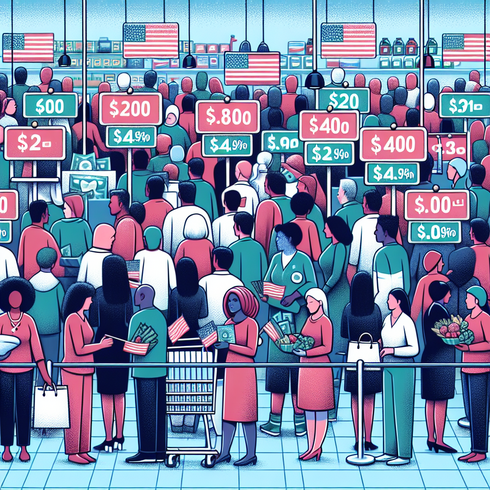
In a world where deal-hunting and cost-saving are widespread, one might assume that Americans, like many others globally, would eagerly embrace negotiation to get better prices. Surprisingly, however, recent research is shedding light on a stark contrast: many Americans actively avoid haggling, even if it means paying a premium. This cultural reluctance toward negotiation is not only economically puzzling, but also socially revealing about American attitudes toward conflict, time management, and personal pride.
The aversion to negotiation doesn’t stem from laziness or wealth so much as discomfort. Unlike in many cultures where bargaining is seen as a social sport or even a duty, Americans tend to see it as confrontational or awkward. When someone walks into a store or approaches a service provider, the prevailing mindset is often “take it or leave it,” treating the listed price as final rather than a starting point. In contrast, markets in regions like Latin America, the Middle East, and parts of Asia are built on the assumption that prices are flexible, and engaging in negotiation is a normal part of the exchange.
Another reason Americans might steer clear of negotiation is due to time constraints and cognitive fatigue. In a fast-paced society where multitasking is a badge of honor, the mental energy it takes to negotiate—and the uncertainty of its outcome—can feel like an unnecessary burden. If the price difference feels negligible, many people simply choose convenience over contest, especially in retail or low-stakes scenarios. But even in big-ticket transactions like car sales or home buying, where negotiation could save thousands, many still shy away or rely on third-party negotiators like agents or relatives.
Interestingly, this reluctance seems to be shifting slightly with the younger generation. Thanks to the internet and growing transparency in pricing, tools like online coupons, price match guarantees, and chat-based customer service allow for negotiation-lite experiences. Apps and websites that allow users to compare deals or leave reviews have also empowered more people to ask for better terms indirectly. However, whether this counts as true negotiation or simply price optimization remains debatable. The element of face-to-face persuasion—a skill that is culturally downplayed in the U.S.—remains underutilized.
In the end, the tendency of Americans to pay more in order to avoid negotiation reveals more than just a preference; it highlights deeper cultural values around politeness, efficiency, and discomfort with confrontation. While there’s nothing inherently wrong with this approach, understanding its roots might help consumers make more empowered financial choices. Perhaps embracing a bit of bargaining might not only save money but also teach patience, empathy, and confidence in personal interactions.
Most Popular!
-
 When an Absent Parent Returns: Boundaries, Time, and the Limits of Making Amends
-
When Secrets in the Home Become Dangerous: Recognizing Control, Betrayal, and the Path Back to Safety
-
The Quiet Crisis Next Door: Loneliness, Small Gestures, and What We Miss in Ordinary Neighborhoods
-
When a Community Refuses to Forget: Memorials, Missing Children, and the Complicated Search for Meaning
-
High School Cruelty, Body Shame, and the Quiet Work of Reclaiming Your Place
-
James Spader’s Quiet Rebellion: Why One of Hollywood’s Most Private Actors Still Fascinates Us
-
Shared Spaces, Small Cruelties, and the Quiet Power of Choosing Kindness on Vacation
-
When a False Accusation Echoes Across Decades: Trust, Silence, and the Long Path Back to Truth