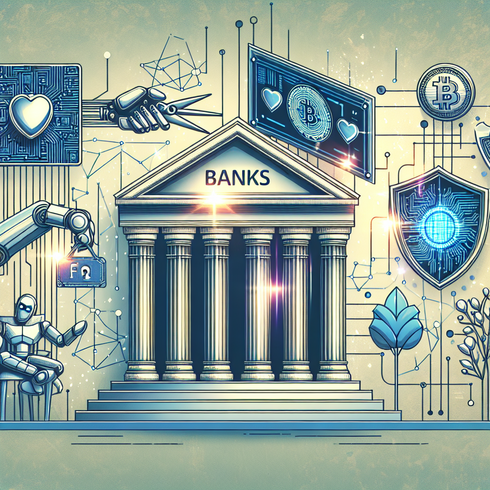
As we inch closer to the latter half of the decade, financial institutions are beginning to acknowledge a significant shift on the horizon. A recent survey conducted by American Banker indicates that a growing number of banking professionals expect major breakthroughs in artificial intelligence and digital assets by 2026. Paradoxically, these same experts express concern that their institutions are not equipped to handle the pace and scale of these technological evolutions.
Artificial intelligence continues to generate buzz for its transformative potential in everything from fraud detection to customer service automation. However, many bank leaders admit their organizations lack the infrastructure and talent to fully harness AI’s capabilities. The technology’s fast-changing nature poses a steep challenge to legacy systems that were not designed for iterative learning algorithms or massive data analysis.
On the digital asset front, the increasing normalization of cryptocurrencies and tokenized assets is prompting banks to reconsider their stance. While regulatory uncertainty remains a significant barrier, the slow-but-steady shift toward decentralized finance is hard to ignore. What’s clear is that by 2026, digital wallets and blockchain-enabled transactions could become as commonplace as mobile banking apps today—if banks can adapt in time.
This should spark a sense of urgency across the financial sector. Rather than taking a wait-and-see approach, banks would benefit from investing in research, partnerships, and hiring experts in AI and blockchain technologies today. Institutions that take proactive steps now are more likely to ride the wave of innovation rather than be swept away by it.
Ultimately, the forecasts for 2026 are not so much warnings as they are calls to action. Groundbreaking advances in AI and crypto are not just possible—they’re probable. For banks, the time to prepare is now. Those who do may find themselves not just keeping pace with change, but leading it.
Most Popular!
-
 When an Absent Parent Returns: Boundaries, Time, and the Limits of Making Amends
-
When Secrets in the Home Become Dangerous: Recognizing Control, Betrayal, and the Path Back to Safety
-
The Quiet Crisis Next Door: Loneliness, Small Gestures, and What We Miss in Ordinary Neighborhoods
-
When a Community Refuses to Forget: Memorials, Missing Children, and the Complicated Search for Meaning
-
High School Cruelty, Body Shame, and the Quiet Work of Reclaiming Your Place
-
James Spader’s Quiet Rebellion: Why One of Hollywood’s Most Private Actors Still Fascinates Us
-
Shared Spaces, Small Cruelties, and the Quiet Power of Choosing Kindness on Vacation
-
When a False Accusation Echoes Across Decades: Trust, Silence, and the Long Path Back to Truth