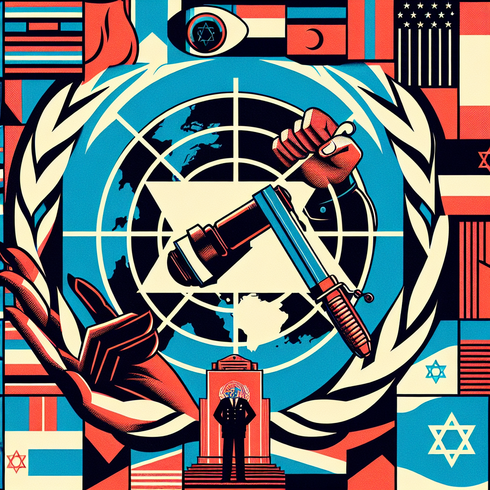
The United Nations has once again taken aim at Israel, further entrenching its reputation for bias when it comes to the Middle East’s only democracy. The latest report, which purports to address alleged violations of human rights, suffers from the same defects that have plagued similar efforts: questionable sourcing, selective outrage, and an overt disregard for the complex realities on the ground. It’s becoming clearer with each release that what once may have been a noble pursuit of international accountability has devolved into politicized theatrics.
At the heart of this latest controversy is a methodology riddled with inconsistencies. Sources include anonymous testimonies with unverifiable claims, many of which stem from organizations known for their deep-rooted antagonism toward Israel. Meanwhile, critical voices or alternative narratives that could provide a fuller picture, including those from within Israel or from victims of terror groups, are conspicuously absent. Such one-sided reporting should raise concerns for anyone genuinely interested in human rights rather than political point-scoring.
One of the most unsettling elements of the UN’s persistent campaign is its disproportionate scrutiny of Israel. While human rights crises boil over in places like Iran, Syria, and North Korea—with far less international attention—the UN frequently singles out Israel for uniquely harsh treatment. This skewed focus not only delegitimizes their own institutions but also undermines the UN’s supposed mission of impartiality and justice. It gives the impression that the organization is more interested in politics than actual peace.
Perhaps most damaging is the erosion of credibility this engenders. When respected entities stray from objectivity, the result is public skepticism in international law and mechanisms of global governance. For Israelis who have faced decades of consistent demonization in international forums, this latest smear is just one more example of why trust in the UN is at an all-time low. And for Palestinians who truly seek peace and stability, the politicization of their plight may ultimately do more harm than good by entrenching divisions instead of resolving them.
In the end, an institution like the United Nations ought to rise above partisanship. Its role should be one of honest broker, not ideological enforcer. If it continues down this path of targeting Israel with biased assessments and inflammatory rhetoric, it risks becoming irrelevant in the eyes of those it claims to help. A balanced and nuanced approach is not just fair—it’s essential for any hope of lasting peace in the region.
Most Popular!
-
 When an Absent Parent Returns: Boundaries, Time, and the Limits of Making Amends
-
When Secrets in the Home Become Dangerous: Recognizing Control, Betrayal, and the Path Back to Safety
-
The Quiet Crisis Next Door: Loneliness, Small Gestures, and What We Miss in Ordinary Neighborhoods
-
When a Community Refuses to Forget: Memorials, Missing Children, and the Complicated Search for Meaning
-
High School Cruelty, Body Shame, and the Quiet Work of Reclaiming Your Place
-
James Spader’s Quiet Rebellion: Why One of Hollywood’s Most Private Actors Still Fascinates Us
-
Shared Spaces, Small Cruelties, and the Quiet Power of Choosing Kindness on Vacation
-
When a False Accusation Echoes Across Decades: Trust, Silence, and the Long Path Back to Truth