In communities across Virginia, including the growing number of smoke shops on Valley Avenue and throughout Frederick County, products containing high-potency THCA, delta-8 THC, and similar hemp-derived substances have been flying off the shelves. These items exploit a legal gray area opened by the federal 2018 Farm Bill, which unintentionally allowed psychoactive compounds to be sold under the guise of legal hemp. Unlike state-regulated cannabis, these products are largely unregulated, unlabeled, and available to nearly anyone — an oversight that many believe is endangering public health.
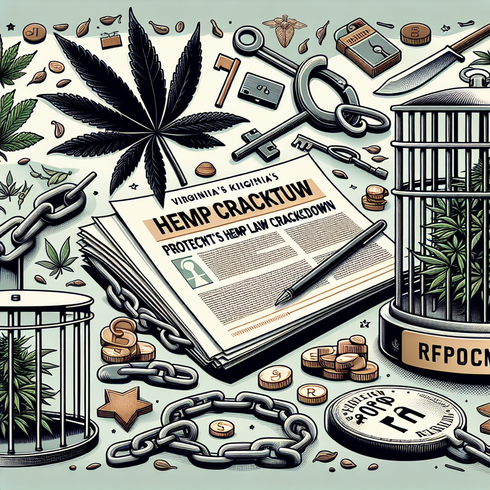
Recent legislative efforts to close this loophole are now gaining steam. Virginia lawmakers are introducing measures to treat these potent hemp derivatives more like controlled substances, effectively bringing them under the same regulatory scrutiny as state-authorized cannabis dispensaries. Supporters argue this change is necessary, noting that many of these products are sold in flashy, youth-targeted packaging and lack adequate safety testing or labeling, leaving users unaware of what they’re actually consuming.
From a public safety standpoint, this move is long overdue. Unregulated delta-8 and THCA products have created a parallel market that undermines the legal cannabis industry while also exposing youth and vulnerable populations to potent psychoactive effects. Emergency room visits and calls to poison control centers have reportedly spiked in areas where these products are commonly sold. By enforcing stricter rules, Virginia can strengthen consumer protections without necessarily infringing on individual liberty or hampering access for responsible adults.
Critics, however, see this crackdown as potentially squashing a budding sector that could provide economic growth and new opportunities. Small business owners, especially those who’ve pivoted to hemp as a way to stay afloat in tough times, argue that regulation should be balanced rather than prohibitive. A nuanced approach that includes product testing, clear labeling, and age restrictions could be a middle ground that preserves business viability while safeguarding users.
Ultimately, the debate over hemp-derived cannabinoids reflects a broader conversation about cannabis reform, personal freedom, and responsible public policy. Closing the loophole isn’t about eliminating access — it’s about ensuring that access comes with accountability. If Virginia can strike the right balance, it could serve as a model for other states grappling with the unintended consequences of loosely regulated hemp markets.
Most Popular!
-
 When an Absent Parent Returns: Boundaries, Time, and the Limits of Making Amends
-
When Secrets in the Home Become Dangerous: Recognizing Control, Betrayal, and the Path Back to Safety
-
The Quiet Crisis Next Door: Loneliness, Small Gestures, and What We Miss in Ordinary Neighborhoods
-
When a Community Refuses to Forget: Memorials, Missing Children, and the Complicated Search for Meaning
-
High School Cruelty, Body Shame, and the Quiet Work of Reclaiming Your Place
-
James Spader’s Quiet Rebellion: Why One of Hollywood’s Most Private Actors Still Fascinates Us
-
Shared Spaces, Small Cruelties, and the Quiet Power of Choosing Kindness on Vacation
-
When a False Accusation Echoes Across Decades: Trust, Silence, and the Long Path Back to Truth