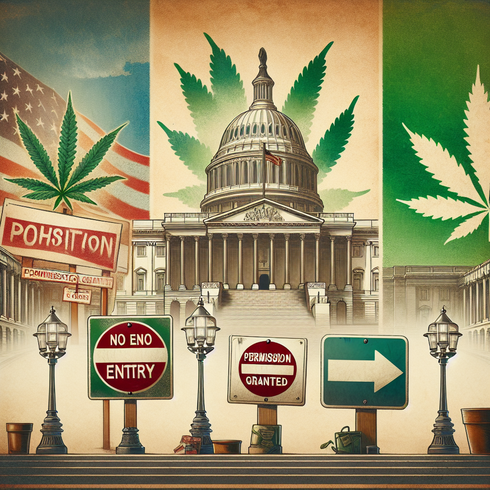
After decades of staunch opposition and outdated stereotypes, the federal government may finally be shifting its stance on cannabis. In an unexpected turn, former President Trump’s executive order is being credited with paving the way for rescheduling cannabis under federal law—a move that effectively acknowledges its medicinal potential and reduces its classification from the same tier as heroin. This change, while long overdue, marks a potential transformation in how cannabis is understood and regulated in the United States.
Ironically, this shift comes at the same time as a new analysis questioning the effectiveness of cannabis for common conditions like pain, anxiety, and insomnia. For advocates and skeptics alike, this creates a moment of cognitive dissonance: while the federal government moves toward legitimizing medical marijuana, scientific scrutiny is beginning to challenge some of the long-held assumptions about its therapeutic utility. This duality lays bare the complex relationship Americans have with cannabis—torn between cultural acceptance and scientific caution.
The implications of rescheduling cannabis extend far beyond mere regulatory changes. Financial institutions could finally feel secure dealing with cannabis businesses, researchers might gain easier access to study the plant under less restrictive conditions, and states would get much-needed clarity on navigating their own legal frameworks. Equally important is the symbolic weight: rescheduling would send a message that the federal government acknowledges the need to rectify decades of stigma and misinformation.
Still, the newfound openness to cannabis should not come at the expense of scientific integrity. The medical community must be empowered to conduct robust, transparent research—even if those findings sometimes challenge the prevailing narratives within both advocacy and industry circles. Accepting cannabis as medicine demands that it be held to the same evidentiary standards as other treatments, rather than relying solely on anecdotal experience or commercial momentum.
In all, America may finally be moving past the era of “Reefer Madness”—a time when fear and propaganda dictated policy more than facts and reason. Rescheduling cannabis is a promising step, but the future will depend on our willingness to approach marijuana with both open minds and rigorous standards. As public sentiment, medical research, and government policy gradually align, the real victory may be not just in legalizing cannabis, but in finally understanding it.
Most Popular!
-
 When an Absent Parent Returns: Boundaries, Time, and the Limits of Making Amends
-
When Secrets in the Home Become Dangerous: Recognizing Control, Betrayal, and the Path Back to Safety
-
The Quiet Crisis Next Door: Loneliness, Small Gestures, and What We Miss in Ordinary Neighborhoods
-
When a Community Refuses to Forget: Memorials, Missing Children, and the Complicated Search for Meaning
-
High School Cruelty, Body Shame, and the Quiet Work of Reclaiming Your Place
-
James Spader’s Quiet Rebellion: Why One of Hollywood’s Most Private Actors Still Fascinates Us
-
Shared Spaces, Small Cruelties, and the Quiet Power of Choosing Kindness on Vacation
-
When a False Accusation Echoes Across Decades: Trust, Silence, and the Long Path Back to Truth