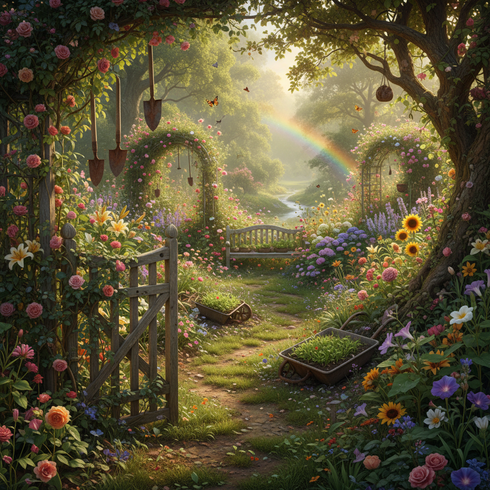
For years, Margaret had poured her heart and soul into the small community garden in the heart of the neighborhood. It wasn’t just a patch of soil tucked between buildings—it was a sanctuary where memories blossomed alongside marigolds and tomatoes. Each morning, she walked the familiar paths lined with sun-drenched flowers, breathing in the fragrances that reminded her of days when life felt simpler, yet infinitely precious.
She had inherited the garden from her mother, a woman whose hands had their own stories etched into the wrinkles of soil and leaves. Gardening was not just a pastime; it was a language spoken without words, a dialogue between the earth and her spirit. Through seasons of joy and sorrow, Margaret nurtured seedlings as if they were her own hopes, watching them grow and bloom while quietly healing her own wounds.
But time had its ways. Visitors to the garden became less frequent, their lives pulled in directions she couldn’t follow. The benches, once filled with laughter and shared stories, stood empty. Margaret noticed the creeping silence around her cherished space, and with it, a creeping loneliness that settled deeper than she expected.
One afternoon, amidst the rustle of autumn leaves, a young woman arrived carrying a box of old gardening tools. She introduced herself as Emma, new to the neighborhood and eager to revive the garden’s spirit. At first, Margaret was unsure—she had grown protective of her world, wary of change. But Emma’s enthusiasm was contagious, reminding her of the fresh energy that once surged through her veins.
Together, they tilled the earth, planted new seeds, and shared stories beneath the shade of the old oak tree. Emma listened to every word Margaret shared, as if absorbing the garden’s history into her own heart. In those moments, Margaret realized the garden was no longer just a memory; it was a living bridge connecting past and future, youth and experience.
The seasons shifted once more, and with patience and care, the garden flourished anew. Neighbors began to return, children ran between the rows of sunflowers, and laughter once again infused the air. Margaret watched it all unfold, feeling a warmth she hadn’t known in years. The garden had become a tapestry woven with new friendships and renewed purpose.
What touched Margaret most profoundly was how the garden offered more than just beauty—it gave her a space to share wisdom, to mentor, and to feel needed in a world that often rushes past. Through the phases of growth and rest, she learned that life’s seasons might be inevitable, but the chance to begin again, to find joy in unexpected places, was a gift she could always embrace.
In the quiet moments, as she leaned against the fence surrounded by blossoms and the gentle hum of life, Margaret understood that the garden was never truly hers alone. It belonged to everyone willing to plant hope, to nurture with love, and to believe in the endless possibilities of second chances.
Most Popular!
-
 Eggs, Cholesterol, and Timing: What Actually Matters for Most People
-
When a Partner Leaves With More Than a Suitcase: Protecting Yourself From Financial Betrayal
-
When Financial Support Meets Contempt: Recognizing Exploitation Inside a Marriage
-
Why Some Sensory Toys and Household “Hacks” Do Not Belong in the Microwave
-
When Grief Clouds Judgment: Misreading Silence and the Quiet Ways People Show Care
-
When One Partner Does All the Hosting: Recognizing Imbalance Before Resentment Takes Over
-
How Many Holes Are in a T-Shirt? What a Simple Puzzle Reveals About How We See
-
The Quiet Stories Inside Secondhand Objects: When a Thrift-Store Find Carries Someone Else’s History