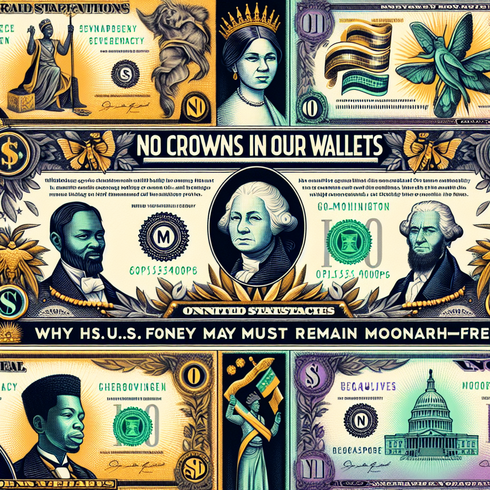
As world economies evolve and nations hang on to symbols of heritage, the imagery on money plays a surprisingly symbolic role. Recently, the image of King Charles III has begun appearing on the currency of several Commonwealth nations including the United Kingdom, Canada, and Australia—a gesture, some argue, of both tradition and loyalty. While this practice might seem quaint or ceremonial in nature, it raises an important question here in the United States: Should any single person—especially a monarch—ever be the face of our money?
In the United States, our currency features influential historical figures who helped shape the nation, such as George Washington, Abraham Lincoln, and Harriet Tubman (soon to appear on the $20 bill). These are individuals celebrated not because of inherited titles but because of their contributions to democracy and human rights. This emphasis on earned legacy rather than inherited privilege is more than a cultural preference—it’s a foundational part of our national identity.
There’s a deeper principle at play too: democracy stands in contrast to monarchy. Where a king is born into power, American leadership is earned through votes and service. Putting a monarch’s image—even a foreign one—on U.S. money would stand in conflict with the ideals of self-governance, equality, and liberty that our republic is built upon. Money is more than a tool for exchange; it’s a reflection of values. We must be careful about what—and whom—we choose to immortalize on it.
It may seem unlikely that King Charles or any monarch would appear on U.S. currency, but the conversation remains relevant. As newer generations engage more with global culture, there’s often a renewed fascination with royal families and traditions abroad. While such interest is natural, we must draw the line between cultural admiration and institutional endorsement. Keeping monarchs off our money is a symbolic but essential way to preserve the unique democratic principles that define America.
In closing, the absence of royalty from American currency is not just a quirk—it’s a choice that reinforces who we are as a people. We left monarchy behind in 1776 for a reason. Whether it’s on a coin or a bill, our money should reflect the democratic values we cherish, not the pomp and lineage of distant thrones. Let our currency tell the story of freedom, representation, and earned leadership—not inherited crowns.
Most Popular!
-
 When Money and Loyalty Collapse Together: Navigating Financial Betrayal in a Marriage
-
The Mattress Tag Myth: Why “Do Not Remove Under Penalty of Law” Does Not Apply to You
-
When Helping Family Puts Your Home at Risk: Protecting Yourself in Later Life
-
Feeling Drained Despite Rest: Understanding the Signs That May Point to Low Vitamin B12
-
That Strange Thing in Your Ground Beef: What It Usually Is and When to Worry
-
When an Absent Parent Returns: Boundaries, Time, and the Limits of Making Amends
-
When Secrets in the Home Become Dangerous: Recognizing Control, Betrayal, and the Path Back to Safety
-
The Quiet Crisis Next Door: Loneliness, Small Gestures, and What We Miss in Ordinary Neighborhoods