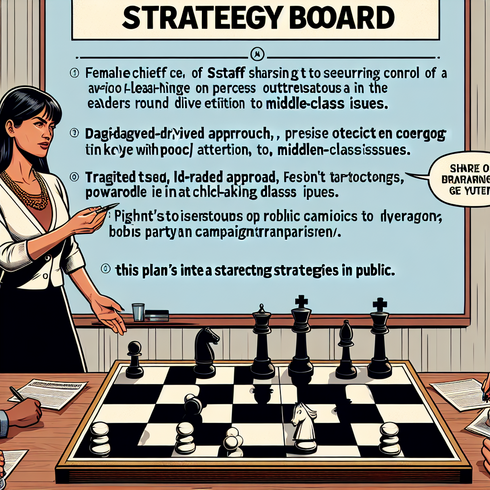
In a recent and somewhat surprising interview on the online show “The Mom View,” White House Chief of Staff Susie Wiles disclosed that she has developed a strategic plan aimed at securing Republican control of Congress in the upcoming 2024 midterm elections. What stood out more than the content of the strategy was Wiles’ admission that she hasn’t yet shared this plan with the president. While this raises eyebrows in terms of internal coordination, it also highlights the increasing autonomy of political operatives in shaping party outcomes.
In a political climate where voter turnout, grassroots mobilization, and messaging consistency are more crucial than ever, Wiles’ confidence stems from what she describes as a “targeted, data-driven approach.” Though she stopped short of offering specifics, it’s reasonable to infer that the plan involves precise voter outreach in key battleground districts and a renewed emphasis on pocketbook issues that resonate with middle-class America. Given her track record with Florida’s Republican resurgence, Wiles’ approach may hinge on micro-targeting swing voters and triangulating messages that avoid polarizing national rhetoric.
Interestingly, the fact that this plan has yet to be conveyed to the president suggests a potential disconnect—or perhaps a calculated play to test public reception before escalating it to executive levels. In the modern Republican Party, where factional divides between establishment conservatives and populist elements remain prominent, having an operational roadmap independent of the Oval Office could reflect deeper strategic flexibility. Either way, this raises important questions about how inter-party communication will function in the coming electoral cycles.
As Democrats eye potential vulnerabilities in traditionally red districts, the GOP’s proactive steps could give it a significant edge in retaining the House and possibly flipping the Senate. However, success will depend not only on the clarity of Wiles’ plan but also on the party’s ability to rally behind a cohesive message. Avoiding internal strife and aligning endorsements, fundraising efforts, and campaign narratives around shared goals could make the difference between a red wave and a political sputter.
Ultimately, Susie Wiles’ revelation underscores the high-stakes chess match underway as both parties prepare for 2024. Whether her unnamed plan turns into a Republican masterstroke or a missed opportunity will hinge on execution, unity, and the ever-unpredictable American electorate. One thing is certain: political strategists are no longer operating behind closed doors—they’re testing their ideas in public, charting a bold new frontier in campaign transparency.
Most Popular!
-
 When Money and Loyalty Collapse Together: Navigating Financial Betrayal in a Marriage
-
The Mattress Tag Myth: Why “Do Not Remove Under Penalty of Law” Does Not Apply to You
-
When Helping Family Puts Your Home at Risk: Protecting Yourself in Later Life
-
Feeling Drained Despite Rest: Understanding the Signs That May Point to Low Vitamin B12
-
That Strange Thing in Your Ground Beef: What It Usually Is and When to Worry
-
When an Absent Parent Returns: Boundaries, Time, and the Limits of Making Amends
-
When Secrets in the Home Become Dangerous: Recognizing Control, Betrayal, and the Path Back to Safety
-
The Quiet Crisis Next Door: Loneliness, Small Gestures, and What We Miss in Ordinary Neighborhoods