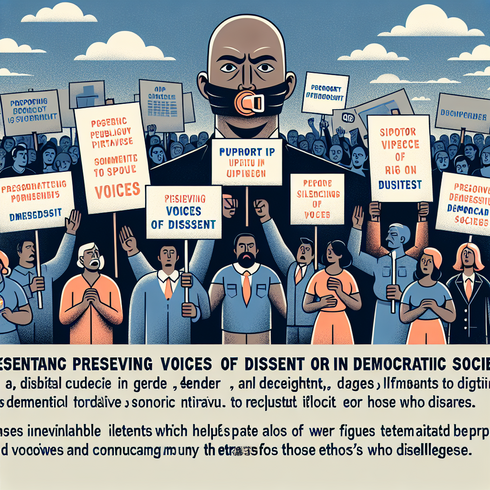
Freedom of speech is one of the most cherished pillars of any democratic society, yet it continues to be misunderstood and, more troublingly, weaponized. In today’s rapidly polarizing climate, where opinions can instantly trend or be condemned online, there is an unsettling trend of trying to erase or delegitimize dissenting voices. But suppressing opposing views isn’t just unproductive—it’s dangerous to the very foundation upon which free societies stand.
When individuals in power try to muzzle critics or rewrite narratives that don’t align with their ideals, they aren’t protecting the public—they’re manipulating it. The essence of democracy lies in open debate, uncomfortable truths, and the ability for all sides, even unpopular ones, to be heard. History is rich with examples where dissent fueled progress: the civil rights movement, anti-apartheid protests, and more recently, global climate activism. None of these movements would’ve evolved without people speaking out against the status quo.
One reason freedom of speech is so difficult to broadly embrace is because it requires us to tolerate views that challenge our own. The discomfort of confronting opposing ideologies often leads people to demand censorship under the guise of maintaining civility or unity. But unity should never mean uniformity. In suppressing alternative perspectives, even those we find objectionable, we risk constructing echo chambers that limit societal growth and the collective wisdom of our communities.
Additionally, labeling critics as threats or painting all dissent as dangerous breeds a culture of fear and self-censorship. It sends a chilling message: either conform or be silenced. Democracies thrive not when everyone agrees, but when people are free to disagree without fear of retaliation. Protecting speech must include the uncomfortable parts—questions, protests, and yes, even unpopular ideas. Otherwise, freedom becomes selective, and once that door is opened, who decides which voices get through?
At its core, defending the right to dissent is about trust—trusting people to think critically and determine truth for themselves. If we truly value freedom, we have to make space for discomfort. A society that dismisses opposing opinions isn’t stronger or safer—it’s simply quieter. And in democracy, silence shouldn’t mean agreement; it often means exclusion. Let’s encourage dialogue, not drown it. Because a nation where everyone speaks but only some are heard isn’t truly free.
Most Popular!
-
 When Money and Loyalty Collapse Together: Navigating Financial Betrayal in a Marriage
-
The Mattress Tag Myth: Why “Do Not Remove Under Penalty of Law” Does Not Apply to You
-
When Helping Family Puts Your Home at Risk: Protecting Yourself in Later Life
-
Feeling Drained Despite Rest: Understanding the Signs That May Point to Low Vitamin B12
-
That Strange Thing in Your Ground Beef: What It Usually Is and When to Worry
-
When an Absent Parent Returns: Boundaries, Time, and the Limits of Making Amends
-
When Secrets in the Home Become Dangerous: Recognizing Control, Betrayal, and the Path Back to Safety
-
The Quiet Crisis Next Door: Loneliness, Small Gestures, and What We Miss in Ordinary Neighborhoods