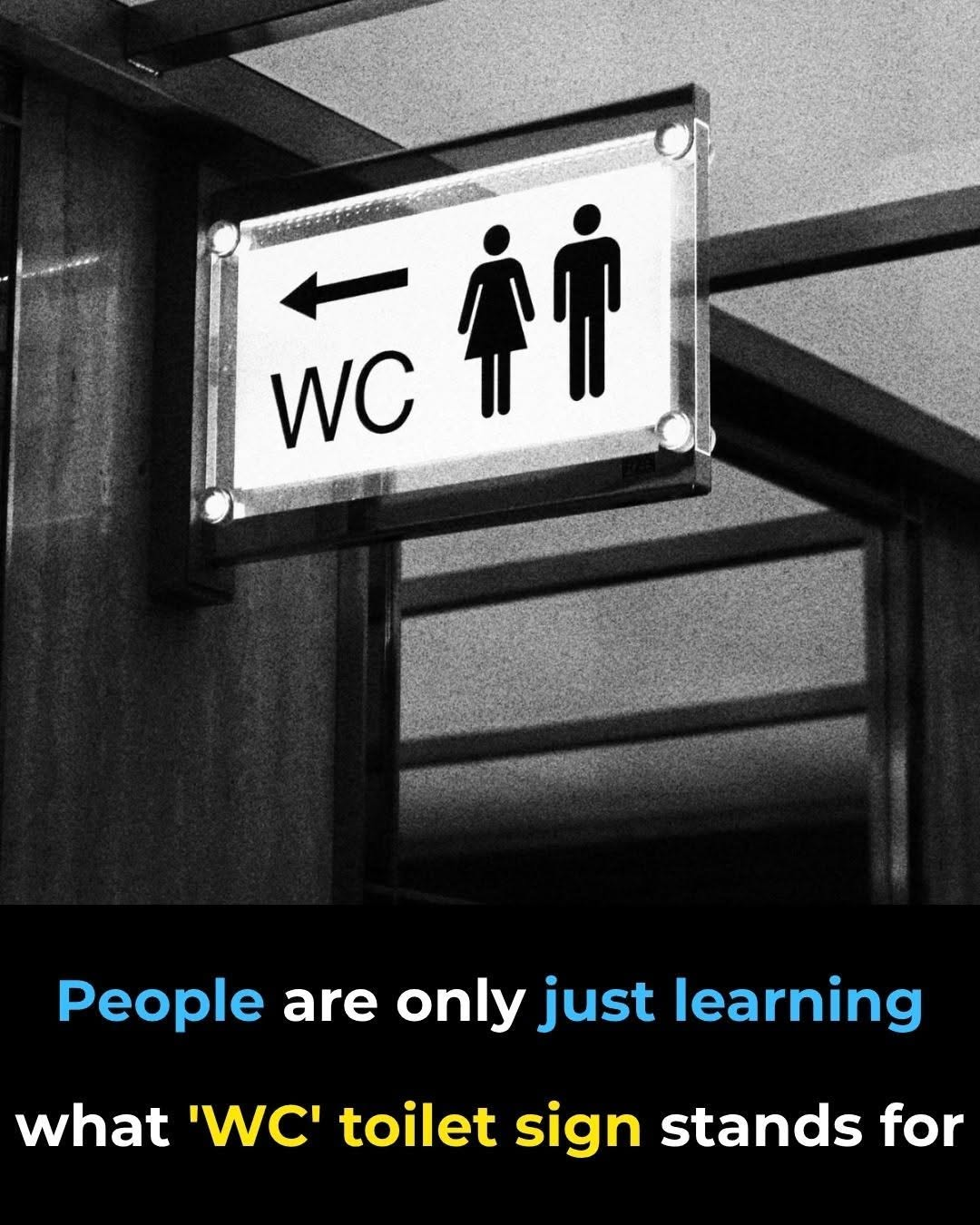
We’ve all been there. You’re in a foreign airport, a fancy European hotel, or even a local restaurant, desperately searching for the restroom. Your eyes scan the signs until you spot those two familiar letters: WC. You breathe a sigh of relief and head toward the door, only to sometimes find yourself in a confusing situation or wondering why this particular abbreviation seems so universal yet oddly outdated. For millions of travelers and everyday people, “WC” has been a source of minor bewilderment for decades. What does it actually mean? Why is it still used everywhere from Tokyo to Paris? And how did something so simple become one of the most misunderstood signs in the world?
The answer takes us back more than a century to the early days of modern plumbing. “WC” stands for Water Closet, a term that emerged in Britain during the Victorian era when indoor bathrooms were becoming more common in homes and public spaces. At the time, having a dedicated room with a flushing toilet was a luxury, and “water closet” was a polite, somewhat euphemistic way to describe this new technological marvel. The phrase distinguished the toilet area from other parts of the bathroom, like the sink or bathtub. Over time, the abbreviation “WC” became a standard international symbol, printed on doors and signs across continents because it was short, clear, and didn’t rely on any single language.
What many people don’t realize is that “WC” was never meant to be mysterious or exclusive. It was designed for practicality in an increasingly connected world. As international travel boomed in the 20th century, English abbreviations became a common bridge between cultures. “WC” spread far beyond English-speaking countries because it was already established in technical drawings, architectural plans, and hotel guides. Today, you’ll find it in airports in Asia, restaurants in South America, and shopping malls in the Middle East. It’s one of those rare global standards that survived the test of time, even as languages and design trends evolved around it.
The confusion often stems from how “WC” is perceived in different regions. In the United States, where “restroom” or “bathroom” dominates everyday language, many people encounter “WC” primarily while traveling and assume it’s some exotic foreign code. In reality, it’s simply an older British term that caught on worldwide. Some countries have tried to phase it out in favor of more modern pictograms showing a male or female figure, or simple words like “Toilet.” Yet “WC” persists because it’s compact, recognizable across languages, and doesn’t require translation. It’s a linguistic fossil that continues to serve a practical purpose in our globalized world.
Beyond the basic meaning, there’s a fascinating cultural layer to how bathrooms are signed and experienced around the world. In Japan, for example, toilet technology has advanced dramatically with features like heated seats and bidet functions, yet you’ll still occasionally see “WC” alongside Japanese characters. In parts of Europe, the distinction between “WC” and other facilities can be more pronounced, sometimes separating the toilet from the full bathroom. These subtle differences can catch travelers off guard, leading to funny or awkward moments that become great stories later. Understanding “WC” as part of this bigger picture helps reduce confusion and makes international travel smoother.
One reason the sign remains so common is its neutrality. Unlike words that might carry awkward connotations in certain cultures, “WC” feels technical and discreet. It’s a holdover from a time when discussing bodily functions was considered impolite in polite society. Even today, many people prefer indirect language when asking for the restroom. “Where is the WC?” sounds more refined than more direct alternatives in some contexts. This linguistic politeness has helped the abbreviation endure even as societies have become more open about such topics.
For frequent travelers, knowing the WC meaning is just the beginning of bathroom navigation wisdom. Different countries have their own quirks and expectations. In some places, you might need to pay a small fee or bring your own toilet paper. In others, the concept of gendered facilities might be handled differently or include family options. Learning to recognize “WC” alongside local symbols and words makes you a more confident explorer. It’s one of those small pieces of knowledge that separates seasoned globetrotters from first-time visitors constantly asking for directions.
The persistence of “WC” also says something interesting about human resistance to change. Even as digital wayfinding apps and universal pictograms become more common, the old abbreviation refuses to disappear completely. It’s embedded in architecture, signage systems, and collective memory. Replacing it entirely would require a massive coordinated effort across countries and languages. So it lingers on, serving as a quiet reminder of how history shapes even the most mundane aspects of daily life. Next time you see those two letters, you’re not just looking at a bathroom sign — you’re seeing a small piece of Victorian engineering terminology that traveled the world.
Parents often find themselves explaining “WC” to curious children during family trips, turning it into an impromptu history lesson. It’s a great opportunity to talk about how language evolves and how different cultures approach everyday needs. For language learners, recognizing “WC” provides an easy entry point into practical vocabulary that works across borders. Even in an age of translation apps, having a few universal terms like this in your mental toolkit can make travel less stressful and more enjoyable.
Of course, not everyone loves the continued use of “WC.” Some design experts argue that clear pictograms or simple words are more inclusive and accessible, especially for people with literacy challenges or those who don’t speak English. There have been efforts in various cities and airports to modernize signage systems, sometimes replacing “WC” with more contemporary alternatives. Yet the abbreviation’s simplicity and global recognition give it staying power that new symbols sometimes struggle to match.
The next time you’re in an unfamiliar place and spot that familiar “WC” sign, take a moment to appreciate the little piece of history you’re encountering. It’s more than just directions to the toilet — it’s a connection to the past, a practical solution that has worked for generations, and a small example of how humans find common ground across cultures. Understanding its meaning removes one tiny layer of confusion from travel and daily life, making the world feel a bit more navigable.
In the end, bathroom signs might seem trivial in the grand scheme of things, but they represent something deeply human: our shared need for basic dignity and convenience, expressed through language and symbols that cross borders. “WC” may be old-fashioned to some, but its continued presence reminds us that the best solutions are often the simplest ones that stand the test of time. So the next time you see those two letters, you’ll know exactly where to go — and maybe smile a little at the fascinating journey those initials have taken around the world.
Most Popular!
-
 The Heartbreaking Reality: Why Jelly Roll and Bunnie XO’s Fairytale Marriage Has Finally Imploded
-
Is That Tiny Canker Sore Actually a Death Sentence? The Silent Signs of Oral Cancer You’re Likely Ignoring
-
The Indecency Scandal: Why Bianca Censori’s Latest Cat Mask Ensemble Has the Public Demanding Her Arrest
-
The Secret Message from Beyond: Why Cemetery Officials Are Desperate to Destroy This Man’s Final Tribute
-
The Miracle Weed: Why This Common Backyard Menace Is Worth Its Weight in Gold
-
The Innocent Selfie That Ended a Wedding: How One Tiny Detail Destroyed Everything
-
The Secret Whisper That Left a Nation Stunned: What Trump Actually Said to the Fighter Who Insulted Michelle Obama
-
These Mind-Bending Riddles Are Humiliating Millions Online — Can You Solve Them Without Losing Your Mind?