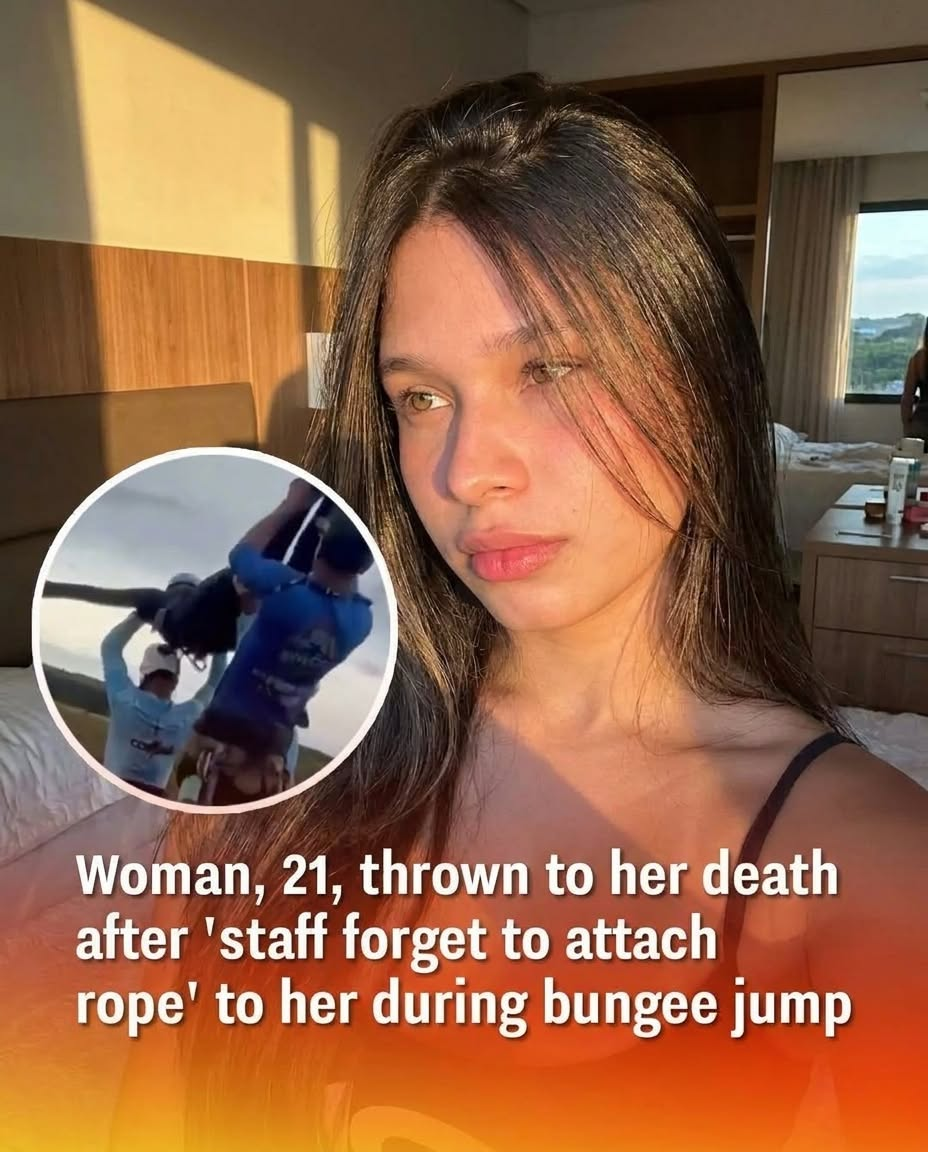
The sun was shining brightly over the abandoned railway bridge in Limeira, São Paulo, as a group of excited young people gathered for what should have been an unforgettable day of adrenaline and freedom. Among them was Maria Eduarda Rodrigues de Freitas, a vibrant 21-year-old woman full of life and ready to conquer her fears. She had come to experience the thrill of rope jumping — a high-adrenaline activity similar to bungee jumping but with its own technical demands. Maria trusted the organizers completely. After all, they were the professionals, the ones who had done this countless times before. She had no reason to doubt that every safety measure was in place as she stood at the edge, heart racing with excitement, and took the leap that would change everything in the most devastating way possible.
What happened next was the stuff of nightmares. Instead of the expected secure swing and rebound that rope jumping promises, Maria plummeted straight down. The critical safety rope that should have been firmly attached to her harness was nowhere to be found. Witnesses described the horrifying moment in stunned disbelief as she fell approximately 40 meters to the unforgiving ground below. Screams filled the air as the joyful atmosphere shattered instantly. Emergency services rushed to the scene, but for Maria, it was already too late. Her life, filled with dreams, laughter, and bright potential, ended in seconds due to a failure so basic it should never have happened.
This wasn’t a case of equipment malfunction or some freak accident. Investigations quickly revealed a shocking level of negligence. The organizers had operated without proper licensing, safety protocols, or even basic double-checks that any responsible adventure company would consider mandatory. No one had verified the connection between Maria’s harness and the main rope. In the casual, almost party-like atmosphere at the bridge, safety had been treated as an afterthought rather than the non-negotiable priority it should have been. Several individuals involved were detained as authorities began piecing together how such a preventable tragedy could occur in broad daylight.
Maria’s final moments, captured unintentionally on friends’ phones and social media stories from earlier that day, now stand as haunting reminders of a life cut short. She had posted with excitement about facing her fears and embracing new experiences. Those images, once filled with joy, now carry an unbearable weight for her family and friends. The young woman who had so much ahead of her — dreams, relationships, and a future full of possibility — was gone because someone simply forgot the most fundamental step in the entire process.
The broader implications of this tragedy extend far beyond one bridge in Brazil. Rope jumping and similar unregulated adventure activities have grown in popularity as people seek bigger thrills and unique experiences. But this case exposes the dangerous gap between professional, licensed operations and informal setups that prioritize excitement over safety. Without strict oversight, proper training, and mandatory safety redundancies, these activities become lotteries where participants unknowingly risk everything. Maria’s death has sparked urgent calls for better regulation, mandatory licensing, and clearer standards across the adventure tourism industry.
For Maria’s loved ones, no investigation or legal outcome can bring her back. The pain of losing a daughter, sister, and friend so suddenly and senselessly is unimaginable. Her family has spoken publicly about the need for accountability, hoping that her story prevents other families from enduring the same heartbreak. In the days following the incident, tributes poured in from those who knew her as someone full of energy, kindness, and a zest for life. The community has rallied around them, but the void left behind remains profound and permanent.
This tragedy also raises important questions about personal responsibility in thrill-seeking. While the primary fault lies squarely with the organizers, participants can protect themselves by asking the right questions beforehand. Reputable operators should welcome inquiries about safety records, insurance, licensing, and specific protocols. If answers feel vague, rushed, or defensive, that’s a clear red flag. No thrill is worth risking your life over an outfit that cuts corners. True adventure companies prioritize safety as their core value, not an inconvenience to be minimized.
The emotional impact on witnesses cannot be overstated either. Seeing a young woman fall without protection created lasting trauma for everyone present. Many have spoken about struggling with nightmares, anxiety about heights, and a newfound caution toward any high-risk activity. This ripple effect shows how one moment of negligence doesn’t just destroy one life — it touches countless others in profound and lasting ways.
As the legal process continues, the hope is that meaningful change will emerge from this preventable loss. Stronger regulations, regular inspections, mandatory safety training, and better consumer education could prevent similar tragedies in the future. Adventure tourism can be a wonderful way to experience life’s excitement, but only when safety isn’t treated as optional. Maria’s story should serve as a permanent reminder that behind every jump, every climb, and every thrill is a human life that deserves the highest level of protection possible.
For anyone considering high-adrenaline activities, the lesson is clear: do your research, trust your instincts, and never assume that someone else has your safety covered. Ask to see certifications, watch the setup process carefully, and don’t be afraid to walk away if anything feels wrong. The memory of Maria Eduarda Rodrigues de Freitas deserves to inspire better standards across the industry so that no one else has to pay the ultimate price for someone else’s carelessness.
In the end, what should have been a carefree day of adventure became a nightmare defined by negligence. Maria’s final leap wasn’t just a personal tragedy — it was a wake-up call for everyone involved in or participating in extreme sports. The bridge in Limeira now stands as a silent witness to a loss that should never have happened. As investigations proceed and calls for justice grow louder, her story continues to remind us that safety isn’t an afterthought. It is the foundation upon which all true adventure must be built. No thrill is worth a life, and no oversight is too small when human lives hang in the balance.
Most Popular!
-
 The Heartbreaking Reality: Why Jelly Roll and Bunnie XO’s Fairytale Marriage Has Finally Imploded
-
Is That Tiny Canker Sore Actually a Death Sentence? The Silent Signs of Oral Cancer You’re Likely Ignoring
-
The Indecency Scandal: Why Bianca Censori’s Latest Cat Mask Ensemble Has the Public Demanding Her Arrest
-
The Secret Message from Beyond: Why Cemetery Officials Are Desperate to Destroy This Man’s Final Tribute
-
The Miracle Weed: Why This Common Backyard Menace Is Worth Its Weight in Gold
-
The Innocent Selfie That Ended a Wedding: How One Tiny Detail Destroyed Everything
-
The Secret Whisper That Left a Nation Stunned: What Trump Actually Said to the Fighter Who Insulted Michelle Obama
-
These Mind-Bending Riddles Are Humiliating Millions Online — Can You Solve Them Without Losing Your Mind?