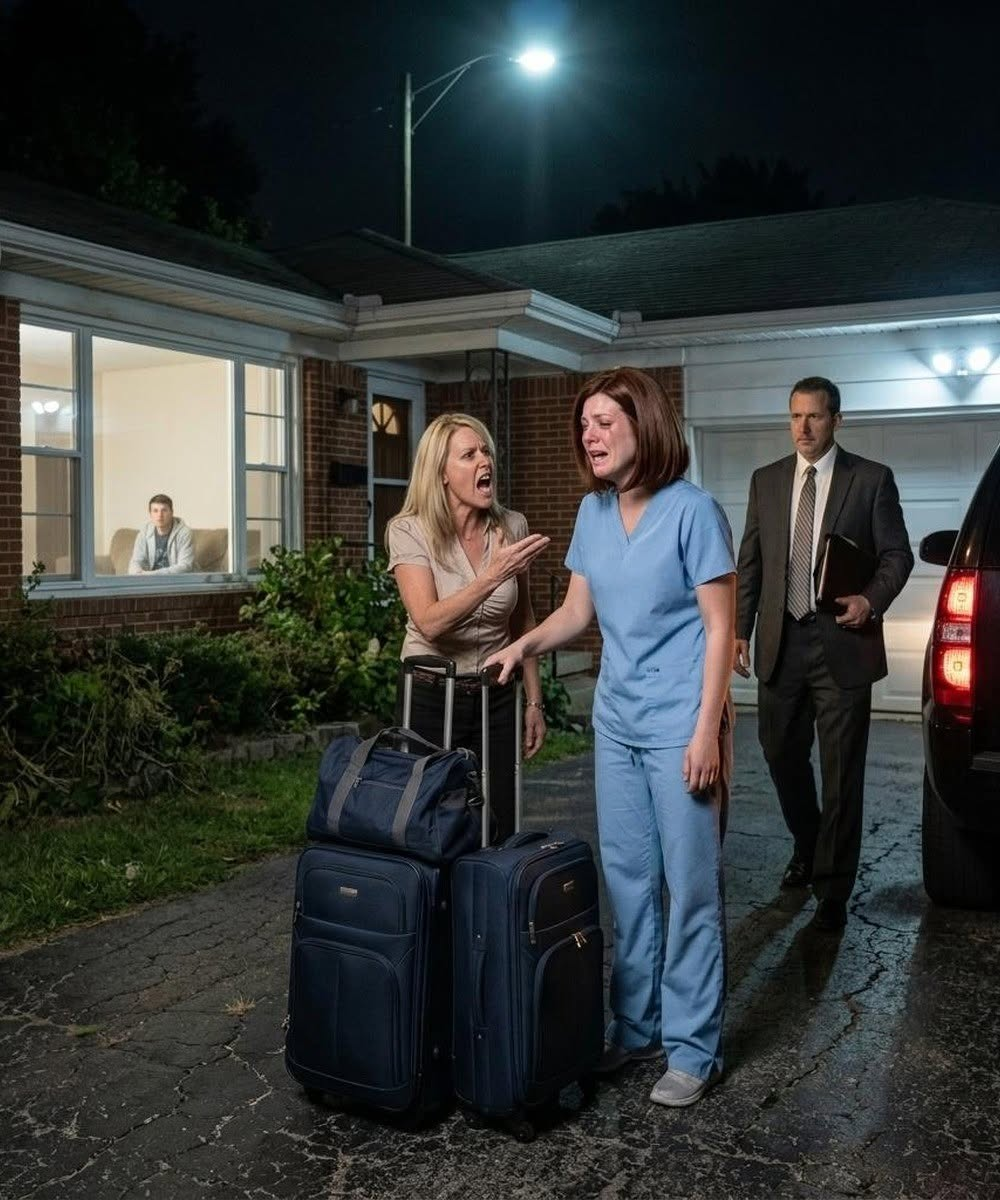
I had just finished a grueling twelve-hour night shift in the ICU, my feet throbbing and my mind exhausted from back-to-back emergencies, when I pulled into the driveway of what I still called home. The sun was just coming up, painting the neighborhood in soft morning light. That’s when I saw it — my clothes scattered across the front porch like discarded trash, some still on hangers, others crumpled in piles. My mother stood in the doorway with her arms crossed, her face twisted in that familiar mix of anger and satisfaction. “You think you can disrespect me under my roof?” she yelled. What she didn’t know in that moment was that this wasn’t her roof at all. It was mine. And that single revelation would change everything between us forever.
For years I had tolerated her cruelty because I thought I had no choice. After my father passed, my mother moved in with me while I was still in nursing school. I worked extra shifts to cover the mortgage and bills, believing I was helping family. She never contributed financially but controlled everything — criticizing my job, my friends, even the way I folded laundry. I told myself it was temporary, that blood was thicker than water. But the constant put-downs and power plays chipped away at my spirit. The night she threw my clothes out was the breaking point I had quietly been preparing for, even if she had no idea.
I stood there in my scrubs, staring at my scattered belongings, and felt something shift inside me. Instead of crying or begging, I calmly pulled out my phone and showed her the documents I had kept hidden for months. The house deed with only my name on it. The mortgage statements I had paid alone for the past four years. The renovation receipts funded entirely from my nursing salary and overtime. Her face went pale as she realized the truth. This home — the one she had lorded over like a queen — had been mine since I closed on it quietly after a surprise inheritance from my grandmother. I had let her believe it was still in the family’s old name to keep the peace. That decision was about to pay off in ways she never expected.
The confrontation that followed was raw and painful. She accused me of betrayal, of tricking her, of being ungrateful after everything she had “done” for me. But as I listened, I finally saw the pattern clearly. Her cruelty wasn’t new — it was lifelong. The way she had belittled my achievements, discouraged my independence, and made me feel small so she could feel big. Nursing had taught me about setting boundaries with difficult patients, but applying those lessons to family was far harder. In that moment on the porch, surrounded by my scattered uniforms and personal items, I made the decision I had delayed for too long. This house was my sanctuary, earned through long shifts, sacrifices, and quiet determination. It was time to reclaim it.
Over the next few days, I arranged for her belongings to be packed carefully. I offered to help her find suitable housing and even covered first month’s rent as a gesture of goodwill, but I made it clear the living arrangement was over. Friends and colleagues who knew my situation supported the decision, sharing their own stories of toxic family dynamics. Many nurses, in particular, understood the emotional drain of giving everything at work only to come home to more stress. One coworker told me, “You can’t pour from an empty cup, especially when someone keeps punching holes in it.”
The weeks that followed brought a strange mix of grief and liberation. I missed the idea of family more than the reality of our relationship. Nights were quieter now, without her constant criticism. I turned the spare room into a peaceful reading nook and planted flowers in the front yard — small acts of reclaiming space that felt incredibly healing. My shifts at the hospital became more manageable because I was no longer carrying the weight of walking on eggshells at home. I even started seeing a therapist who specialized in family estrangement, learning tools to process guilt without letting it control me.
This experience taught me several hard but valuable lessons about family, boundaries, and self-worth. First, love and respect are not the same thing, and blood relation does not grant unlimited access to your life or peace. Second, financial independence is one of the greatest forms of freedom — it gives you choices when relationships turn toxic. Third, silence and endurance often enable bad behavior; speaking up, even when it’s uncomfortable, is an act of self-preservation. And finally, it’s okay to choose your own well-being over keeping the peace at any cost.
For anyone facing similar situations — whether with parents, in-laws, or other relatives — know that you are not alone. Many people, especially women in caregiving professions like nursing, find themselves trapped in unhealthy dynamics because they are natural helpers. Start by documenting important financial and legal information. Build a support network outside the family. Save quietly if you need to. And when the moment comes, trust your instincts. You deserve a home that feels safe, not a battlefield.
Today, my mother lives in her own apartment across town. We speak occasionally, but the relationship is on my terms now — limited, respectful, and protected by strong boundaries. She has never fully acknowledged her role in the breakdown, but I’ve made peace with that. My focus is on the life I’m building: advancing my nursing career, nurturing friendships, and creating the peaceful home I always wanted. The porch that once held my scattered clothes now features potted plants and a welcome mat that truly feels welcoming.
If you’re reading this and carrying the weight of a difficult family member under your roof, remember that change is possible. It may be painful and messy, but reclaiming your space and peace is worth it. You don’t have to tolerate cruelty, even from those who raised you. Strength isn’t always loud — sometimes it’s the quiet decision to stop enduring and start living on your own terms. My nursing shift that morning ended with chaos, but it began a new chapter of freedom I never knew I needed. Your turning point might be closer than you think. Trust yourself enough to take it when it arrives.
Most Popular!
-
 Expert Suggests New Approaches to Communication During Baby Diaper Changes
-
From Hollywood Stardom to Silence: The Actress Who Walked Away from Fame to Start Over with Baking
-
Demi Moore’s Heartfelt Birthday Tribute to Bruce Willis on His 71st Birthday Shows the Power of Enduring Love
-
This Little-Known 80s Horror Story Left a Lasting and Disturbing Impact
-
This Morning I Went Outside and Noticed Something Unusual on My Porch That Immediately Caught My Attention
-
After 15 Years, a State Questioned Her License Plate – What Happened Next Shocked Her
-
The Hidden Threat: How to Protect Your Savings from Modern Online Scams
-
I Missed My Prom Plans While Facing a Serious Stage 3 Diagnosis – What Happened Next Changed My Life