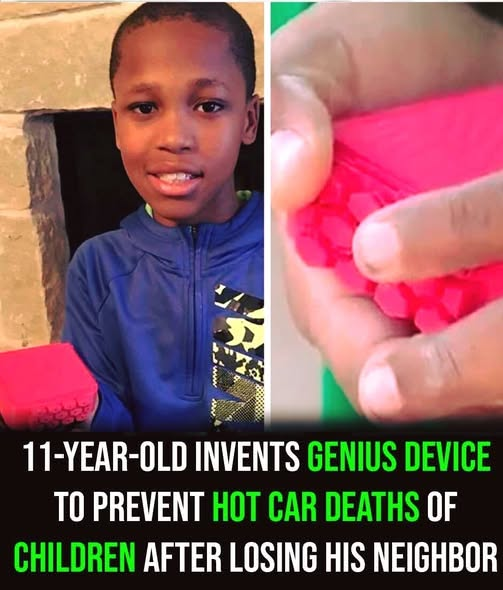
When most 11-year-olds are thinking about video games, sports practice, or weekend adventures, one remarkable young inventor was focused on something far more serious — saving lives. After learning about the devastating reality of hot car deaths, this bright child decided to take action. What began as a school science project has now become a potentially life-saving device that could prevent countless tragedies. This story isn’t just about a smart kid with a big idea — it’s about hope, ingenuity, and the power of young minds to solve problems that adults have struggled with for years. In a world that sometimes feels overwhelming, stories like this remind us that real change can start with curiosity and compassion in the heart of a child.
The inspiration struck after the young inventor heard a heartbreaking news story about a toddler who had been accidentally left in a car on a hot day. The statistics are sobering: dozens of children die each year in the United States alone from heatstroke after being left in vehicles, often due to busy parents simply forgetting in the chaos of daily life. The child couldn’t shake the thought that something so preventable was claiming innocent lives. Instead of just feeling sad, this young innovator decided to build something that could help. With support from teachers and family, the idea quickly moved from concept to prototype.
The device itself is impressively simple yet effective. It uses a combination of sensors, alarms, and smartphone connectivity to alert caregivers if a child is left in the vehicle. It monitors interior temperature, detects the presence of a child through weight or motion sensors, and sends notifications to parents’ phones while also activating visual and audio alerts inside and outside the car. What makes this invention stand out is its thoughtful design — affordable, easy to install, and focused on real-world usability rather than complicated technology that might fail when needed most. Early testing has shown promising results, with the device successfully triggering alerts in simulated scenarios.
This young inventor’s journey highlights several beautiful truths about creativity and problem-solving. First, age is not a barrier to making a real difference. Second, the best solutions often come from those closest to the problem — in this case, a child who could imagine the fear and helplessness of being left behind. Third, turning empathy into action is one of the most powerful forces for good. Teachers who worked with the student described a quiet determination mixed with genuine excitement about helping others. The project wasn’t just about winning a science fair — it was about creating something that could save lives.
Parents and safety advocates have responded with overwhelming support. Hot car deaths are particularly tragic because they are almost always preventable. Busy schedules, changes in routine, and the natural distractions of daily life can lead even the most attentive caregivers to make fatal mistakes. Devices like this one add an important layer of protection — not replacing parental responsibility, but serving as a reliable backup when human memory fails. Organizations working on child passenger safety have expressed interest in partnering to help refine and distribute the technology more widely.
The story also shines a light on the importance of encouraging STEM education and creative thinking in children. When young people are given the tools, support, and freedom to explore ideas, they often come up with solutions that adults might overlook. This 11-year-old’s invention joins a growing list of youth-led innovations that address real-world problems — from environmental solutions to accessibility tools. Schools and families play a crucial role in nurturing this kind of thinking by celebrating curiosity and providing opportunities for hands-on learning.
For families who have lost children to hot car tragedies, this invention brings a mix of emotions. While nothing can bring their loved ones back, knowing that a child is working to prevent future deaths offers a small measure of comfort and hope. Many bereaved parents have become powerful advocates for awareness and technology solutions, and they have welcomed this young inventor’s efforts with open arms. Their courage in sharing their stories has helped drive progress and keep the issue in the public consciousness.
Practical prevention tips remain essential alongside any new technology. Never leave children alone in a vehicle, even for a moment. Use visual reminders like placing a stuffed animal in the front seat when a child is in the back. Take advantage of apps and built-in vehicle alerts that many newer cars now offer. Develop habits like always checking the back seat when you park, especially when routines change. These simple practices, combined with innovative solutions like this young inventor’s device, create multiple layers of protection that can save lives.
As this story continues to unfold, the young inventor remains humble and focused on improving the prototype. Their goal isn’t fame or fortune but making sure no other child has to suffer because they were accidentally forgotten. This kind of pure motivation is rare and beautiful. It reminds us that the next generation is capable of incredible things when given the chance to dream big and act with compassion. Watching a child turn sadness into solutions is one of the most hopeful things we can witness in a sometimes difficult world.
The invention of this life-saving device by an 11-year-old proves that innovation can come from anywhere. It challenges us all to look at problems differently and to believe that meaningful change is possible when we combine empathy with creativity. For parents, educators, and anyone who works with children, this story serves as powerful inspiration to nurture curiosity and support big ideas, no matter how young the dreamer.
In the end, this isn’t just about one clever invention — it’s about the power of caring enough to try. An 11-year-old saw a problem and refused to accept it as inevitable. That kind of determination, combined with practical action, is exactly what the world needs more of. As the device moves closer to wider availability, countless families may one day owe their peace of mind — and possibly their children’s lives — to a child who decided to make a difference. The future looks a little brighter knowing that young minds like this are paying attention and working toward solutions. Keep dreaming big, young inventor. The world is watching and cheering you on.
Most Popular!
-
 Donald Trump Releases Shocking Health Report but Critics Point to Hidden Details and Missing Data That Could Change Everything
-
The Unholy War Between the White House and the Vatican: Why JD Vance’s Shocking Accusation Against Pope Leo Has the Entire World Bracing for a Spiritual Collapse
-
Chilling Reports of US and Iran War Send Global Markets into Total Chaos as Truth Behind Downed Fighter Jet Finally Revealed
-
The Truth About What Happens to Your Body When You Eat Walnuts Every Day, According to Top Medical Experts
-
Brandi Passante Sends Internet Into Total Meltdown After Stunning New Beach Photos Go Viral Across Social Media
-
Where Are They Now: The Heartstopping True Story of Britain’s Youngest Parents Who Shocked the Nation at Fourteen Years Old
-
Why You Are Waking Up at One AM Every Night and the Shocking Spiritual Warning Your Body Is Trying to Send You Before It Is Too Late
-
Unprecedented Global Showdown as Trump Unleashes Chilling Two-Word Attack on Pope Leo Amid International Crisis