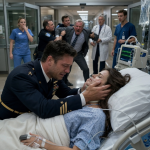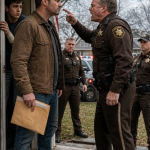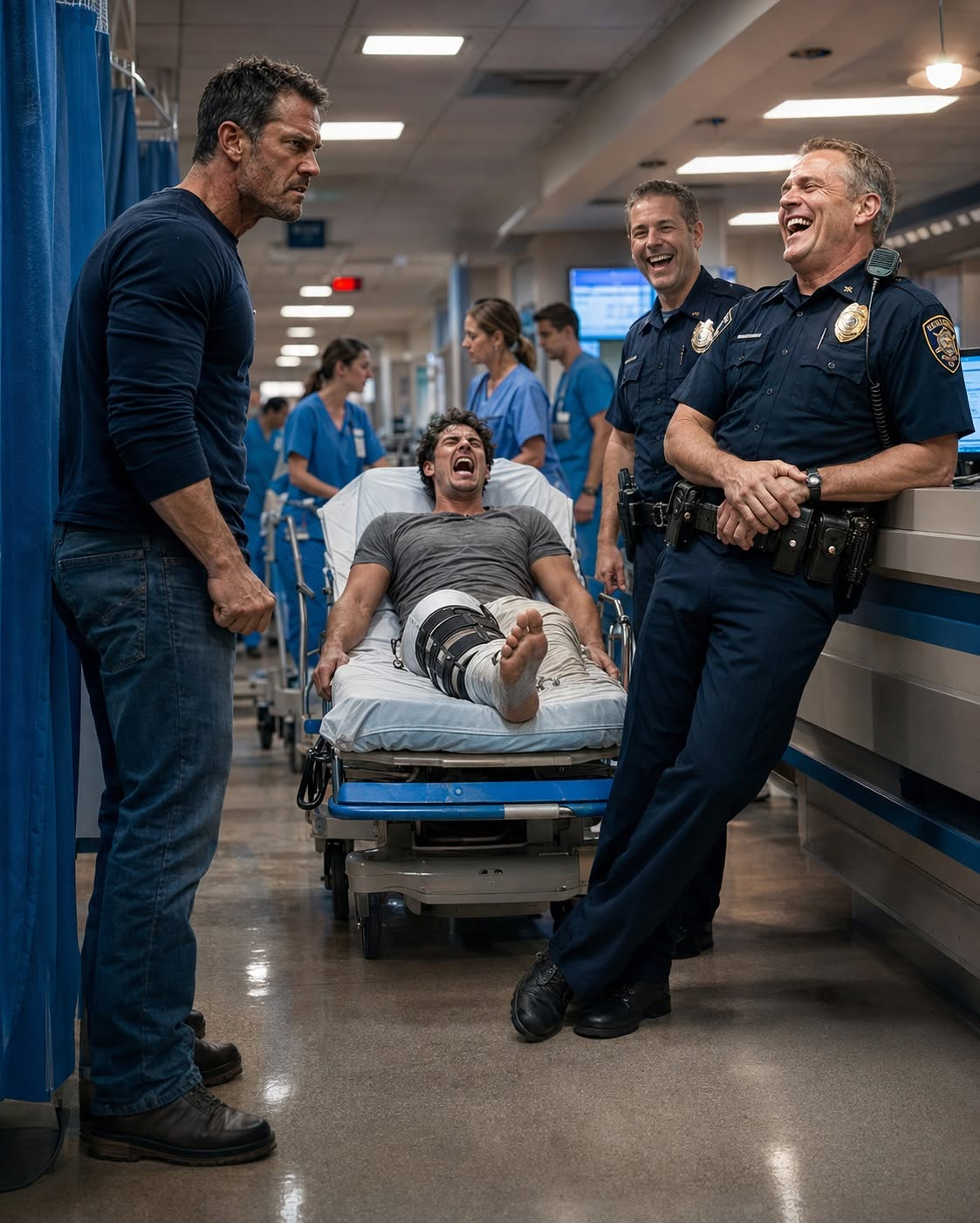
The fluorescent lights in the emergency room felt blinding as I cradled my twelve-year-old son, Jamal, in my arms. Blood soaked through his jeans where the police cruiser had pinned his legs against the curb. His screams had faded into weak whimpers, but the pain in his eyes was unbearable. I had rushed him there after the officer who caused the accident followed us into the hospital, still wearing that same smirk. When the doctor described the fractures — multiple breaks in both femurs and a shattered kneecap — the officer actually laughed. A short, dismissive chuckle that echoed through the hallway. In that moment, something inside me broke and then hardened into steel. The mother who once trusted the system to protect her child was gone. In her place stood a woman ready to fight for justice, no matter how long or how painful the road ahead would be.
It started as an ordinary evening in our neighborhood. Jamal was riding his bike home from a friend’s house when a police cruiser came speeding around the corner. The officer later claimed he was responding to a call, but witnesses said there were no lights or sirens. Jamal swerved to avoid being hit, but the car clipped him, pinning his legs. Instead of immediate concern, the officer got out, looked at my injured son on the ground, and told him to “stop making a scene.” Neighbors called 911 while I raced there after getting the frantic call. By the time I arrived, Jamal was in shock, and the officer was already writing a report that painted my child as reckless. The laughter in the ER was just the beginning of the nightmare.
The days that followed were a blur of surgeries, pain management, and mounting frustration. Jamal faced months of physical therapy, nightmares about the sound of the engine, and the fear of ever riding his bike again. I filed every report, gathered witness statements, and contacted internal affairs. But the department closed ranks quickly. The officer had a clean record on paper and friends in high places. They suggested Jamal had been “darting into traffic” and that the incident was unfortunate but not criminal. The video from a nearby traffic camera mysteriously had gaps. I was told to accept the settlement offer and move on. But watching my son struggle to walk again, I couldn’t accept it. No mother could.
Support came from unexpected places. Other parents in the community shared similar stories of excessive force and cover-ups. A civil rights attorney took our case pro bono after seeing the evidence. The laughter in the ER became the sound that fueled our fight — a symbol of the dehumanization we refused to accept. As the lawsuit progressed, more details emerged. The officer had a history of complaints that were buried. Body camera footage from previous incidents showed similar patterns of aggression. Public pressure grew as local news picked up the story. The department that once protected its own now faced scrutiny it couldn’t ignore.
Jamal’s recovery was slow and painful, but his spirit remained unbroken. He pushed through physical therapy with a determination that inspired everyone around him. We turned our living room into a temporary gym, celebrating small victories like standing without assistance or taking his first unaided steps. Through it all, I made sure he knew this fight wasn’t just about him — it was about every child who deserved to feel safe in their own neighborhood. The bond between us grew stronger in those difficult months. He taught me resilience while I taught him that seeking justice is an act of love.
The turning point came during the deposition when the officer was confronted with the full evidence. His laughter turned to deflection, then to visible discomfort as contradictions piled up. The department eventually settled for a significant amount that covered Jamal’s medical costs, future therapy, and created a college fund. More importantly, the officer was placed on administrative leave pending further investigation, and policy changes were implemented in the department. It wasn’t perfect justice, but it was a start. Other families began coming forward, encouraged by our willingness to speak up.
This ordeal taught our family and community several painful but necessary lessons. First, a child’s safety should never be secondary to protecting an officer’s image. Second, silence and settlements without accountability only allow harm to continue. Third, one mother’s refusal to stay quiet can create ripples that protect many others. And finally, true healing comes not just from winning in court, but from watching your child regain confidence and joy despite the scars they carry.
Today, Jamal walks without a limp most days. He rides his bike again, though he stays on quieter streets. He talks openly about the incident, using his experience to advocate for other kids in school presentations. I’ve become more involved in police reform groups, channeling the anger into action that creates real change. The house that once echoed with hospital visits now fills with laughter and normal teenage energy. The mother who held her broken son in the ER has learned what real strength looks like — it looks like showing up every single day for your child’s recovery and their future.
For any parent who has watched their child harmed by those sworn to protect them, know that your voice matters. Document everything. Seek strong legal help. Connect with advocacy groups. And never let them make you feel like your child’s pain is an inconvenience. Jamal’s broken legs healed, but the system’s failure left deeper wounds. Our fight didn’t just get him justice — it helped expose problems that had been ignored for too long. The officer who laughed in the ER eventually faced consequences. The department that tried to bury the truth had to confront it. And the boy who once cried in pain now stands taller, knowing his mother refused to let his suffering be forgotten.
The road to healing is long, but every step forward honors the child who deserved better. I no longer see the incident as just a tragedy. It became the catalyst that taught our family resilience, our community awareness, and me the power of a mother’s love when it refuses to stay silent. Jamal still has bad days, but he also has hope. And in that hope lies the promise that no child’s pain has to be the end of their story — it can become the beginning of change for everyone who comes after them. The laughter that once mocked us now echoes as a reminder that truth eventually wins, even when the fight feels impossible. We lost innocence that night, but we gained something stronger — a voice that will not be silenced.
Most Popular!
-
 My Brother Locked His Son Outside All Night as “Consequences” — Then His Wife Revealed the Cameras Hidden in the Boy’s Room
-
My Father-in-Law and His Eight Sons Brutalized My Pregnant Wife So Severely That We Lost Our Unborn Child
-
I Married a Lonely Old Woman for Her Money and a Place to Live — But After Her Funeral, Everything Changed
-
I Crashed My Ex-Husband’s Wedding With Our Four Children He Never Knew Existed — Then His Father Realized They Had Rights to Everything
-
A Billionaire Saw His Ex-Wife With Triplets in a Tiny Bistro — Then One Little Boy Looked Up and Exposed the Secret That Had Been Hidden for Five Years
-
The Sheriff’s Son Broke My Child’s Arm — Then the Truth About His Father’s Department Destroyed Everything
-
The Morning After We Buried My Father, My Ex-Husband’s New Wife Walked Straight Into His Garden And Told Me I Should Begin Packing My Belongings
-
I Hid My Pregnancy From My Ex-Husband After Our Divorce — Then He Pulled Down His Mask in the Delivery Room and Realized the Baby Was His