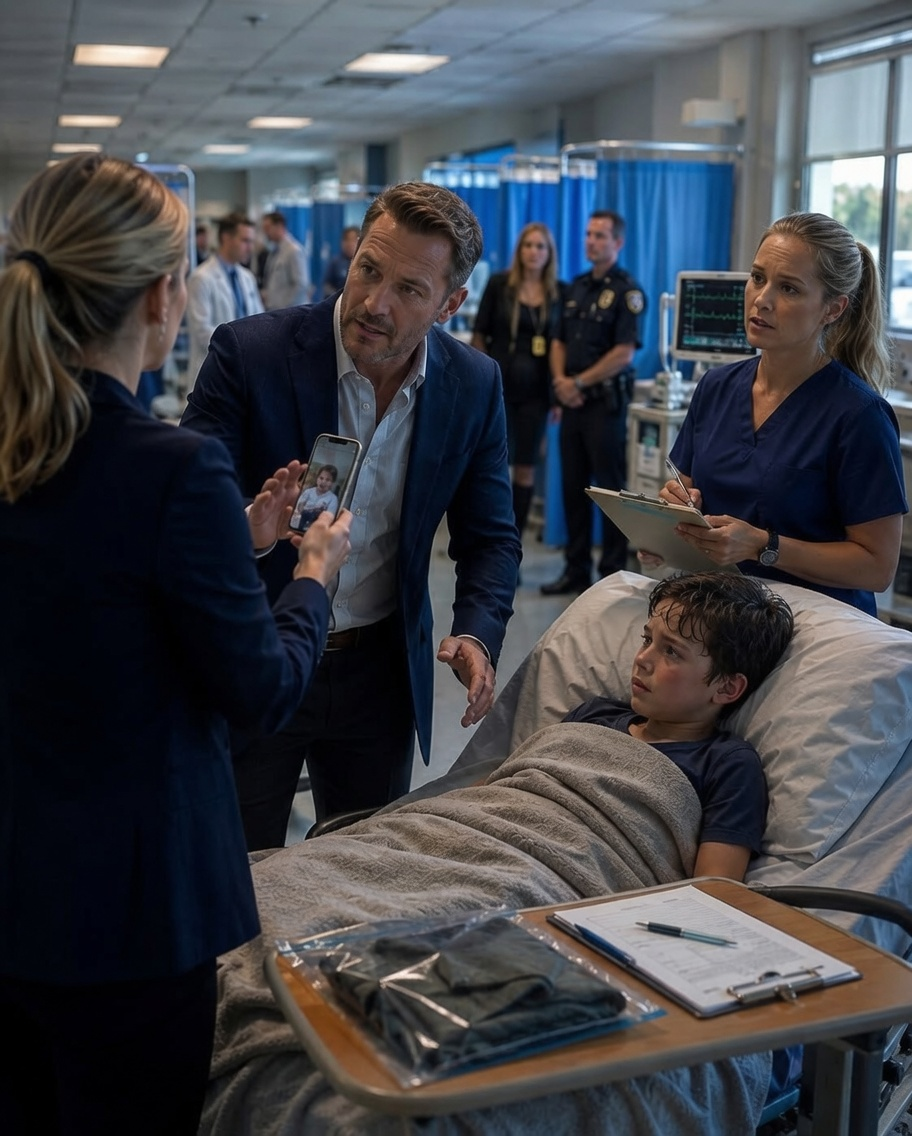
The emergency room lights buzzed overhead as I held my nephew Noah wrapped in warm blankets, his small body still shivering from hours spent in the cold. At just eight years old, he had walked nearly five miles in wet clothes after his father locked him out of the house. When the CPS investigator arrived and looked my brother Grant straight in the eyes, the carefully constructed image of their perfect family began to crack. What started as a desperate middle-of-the-night call from my nephew turned into revelations that exposed years of control, neglect, and secrets hidden behind closed doors. The brother I thought I knew had become someone I no longer recognized, and protecting Noah meant facing truths that would shatter our entire family.
I had always tried to maintain a relationship with Grant and his wife Celeste for the sake of their children. They lived in a beautiful house in a good neighborhood, and on the surface, everything looked ideal. But over the past year, Noah had grown quieter during our visits. He flinched at loud voices and seemed terrified of making mistakes. I brushed off my concerns as overprotective aunt behavior, telling myself Grant was simply strict like our own father had been. That illusion ended the night Noah showed up at my apartment door soaked and freezing, begging me not to call his parents. He had been locked outside after an argument about a forgotten chore, left to face the elements as a lesson in “respect.”
The hospital became the place where the truth finally emerged. Grant and Celeste arrived looking composed at first, spinning stories about an “accident” and how Noah had locked himself out. But the CPS investigator wasn’t buying it. When Noah, still wrapped in blankets, quietly confirmed that his father had changed the door code and left him outside on purpose, the room grew heavy with silence. Celeste broke down, whispering through tears that she thought Grant had let him back in. The fear in Noah’s eyes whenever his father spoke told a much darker story than any of their excuses. As a mother myself, watching my nephew tremble at the sound of Grant’s voice broke something inside me. No child should live in that kind of fear.
Then Celeste said the words that changed everything. “There are cameras,” she whispered. “Inside Noah’s room.” Grant’s face went pale. The CPS investigator immediately pressed for details, and what came out next was worse than I could have imagined. The cameras weren’t for safety — they were part of a system of constant surveillance and control. Grant had been monitoring Noah’s every move, punishing small infractions with extreme measures, all while presenting themselves as the ideal family to the outside world. The investigator’s expression hardened as more details emerged about previous ignored complaints and how Grant’s influence in the community had silenced concerns before.
The days that followed were a whirlwind of interviews, home visits, and legal proceedings. Noah stayed with me while the investigation deepened. Other family members came forward with stories they had been too afraid to share. Grant’s carefully built image of success and discipline crumbled as evidence of emotional and psychological abuse came to light. Celeste, caught between loyalty and guilt, ultimately chose to cooperate with authorities, admitting she had been too scared to challenge her husband’s methods. The man who thought locking his son outside would teach respect found himself facing charges and losing custody. Noah’s bravery in speaking up that night in the ER became the catalyst that freed him from years of fear.
Rebuilding trust and healing took time, patience, and professional support. Noah started therapy and slowly began to smile again, playing without constantly looking over his shoulder. I became his legal guardian, creating a home filled with safety, consistency, and unconditional love. Grant faced significant consequences, including supervised visitation only after completing extensive programs. The family that had been fractured by control and silence started finding new ways to connect based on respect rather than fear. Celeste sought help for herself, determined to become the mother her children deserved without living under constant intimidation.
This heartbreaking experience taught our family — and continues to teach others — several crucial lessons about child protection and speaking up. First, a child’s fear is never an exaggeration; it is a signal that something is deeply wrong. Second, no amount of outward success or community standing justifies abuse behind closed doors. Third, one person’s courage to tell the truth can break cycles that have lasted for years. And finally, protecting children sometimes means making the difficult choice to involve authorities even when it feels like betrayal. Noah’s story reminds us that silence enables harm, while truth brings healing.
Today, Noah thrives in school, has close friends, and sleeps peacefully knowing he is safe. He still sees his father under strict supervision, but the fear that once defined his life has been replaced with hope and stability. I’ve become more involved in local child advocacy groups, sharing our story to help other families recognize the warning signs. The aunt who answered a desperate knock at her door in the middle of the night now watches her nephew grow into a confident, joyful boy who knows he is loved and protected.
For any parent, relative, or neighbor who suspects a child is living in fear, know that your instincts matter. Document what you see. Reach out to professionals. And remember that intervening, though difficult, can save a child from years of suffering. Noah’s hypothermia and that freezing night became the turning point that exposed a household built on control rather than love. The brother who thought he could punish his son into obedience learned that consequences have a way of finding those who harm the innocent. And the little boy who once locked himself outside for “disrespect” now knows what real respect and safety feel like.
The cameras hidden in his room were meant to control him. Instead, they helped document the truth that set him free. Our family lost the illusion of perfection, but we gained something far more valuable — healing, honesty, and a chance to build relationships based on trust rather than fear. If you’re watching a child suffer in silence, speak up. One voice in an emergency room or at a front door can change everything. Noah taught me that courage isn’t loud or dramatic. Sometimes it’s a small boy finally lifting his eyes and telling the truth. And that truth saved him. It can save others too. The mother who lost her grandson that night and the aunt who gained a son through protection now stand together stronger, knowing that love — real love — always fights for the innocent.
Most Popular!
-
 The Cop Who Crushed My Son’s Legs Laughed in the ER
-
My Father-in-Law and His Eight Sons Brutalized My Pregnant Wife So Severely That We Lost Our Unborn Child
-
I Married a Lonely Old Woman for Her Money and a Place to Live — But After Her Funeral, Everything Changed
-
I Crashed My Ex-Husband’s Wedding With Our Four Children He Never Knew Existed — Then His Father Realized They Had Rights to Everything
-
A Billionaire Saw His Ex-Wife With Triplets in a Tiny Bistro — Then One Little Boy Looked Up and Exposed the Secret That Had Been Hidden for Five Years
-
The Sheriff’s Son Broke My Child’s Arm — Then the Truth About His Father’s Department Destroyed Everything
-
The Morning After We Buried My Father, My Ex-Husband’s New Wife Walked Straight Into His Garden And Told Me I Should Begin Packing My Belongings
-
I Hid My Pregnancy From My Ex-Husband After Our Divorce — Then He Pulled Down His Mask in the Delivery Room and Realized the Baby Was His