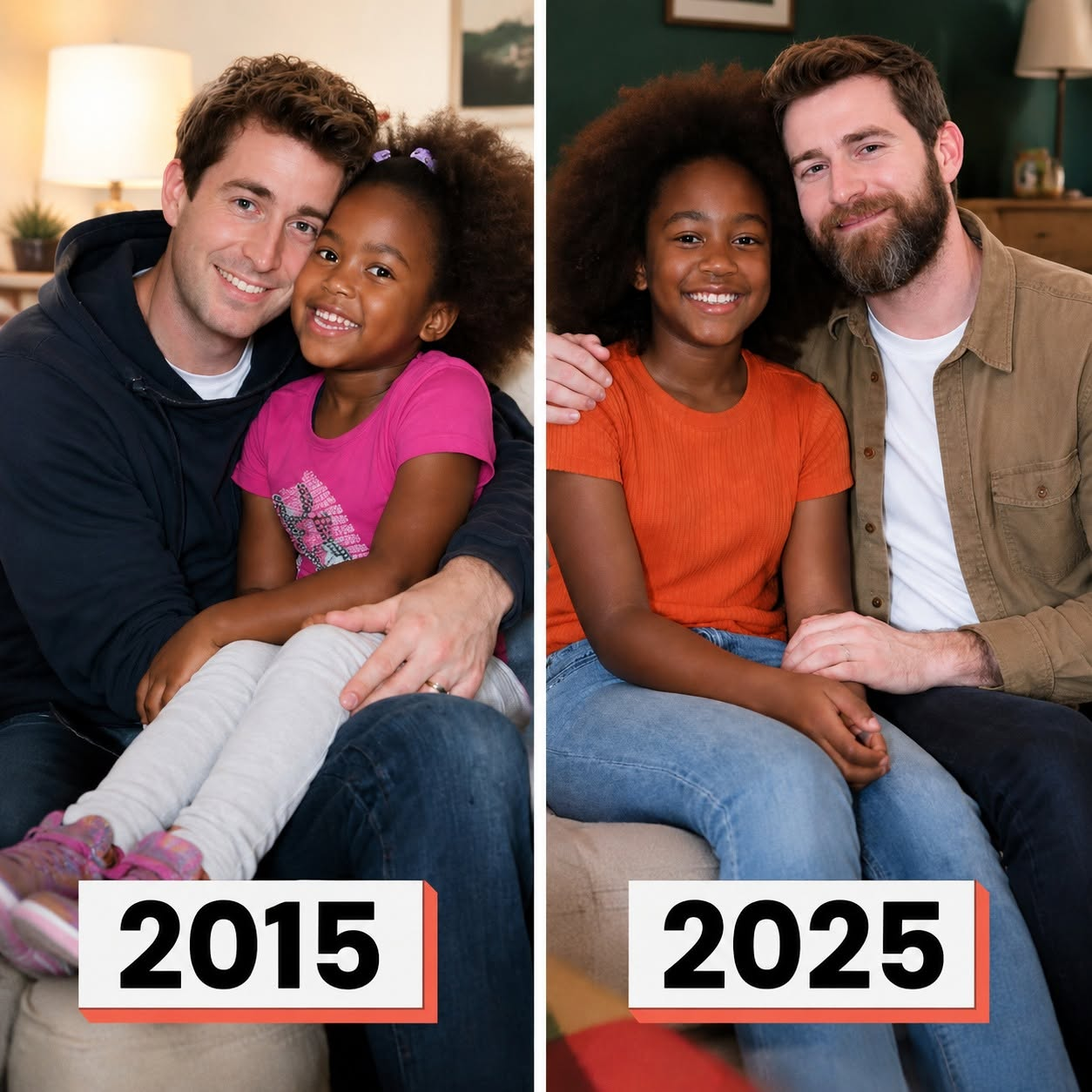
Some bonds are formed by blood. Others are built through sleepless nights, shared laughter, scraped knees, and the quiet decision to show up every single day even when your heart is breaking. For ten years, I raised Sophia as my own daughter after losing her mother, my partner Elena, to a sudden illness. Sophia was only four when Elena passed, too young to fully understand why her world had shattered. I stepped in without hesitation, becoming the father she needed even though we shared no DNA. I learned to braid her hair, stayed up late helping with homework, cheered at every soccer game, and held her through nightmares. She called me Dad. I called her my girl. We built a beautiful life together filled with love, routines, and the kind of quiet strength that comes from choosing each other every day. Then one ordinary Tuesday evening, at fourteen years old, Sophia sat me down and said the words that felt like a knife to my heart: “I want to live with my biological father.”
The room spun. I had known about Sophia’s biological father, of course. Elena had been honest with me from the beginning of our relationship. He had been absent from the start, choosing a carefree lifestyle over responsibility. He had never paid child support, never shown up for birthdays, never even sent a card. When Elena got sick, he was nowhere to be found. I had stepped into the role completely, legally adopting Sophia after her mother’s passing because it felt like the most natural thing in the world. She was my daughter in every way that mattered. Hearing her say she wanted to leave shattered something deep inside me. But what hurt even more was the look in her eyes — a mix of guilt, confusion, and a longing I couldn’t fix.
That night, after Sophia went to bed, I sat alone in the living room surrounded by photos of the life we had built together. The first day of kindergarten. Her gap-toothed smile at age seven. The father-daughter dance at her school event where she had proudly told everyone I was her real dad. How had we gotten here? I thought back over the years, searching for signs I might have missed. Sophia had started asking more questions about her biological father around age twelve, after a school project on family trees. I had answered honestly but gently, never speaking badly about him but also never hiding the truth of his absence. I encouraged her curiosity while reassuring her that family is about love and presence, not blood. Apparently, my words hadn’t been enough to quiet the questions growing inside her.
The weeks that followed were some of the hardest of my life. Sophia’s biological father, now remarried with a new family, had suddenly reached out after seeing a social media post. He expressed interest in “getting to know his daughter.” Sophia, curious and hurting in ways I couldn’t fully reach, wanted to explore that connection. I felt betrayed, angry, and terrified all at once. I had given this child everything — my time, my heart, my unconditional love — and now she was choosing the man who had never shown up. But beneath the pain, I understood something important. Sophia wasn’t rejecting me. She was trying to understand where she came from. Denying her that curiosity would only push her further away.
We made a careful plan together. Sophia would spend weekends with her biological father while continuing to live primarily with me. I attended therapy to process my own grief and fear of abandonment. Sophia started seeing a counselor who specialized in adoption and blended families. The transition was messy and painful. There were tears, arguments, and moments when I worried I was losing my daughter forever. But there were also moments of grace. Sophia would come home from visits and immediately seek me out for our familiar bedtime talks. She still called me Dad. She still needed me to help with math homework and to cheer at her games. The bond we had built over ten years proved stronger than biology.
What surprised me most during this season was how much I grew as a father. I learned to listen without trying to fix everything. I learned to share her without feeling like I was losing her. I learned that love isn’t possession — it’s wanting what’s best for your child even when it breaks your heart. Sophia’s biological father turned out to be decent but distant, still struggling with the responsibilities he had avoided for so long. Sophia quickly realized that the fantasy of a perfect relationship with him couldn’t compare to the steady, everyday love we had built together. After several months of visits, she chose to return home full-time while keeping occasional contact with him. The experience brought us closer than ever before.
This journey taught me several profound lessons about love, identity, and what it truly means to be a parent. First, children need to know their full story, even when it’s complicated. Shielding them from truth often creates more questions and distance. Second, biology matters, but it doesn’t define the depth of a bond. The years I spent showing up for Sophia created something stronger than DNA. Third, fear of loss can make us cling too tightly. Giving Sophia space to explore her curiosity actually strengthened our relationship rather than weakening it.
Today, Sophia is sixteen and thriving. She still calls me Dad without hesitation. We talk openly about her biological father and her feelings about their relationship. She has become a confident, compassionate young woman who understands that family can be both chosen and born. Our home is filled with laughter again, and the pain of that difficult season has transformed into deeper appreciation for the bond we share.
For anyone raising a child who isn’t biologically theirs, or navigating complicated family dynamics, please know you’re not alone. Your love matters. Your presence matters. The years you invest in showing up consistently create a foundation that biology alone cannot match. At the same time, allow space for questions and curiosity. Children need to understand their full story to feel whole. Support them through that journey while reminding them that your love remains steady and unconditional.
My story didn’t end with heartbreak. It ended with healing, deeper connection, and a reminder that real family is built through choice and commitment rather than chance. The man who once feared losing his daughter discovered that love given freely creates bonds that even biology cannot break. And the girl who wondered about her biological father learned that the dad who chose her every single day was the one who truly mattered most.
If you’re walking through a similar season of doubt, identity questions, or fear of loss, hold on. The love you’ve poured out is not wasted. The child who tests your bond is often the one who needs your steady presence most. Keep showing up. Keep choosing love. The story isn’t over yet, and the most beautiful chapters often come after the hardest ones. Sophia and I are living proof that sometimes the family you build through sacrifice and devotion becomes the strongest one of all. And that kind of love — the kind that chooses to stay — is worth every difficult moment it takes to protect it.
Most Popular!
-
 10 Unusual Signs of Stroke in Women That Could Save Your Life If You Spot Them Early
-
After My Wife Was Gone, I Found a Divorce Decree From 20 Years Ago — And the Family Secret That Followed Changed Everything
-
The Day My Son’s Bride Slapped Me — And How It Set Me Free
-
Orphanage Sweethearts Finally Marry — A Long-Lost Letter and Life-Changing Inheritance Gave Them the Dream Home They Never Thought Possible
-
Little-Known Mistakes and Bloopers in The Rifleman That Fans Still Debate Today
-
Shocking New Presidential Polls Reveal Where Americans Stand on Donald Trump
-
The Natural Power of Cloves: Home Remedies for Better Health at Any Age
-
After Eleven Years of Marriage, My Husband Left Me for Someone Younger — But When Karma Struck, He Came Crawling Back