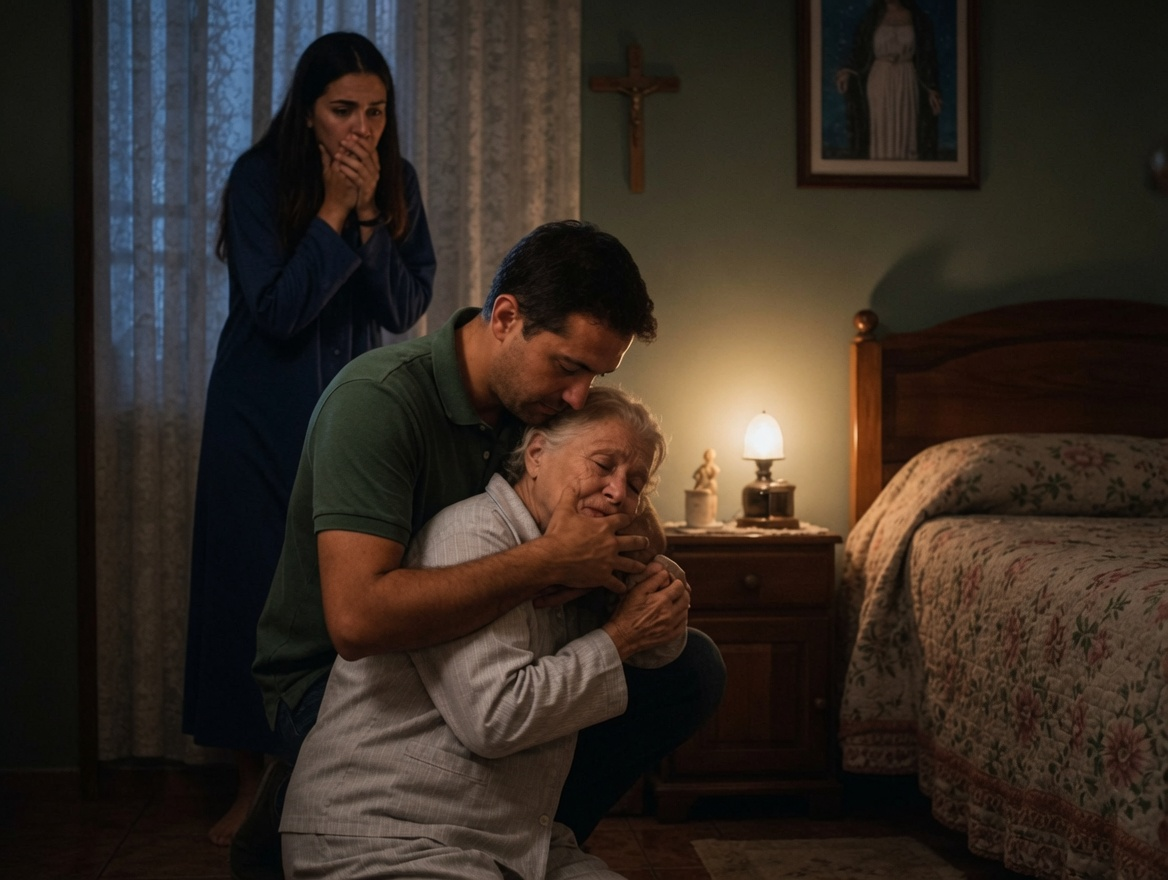
Grace had always believed that love was supposed to feel safe. Not perfect, not without challenges, but fundamentally safe. After twenty-three years of marriage to Thomas, she had built her understanding of love around the steady rhythm of their life together: morning coffee shared in comfortable silence, Sunday drives to the lake, and the way he always remembered to warm her side of the bed on cold nights before she climbed in. Their two children were grown and thriving, their home was paid for, and their retirement dreams were quietly taking shape. On the surface, everything looked exactly as it should. But beneath that surface, something had been shifting for years, and Grace was about to discover just how much she had been missing.
It was a Thursday night in late October when everything changed. Thomas had gone to bed early, complaining of a headache. Grace stayed up to finish reading a novel she had been savoring for weeks. Around eleven-thirty, she finally closed the book and headed to the kitchen for a glass of water. As she passed Thomas’s study, she noticed his laptop was still open, the screen glowing softly in the dark room. Normally she would have closed it without a second thought. But something made her pause. A small notification light was blinking. Against her better judgment, she moved closer.
What she found wasn’t a single secret. It was an entire hidden life.
The emails went back more than four years. They were from a woman named Rebecca, someone Thomas had met at a work conference in Chicago. The messages weren’t crude or overtly sexual at first. They began as professional exchanges that slowly turned personal. Rebecca shared stories about her divorce, her struggles raising teenagers alone, and her fear of growing old without ever feeling truly seen. Thomas responded with a tenderness Grace hadn’t heard from him in years. He called her “beautiful” in ways he had stopped calling Grace. He offered advice, shared vulnerabilities, and created an emotional intimacy that had slowly drained from their own marriage without Grace even realizing it.
She sat in the dark study for nearly two hours, reading through years of correspondence. There were plans for coffee meetups during business trips, shared playlists, and inside jokes that made Grace feel like an outsider in her own life. The worst part wasn’t the emotional affair itself. It was the realization that Thomas had been slowly withdrawing from her while pouring his attention into someone else. All the nights he had come home tired and distant, all the weekends he claimed to need “space to think,” all the times Grace had convinced herself she was imagining the growing distance between them — it all made devastating sense now.
When Thomas woke up the next morning, Grace was sitting at the kitchen table with printed copies of the emails arranged neatly in front of her. She didn’t cry. She didn’t scream. She simply looked at him with a calm that came from somewhere deeper than anger and said, “I know about Rebecca. And I need you to leave the house today.”
The weeks that followed were some of the most difficult of Grace’s life. Thomas denied the emotional depth of the relationship at first, then admitted pieces of it while still trying to minimize the damage. He begged for forgiveness, promised counseling, and swore that Rebecca had only been a distraction during a stressful period at work. But Grace had spent too many years ignoring her intuition to believe him now. She moved through the separation with a clarity that surprised even her closest friends. She hired a lawyer, changed the locks, and began the painful process of untangling twenty-three years of shared finances and memories.
What surprised Grace most during this time wasn’t Thomas’s betrayal. It was her own strength. She discovered reserves of resilience she hadn’t known she possessed. Friends who had watched her marriage from the outside assumed she would fall apart. Instead, she began putting herself back together with deliberate, gentle care. She started therapy not to save her marriage but to understand how she had slowly disappeared inside it. She joined a women’s hiking group and rediscovered her love for nature. She took painting classes and allowed herself to create without worrying whether the results were good enough. For the first time in decades, she began asking herself what she wanted rather than what everyone else needed.
The healing process wasn’t linear. There were nights she cried for the life she thought she had built. There were mornings she woke up angry at herself for missing so many warning signs. But there were also moments of profound peace when she realized she was finally becoming the woman she had always been meant to be. The patience she had shown Thomas for years, she now turned toward herself. She allowed herself to grieve without rushing the process. She learned to sit with discomfort instead of trying to fix it immediately. Most importantly, she discovered that love — real, healthy love — begins with how we treat ourselves.
Six months after that fateful night, Grace received an unexpected letter from Rebecca. In it, the other woman expressed genuine remorse. She explained that she had ended contact with Thomas the moment she realized how deeply she had hurt another family. Rebecca shared her own struggles with loneliness and how Thomas’s attention had felt like a lifeline during a dark period. While Grace didn’t owe her forgiveness, reading the letter brought a strange sense of closure. It humanized the situation without excusing it. Both women had been seeking something they weren’t getting in their own lives. The difference was that Grace had chosen to find it within herself rather than outside her marriage.
Thomas’s journey was more complicated. He attended therapy alone at first, then eventually asked if Grace would join him for couples counseling. She agreed, not because she wanted to reconcile, but because she wanted to understand what had happened so she could fully release it. Through those sessions, she learned that Thomas had been carrying deep insecurities from his childhood that he had never addressed. His emotional affair wasn’t about falling out of love with her as much as it was about trying to feel important and desired during a period when he felt invisible in his own life. While this explanation brought some compassion, it didn’t change Grace’s decision to move forward separately. She had finally learned that understanding someone’s pain doesn’t mean you have to stay and absorb it.
Two years after that night in the study, Grace stood in her new apartment overlooking the river and felt something she hadn’t experienced in decades: genuine contentment. She had redecorated the space entirely in colors that made her happy. She had started dating again, slowly and intentionally, choosing partners who respected her boundaries and celebrated her independence. Most importantly, she had rebuilt her relationship with herself. The woman who had once shrunk to keep peace had learned to take up space with confidence and grace.
The experience taught her lessons she now shares with other women navigating similar heartbreaks. First, intuition is rarely wrong. When something feels off in a relationship, it usually is. Second, patience with yourself during healing is just as important as patience with others. Third, leaving a marriage doesn’t mean you failed. Sometimes it means you finally succeeded at choosing yourself. And fourth, the love you give yourself after betrayal becomes the foundation for every healthy relationship that follows.
Grace’s story isn’t unique, but it carries a powerful message about the strength that can emerge from pain. Many women stay in relationships that slowly erode their sense of self because they fear being alone or disappointing others. Grace’s journey shows that the other side of that fear contains freedom, self-discovery, and the possibility of deeper, more authentic love — both with others and with yourself.
Today, when Grace looks back on that night in the study, she no longer sees it as the end of her marriage. She sees it as the beginning of her return to herself. The truth hurt, but it also liberated her. And in that liberation, she found a version of love she had never known before — the steady, compassionate love she finally learned to give herself.
Sometimes the most important love stories aren’t the ones that begin with romance. They’re the ones that begin with a woman finally choosing herself after years of choosing everyone else. Grace’s story reminds us that healing is always possible, that patience with our own hearts is powerful medicine, and that the night everything falls apart can also be the night everything truly begins.
Most Popular!
-
 Eggs, Cholesterol, and Timing: What Actually Matters for Most People
-
When a Partner Leaves With More Than a Suitcase: Protecting Yourself From Financial Betrayal
-
When Financial Support Meets Contempt: Recognizing Exploitation Inside a Marriage
-
Why Some Sensory Toys and Household “Hacks” Do Not Belong in the Microwave
-
When Grief Clouds Judgment: Misreading Silence and the Quiet Ways People Show Care
-
When One Partner Does All the Hosting: Recognizing Imbalance Before Resentment Takes Over
-
How Many Holes Are in a T-Shirt? What a Simple Puzzle Reveals About How We See
-
The Quiet Stories Inside Secondhand Objects: When a Thrift-Store Find Carries Someone Else’s History