Some places on Earth seem designed to keep secrets. The Pyrenees mountain range, stretching along the border between France and Spain, is one of them. Its jagged peaks, deep valleys, and hidden crevices have swallowed stories for centuries. Hikers, shepherds, and adventurers have disappeared into its folds, leaving behind only questions. But few cases have captured the public imagination quite like the disappearance of Julián Herrera and his nine-year-old daughter Clara in the summer of 2020. What began as a simple father-daughter hike has become one of the most haunting unsolved mysteries of our time, with new clues emerging five years later that only deepen the enigma rather than resolve it.
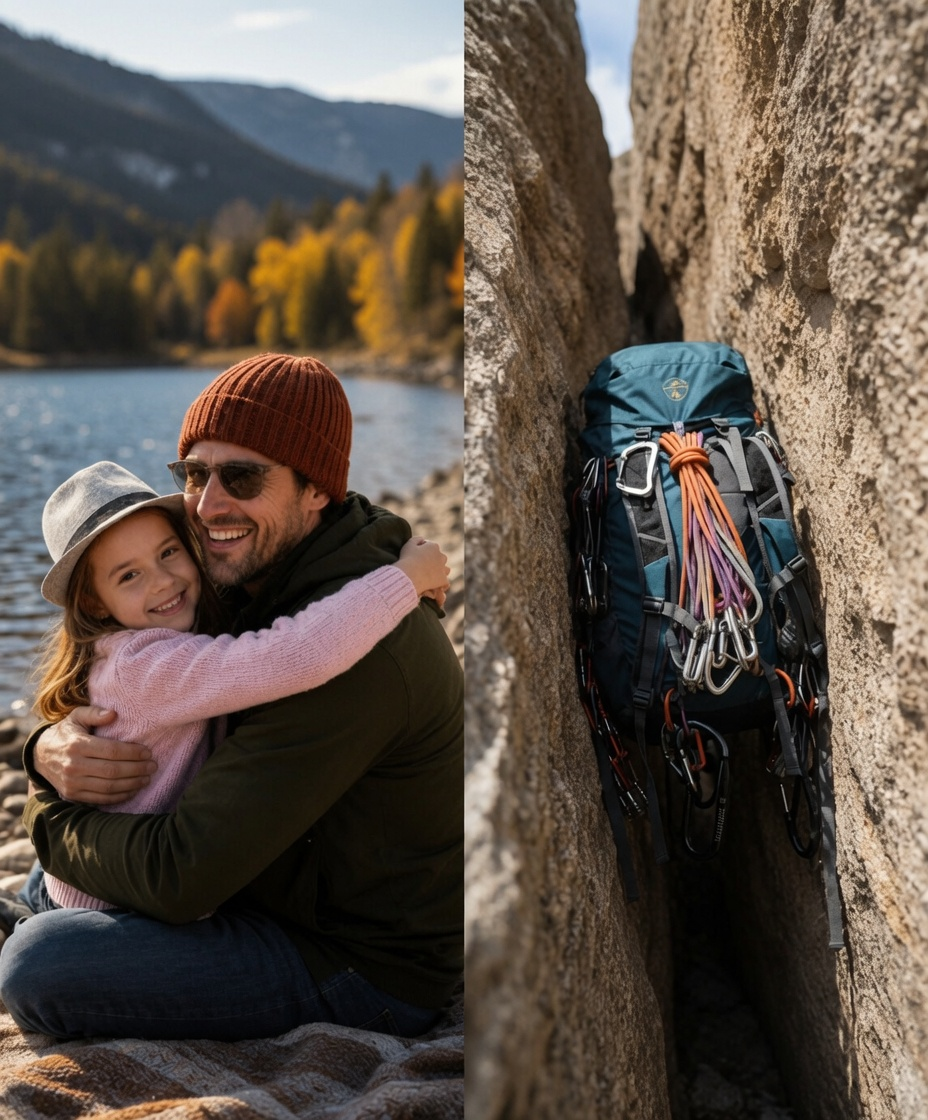
Julián Herrera was a 42-year-old photographer from a small town near Barcelona. He was known among friends as a devoted single father who cherished every moment with his daughter. Clara was a bright, curious nine-year-old who loved nature and often begged her father to take her on adventures. On August 12, 2020, they set out for what was supposed to be a short, well-marked day hike in the French Pyrenees near the dramatic natural formation known as Roland’s Breach. They carried light packs, plenty of water, snacks, and a map. They told relatives they would be back by evening. They never returned.
The initial search was massive. Helicopters scoured the ridges. Rescue dogs followed scent trails that went cold. Hundreds of volunteers combed trails and cliffs. For weeks, the story dominated headlines across Europe. Theories multiplied quickly. Some believed they had fallen into a hidden crevice. Others speculated they had wandered off the main path and become lost in the vast wilderness. A few darker voices whispered about foul play, though no evidence supported it. As summer turned to autumn and then winter, hope began to fade. The official search was eventually scaled back, leaving the family with grief and the public with an uncomfortable silence.
For five years, the case lingered in the background of public consciousness. Every anniversary brought renewed articles and fresh appeals from the family. Clara’s mother, who had been separated from Julián but remained close to her daughter, spoke movingly about the pain of not knowing. “Not knowing is its own kind of death,” she said in one interview. “You wake up every day wondering if today will be the day you finally get answers.”
Then, in late August of this year, everything changed again.
A couple from Catalonia, exploring a lesser-known path near Roland’s Breach, noticed something unusual. Tucked deep inside a narrow, almost invisible gap in the rock face was a weathered backpack. When they carefully pulled it free and examined it, they found Julián’s name stitched into the fabric. The discovery sent shockwaves through the region. Within hours, mountain rescue teams were on site. Captain Morel, who had led portions of the original search, personally oversaw the new operation.
What they found inside the backpack raised more questions than it answered. The items were surprisingly well-preserved considering the harsh mountain conditions. A water bottle, some food wrappers, a folded map. But the map contained fresh markings made with pen — markings that hadn’t been there during the original investigation. Someone had been updating the map long after Julián and Clara had disappeared.
Deeper exploration of the crevice revealed even more puzzling details. A piece of red fabric matching Julián’s jacket was found carefully placed rather than torn by accident. Food wrappers with expiration dates from years after the disappearance suggested someone had returned to the site with supplies. In a small protected pocket within the rock, rescuers discovered remnants of a makeshift shelter: a thermal blanket, short pieces of rope, and another notebook.
The notebook contained faded but partially readable entries. Words like “waiting,” “can’t climb out,” and “we hear voices” painted a picture of two people trying desperately to stay calm and hopeful in terrifying circumstances. One unfinished line hinted that Julián may have been injured and was encouraging Clara to stay safe. On the stone wall nearby, rescuers counted more than thirty groups of three small scratches — a careful tally of days that suggested they had survived in that space for at least a month.
The most disturbing discovery came later. A length of modern rope anchored near the top of the crevice didn’t match any equipment from the original search or rescue teams. Someone else had been there — possibly multiple times — long after the disappearance.
As investigators continue piecing together these fragments, the case has taken on an almost mythical quality. The Pyrenees have always held secrets. Ancient legends speak of hidden valleys, mysterious lights, and travelers who vanish only to reappear years later with stories no one fully believes. The Herrera case now joins that long tradition, but with modern technology and renewed public interest keeping it alive.
For the family, these new clues bring a complicated mix of hope and renewed pain. The possibility that Clara may have survived longer than previously thought — perhaps even escaped the crevice with help — offers a lifeline many had stopped daring to hold onto. At the same time, the uncertainty about what happened next is its own form of torment. Did someone find them and offer shelter? Did fear or injury prevent them from reaching safety? Why did that person choose to help quietly rather than alert authorities?
The psychological impact on everyone involved cannot be overstated. Search and rescue teams who worked the original case have spoken about how certain disappearances stay with them for life. Captain Morel, now retired, returned to help with the new search. In a recent interview, he admitted that this case had haunted him for five years. “Mountains don’t give up their secrets easily,” he said. “But sometimes they whisper just enough to keep you searching.”
For the broader public, the story resonates because it touches on universal fears. The idea that a parent and child can simply vanish during what should have been a safe, joyful outing challenges our sense of control over the world. It reminds us how vast and unforgiving nature can be, even in an age of GPS, satellite phones, and constant connectivity. It also raises uncomfortable questions about how much we truly know about the people and places around us.
As the investigation continues, experts are exploring multiple theories. One suggests Julián may have been injured in a fall and used the crevice as shelter while encouraging Clara to seek help. Another points to the possibility of a third party who found them but chose not to involve authorities for reasons that remain unclear. The presence of the modern rope and later-dated supplies strongly suggests human intervention at some point.
Whatever the final truth turns out to be, the story of Julián and Clara has already left an indelible mark. It has inspired renewed safety discussions among hikers. It has brought communities together in prayer and support. And it has reminded all of us that some mysteries refuse to be solved on our timeline. They linger, echo, and continue shaping lives long after the initial events fade from headlines.
Five years later, the Pyrenees still hold their secrets close. But with each new discovery, the silence feels a little less complete. Somewhere in those mountains, the final chapter of this story may still be waiting to be written. Until then, families, searchers, and all who have followed the case continue holding space for hope, for answers, and for the quiet courage of a father and daughter who faced the unknown together.
The mountains keep their watch. And we keep ours — waiting, wondering, and remembering that some stories refuse to end quietly, no matter how much time passes.
Most Popular!
-
 Eggs, Cholesterol, and Timing: What Actually Matters for Most People
-
When a Partner Leaves With More Than a Suitcase: Protecting Yourself From Financial Betrayal
-
When Financial Support Meets Contempt: Recognizing Exploitation Inside a Marriage
-
Why Some Sensory Toys and Household “Hacks” Do Not Belong in the Microwave
-
When Grief Clouds Judgment: Misreading Silence and the Quiet Ways People Show Care
-
When One Partner Does All the Hosting: Recognizing Imbalance Before Resentment Takes Over
-
How Many Holes Are in a T-Shirt? What a Simple Puzzle Reveals About How We See
-
The Quiet Stories Inside Secondhand Objects: When a Thrift-Store Find Carries Someone Else’s History