Eli Mercer had spent his entire life working the same 110 acres his father and grandfather had farmed before him. The land wasn’t rich, but it had always provided enough — until the drought hit Harper County harder than anyone could remember. By mid-July, his pastures were brown and his cattle were suffering. His only hope for water sat at the bottom of an old well everyone in the county had long dismissed as Mercer’s Folly.
When Eli drove his beat-up truck over to Clayton Harlan’s place to ask about buying water, he already knew it was a long shot. Clayton owned nearly two thousand acres, had modern irrigation systems, and multiple deep wells that kept his operation running smoothly. He also had a reputation for looking down on anyone who couldn’t keep up with his success. Still, Eli had no other options left.
Clayton didn’t even try to hide his amusement. He laughed at Eli’s old truck, at the size of his small operation, and especially at the mention of the dry well. He told Eli he should sell his cattle and his land while he still could, because men like him didn’t belong in modern farming anymore. Eli left without a drop of water, but with something stronger than anger — a quiet determination to prove that his family’s land still had life left in it.
Instead of giving up, Eli went back to his father’s old records and spent days studying county documents about the well. What he discovered surprised him. The well wasn’t completely dry. The water was simply moving too slowly through the rock to keep up with demand. If he could somehow get more water into the ground above it, the aquifer might recharge on its own.
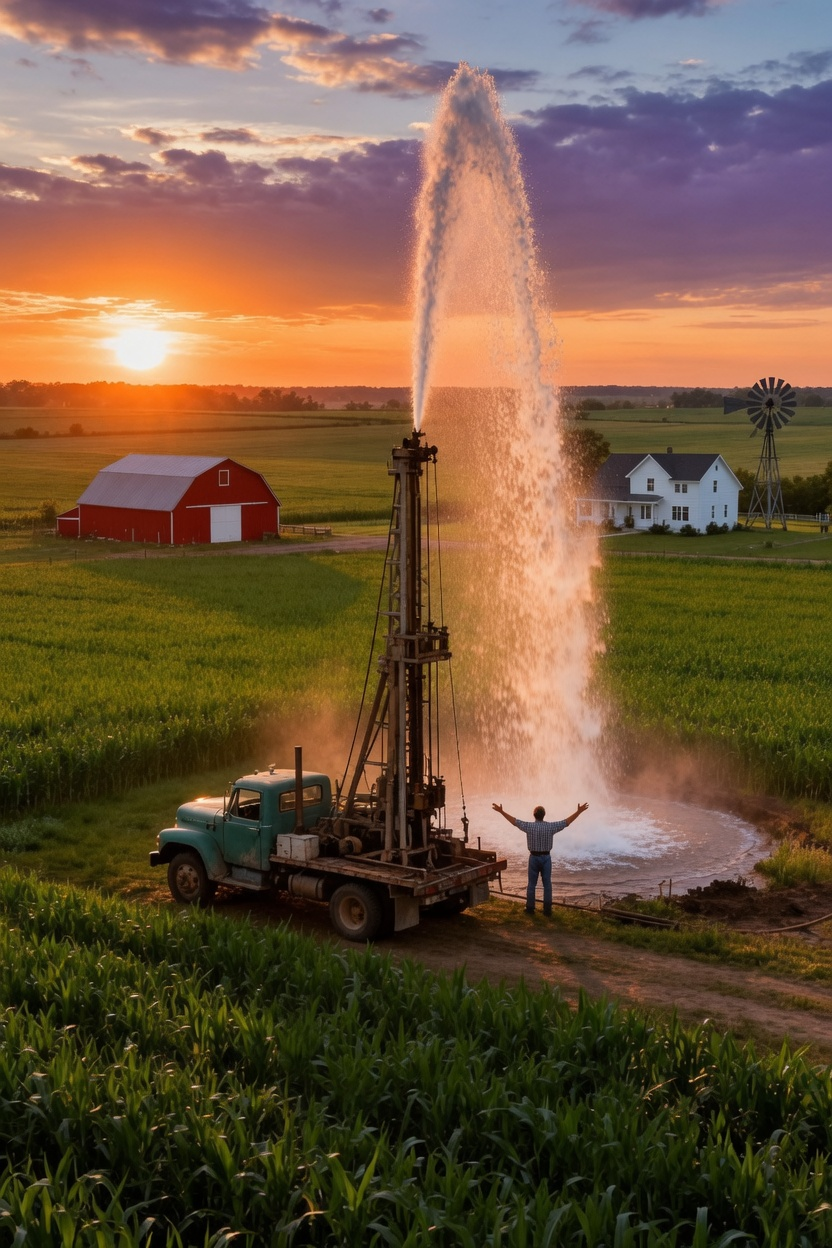
Eli began building what the neighbors jokingly called the trash heap well. He constructed a large settling basin lined with clay to catch rainwater. Below it, he dug a filtration trench filled with layers of stone, sand, and charcoal to clean the water before it reached the aquifer. He installed a small solar-powered pump to move water when needed. Every evening after working his land, he came home and kept building, even as Clayton and others drove by laughing at what they considered a waste of time.
When the heavy rains finally came in December, everything changed. Water flowed into the basin, filtered through the trench, and slowly began refilling the aquifer. Within days, the water level in the old well rose dramatically. Tests showed the water was clean enough to use. For the first time in months, Eli had reliable water on his land again.
Word of what he had done spread quickly through the county. Other farmers facing the same drought began asking questions. Some came to see the system for themselves. What had started as one man’s desperate attempt to save his cattle was quietly turning into something much bigger — a potential solution that could help the entire region survive the dry season.
Clayton Harlan didn’t take the news well. The same man who had mocked Eli now saw his smaller neighbor gaining attention and respect. He filed complaints with the county, claiming the recharge system was unsafe and could contaminate the groundwater. He even tried to pressure other farmers into staying away from Eli’s land. But the evidence was clear, and more people were paying attention to practical results than to old grudges.
At the county hearing, Eli didn’t argue with emotion. He simply showed the data — water levels before and after the rains, water quality tests, and the simple, low-cost design of his system. Several neighboring farmers spoke in support, explaining how they were now considering similar setups on their own properties. The evidence was hard to ignore.
What Clayton had dismissed as a trash heap turned out to be one of the most practical responses to the drought the county had seen. While his large operation continued relying on deep wells that were slowly being strained, Eli’s method worked with nature instead of against it. The irony wasn’t lost on the people who had once laughed at him.
In the end, the hearing didn’t just protect Eli’s right to use his own land. It opened a larger conversation about how the county could better manage water during difficult seasons. Several farmers began working together on similar recharge projects, sharing knowledge and resources instead of competing. The community that had once been divided by arrogance and pride started finding strength in cooperation.
Clayton Harlan eventually sold part of his land and moved on, no longer the dominant voice in local farming discussions. Eli never gloated. He simply kept improving his system and helping neighbors who asked for advice. The well that had once been called a folly became known as the one that helped save Harper County when it needed it most.
Sometimes the solutions we need most are the ones we almost throw away. Eli’s story wasn’t just about water or farming. It was about what happens when someone refuses to accept that their way of life is finished, even when powerful people tell them it is. In the end, the land he refused to give up on ended up giving something back — not just to him, but to everyone around him who was willing to look past pride and see what was actually possible.
Most Popular!
-
 Eggs, Cholesterol, and Timing: What Actually Matters for Most People
-
When a Partner Leaves With More Than a Suitcase: Protecting Yourself From Financial Betrayal
-
When Financial Support Meets Contempt: Recognizing Exploitation Inside a Marriage
-
Why Some Sensory Toys and Household “Hacks” Do Not Belong in the Microwave
-
When Grief Clouds Judgment: Misreading Silence and the Quiet Ways People Show Care
-
When One Partner Does All the Hosting: Recognizing Imbalance Before Resentment Takes Over
-
How Many Holes Are in a T-Shirt? What a Simple Puzzle Reveals About How We See
-
The Quiet Stories Inside Secondhand Objects: When a Thrift-Store Find Carries Someone Else’s History