Losing a spouse changes the shape of everyday life in ways that are hard to explain to anyone who hasn’t lived through it. After nearly twenty years of marriage, the routines that once felt ordinary suddenly became quiet reminders of absence. The house that had been filled with the sounds of two children growing up now held long stretches of stillness. In those early months after my husband’s sudden death, the future felt uncertain, and the idea of ever loving someone again seemed distant and almost impossible.
Through that difficult period, one person remained steadily present. He had been my husband’s closest friend since childhood, the kind of bond that felt more like family than simple friendship. He showed up without being asked, fixing what needed fixing around the house, sitting with my son in the garage during long silences, and making sure the refrigerator stayed stocked when cooking felt overwhelming. His help never came with expectations or pressure. It was simply the continuation of a promise he had made to someone he had loved like a brother.
Over time, our conversations shifted from shared memories of loss into something gentler and more present. We talked about ordinary things — work, the children’s lives, small hopes for the future. What began as comfort slowly grew into something neither of us had planned. It took honest conversations with each other and with our adult children before we allowed ourselves to name what was happening. Both kids, now in their early twenties and building their own lives, eventually gave their blessing. My husband’s mother also offered her quiet support, telling us that choosing happiness did not mean forgetting the past.
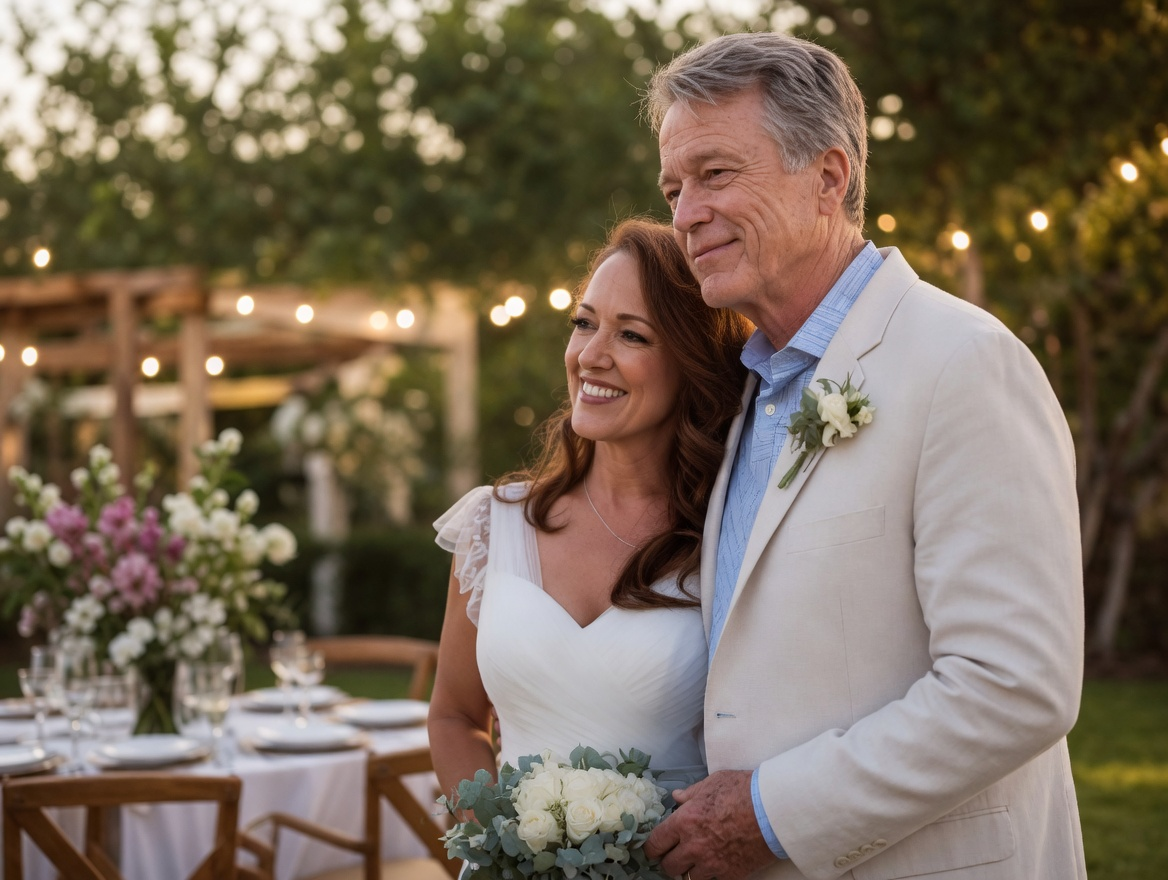
We kept the wedding small and meaningful, with simple vows that acknowledged the unusual path that had brought us together. Family members who had once gathered for other milestones now witnessed this new beginning. There was a gentle understanding in the room that this marriage carried layers of history, loyalty, and care. After the guests left and the lights were turned down, we finally had a moment alone in the quiet of what would become our shared home.
That night, he led me to a safe he had kept for years. Inside was an old phone containing messages from long before my husband’s death. In one exchange from several years earlier, he had once expressed quiet admiration for the life my husband and I had built together. My husband’s reply had been direct and protective: he asked his friend never to cross that line. The words were firm, born from the certainty of that moment in time. Reading them years later, on our wedding night, brought a wave of complicated emotions for both of us.
He explained how the discovery of those old messages had weighed on him. Even though our relationship had developed honestly and gradually through shared grief and genuine connection, he worried that continuing might somehow betray the promise he had once made. He offered, with visible pain, to step away if that was what I needed. In that moment, the depth of his integrity became clearer than ever. His willingness to risk everything we had just promised each other showed how seriously he took both the past and our future.
I told him what I truly believed: the man who wrote those messages years ago could not have known what the future would hold. Grief has its own timeline, and love that grows slowly from friendship and shared experience is not the same as acting on feelings that existed while my husband was alive. What mattered most was the honesty we were choosing now. The fact that he had carried this worry and still chose to marry me spoke volumes about his character.
In the weeks that followed, we settled into a new chapter that felt both familiar and fresh. Our children continued to visit, and the house gradually filled with new conversations and small joys alongside the memories that would always remain. I came to understand that loving again did not require erasing what came before. The heart has room for more than one chapter, and honoring the past can coexist with building something meaningful in the present.
Stories like this often surprise people because they challenge simple ideas about loyalty and timing. Yet real life rarely follows clean rules. When two people who have walked through loss together find comfort and eventually love, the path can feel both complicated and right at the same time. What matters most is the care taken along the way — with each other, with the memory of the person who brought them together, and with the family still learning how to hold space for both the old and the new.
On that wedding night, opening the safe did not break what we were building. Instead, it gave us the chance to speak openly about fears, promises, and the unexpected ways life continues to unfold. We chose to move forward with eyes wide open, carrying gratitude for the love that had already shaped us and hope for the love still ahead. In the end, that quiet decision to be honest with each other became the foundation for a marriage rooted in respect, patience, and the understanding that second chances can still be deeply true.
Most Popular!
-
 Eggs, Cholesterol, and Timing: What Actually Matters for Most People
-
When a Partner Leaves With More Than a Suitcase: Protecting Yourself From Financial Betrayal
-
When Financial Support Meets Contempt: Recognizing Exploitation Inside a Marriage
-
Why Some Sensory Toys and Household “Hacks” Do Not Belong in the Microwave
-
When Grief Clouds Judgment: Misreading Silence and the Quiet Ways People Show Care
-
When One Partner Does All the Hosting: Recognizing Imbalance Before Resentment Takes Over
-
How Many Holes Are in a T-Shirt? What a Simple Puzzle Reveals About How We See
-
The Quiet Stories Inside Secondhand Objects: When a Thrift-Store Find Carries Someone Else’s History