Honey has been treasured for centuries as both a sweetener and a natural remedy, but not every jar labeled “honey” on store shelves contains the real thing. Many products sold today are diluted with corn syrup, rice syrup, or other sugars, stripping away the enzymes, antioxidants, and unique flavors that make pure honey special. Because these fakes can look and taste surprisingly similar at first glance, simple home tests have become popular ways to check quality before you buy or use what you already have. One of the easiest and most talked-about methods is the bottle flip test, which takes just a minute and can give you a strong clue about what’s really inside.
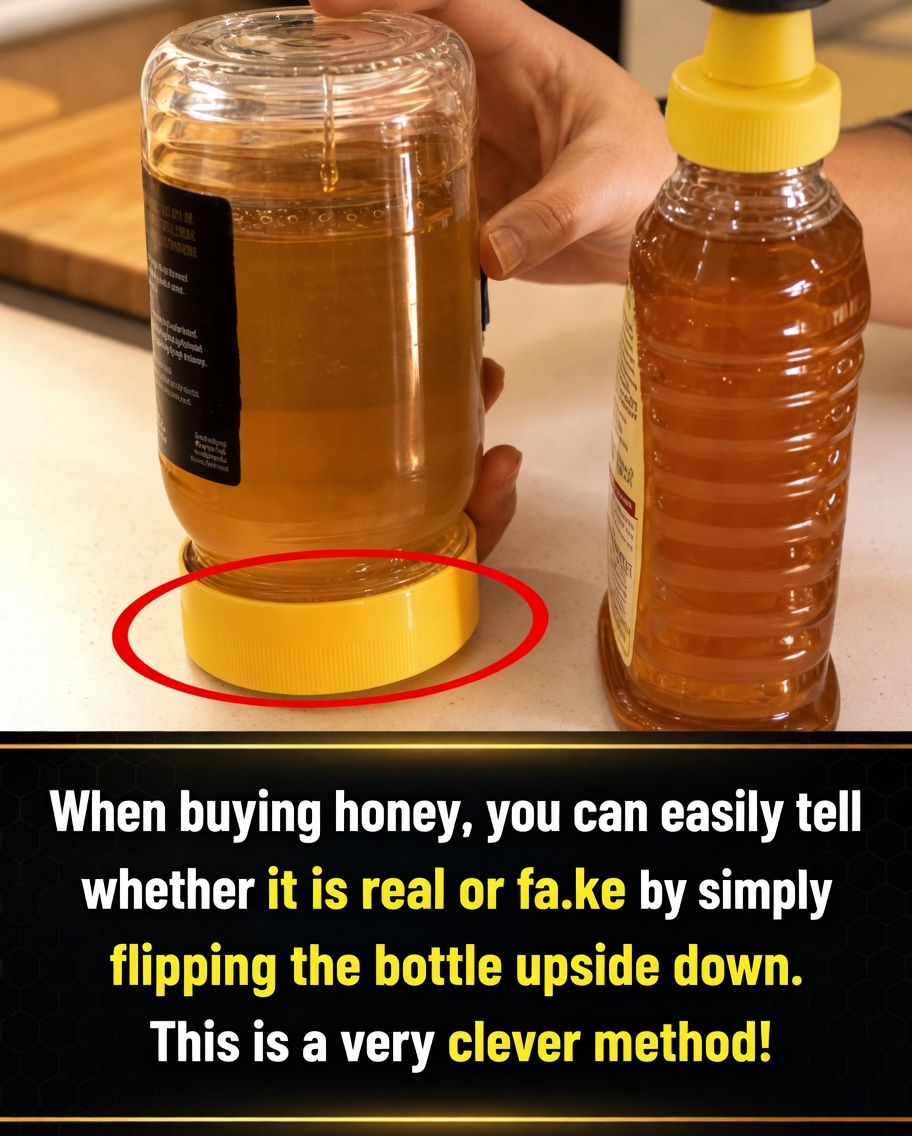
The test works because real honey has a naturally thick, viscous texture created by its low water content and the enzymes bees add during the honey-making process. When you shake a bottle of genuine honey and then turn it upside down, the air bubbles that form move slowly and deliberately. They tend to stay together in thicker formations and can take anywhere from several minutes to a couple of hours to fully rise and disappear. This slow movement happens because the honey’s density resists quick flow. In contrast, honey that has been thinned with added sugars or water allows bubbles to race upward and vanish almost immediately, or sometimes no bubbles form at all because the liquid is too runny to trap air effectively.
Performing the test is straightforward. Choose a clear bottle or jar so you can see the bubbles clearly. Give it three firm shakes, then quickly flip it upside down and watch what happens over the next minute or two. If the bubbles linger and move upward at a relaxed pace while maintaining some thickness, that’s a good sign you’re dealing with real honey. If they shoot up fast and disappear within seconds, or if the liquid seems unusually thin overall, it may have been mixed with cheaper sweeteners. Many people like this test because it requires no special tools and can be done right in the grocery store aisle before making a purchase.
While the bottle flip method is helpful, it works best when combined with other simple checks. One popular companion test involves dropping a spoonful of honey into a glass of room-temperature water. Pure honey tends to sink in a thick, continuous stream and settle at the bottom as a distinct clump before slowly dissolving. Fake or adulterated honey often spreads out quickly and mixes into the water almost like syrup because of its higher water content and added sugars. Watching how the honey behaves in water can give you another layer of confirmation alongside the bubble observation.
Another reliable sign appears over time rather than instantly. Real honey naturally crystallizes as it ages, especially when stored in cooler temperatures. You might notice it turning grainy or forming small crystals on the bottom or sides of the jar. This is a normal process caused by the glucose separating from the liquid. Fake honey, on the other hand, usually stays smooth and syrupy indefinitely because the added sugars and processing prevent natural crystallization. If your honey has been sitting for months and still looks completely liquid with no texture change, it could be worth questioning its purity.
The thumb test offers yet another quick way to check consistency. Place a small drop of honey on your thumb and observe whether it stays in place or starts to spread and drip. Genuine honey is thick enough to hold its shape for a while, while thinner, adulterated versions tend to run or slide off more easily. These simple physical tests all point back to the same core difference: real honey has a denser, more complex structure that fake versions struggle to replicate perfectly.
Understanding why these tests work can also help you become a smarter shopper. Pure honey comes from nectar that bees have processed through their bodies, reducing water content and adding beneficial enzymes. When manufacturers add cheaper syrups, they increase the water content and change the texture, which is exactly what these home tests are designed to detect. While no single at-home method is 100% foolproof, using a combination of the bottle flip, water drop, and crystallization checks gives you a much better chance of spotting obvious fakes before you bring them home.
Beyond testing, a few buying habits can reduce the chances of ending up with questionable honey in the first place. Look for labels that clearly say “100% pure honey” and avoid products that list added ingredients or vague terms like “honey blend.” Whenever possible, buy directly from local beekeepers or farmers’ markets where you can often ask questions about how the honey was harvested and processed. Local honey also tends to support small producers and may carry subtle flavor notes tied to the flowers in your specific region.
Storing honey properly helps preserve its quality whether it’s real or not. Keep it in a sealed container at room temperature away from direct sunlight. If your real honey does crystallize, you can gently warm the jar in warm water to return it to a liquid state without damaging its beneficial properties. Avoid microwaving it, as high heat can reduce some of the natural enzymes that make pure honey valuable.
Knowing how to spot real honey matters because the difference goes beyond taste. Pure honey contains antioxidants, trace minerals, and enzymes that many people seek out for soothing sore throats, supporting digestion, or simply enjoying as a more natural sweetener. When honey has been heavily processed or diluted, many of those qualities are diminished or lost entirely. Taking a minute to perform a quick test can help ensure you’re actually getting the product you’re paying for.
These simple methods empower consumers in a marketplace where not every jar is what it claims to be. The bottle flip test, in particular, has gained popularity because it’s fast, visual, and surprisingly effective at revealing texture differences that are hard to fake completely. Combined with careful label reading and smart purchasing choices, it becomes a practical tool for anyone who wants to enjoy real honey with confidence. Whether you’re stocking your pantry or looking for a thoughtful gift, knowing these easy checks can help you bring home the genuine article instead of an expensive imitation.
Most Popular!
-
 Eggs, Cholesterol, and Timing: What Actually Matters for Most People
-
When a Partner Leaves With More Than a Suitcase: Protecting Yourself From Financial Betrayal
-
When Financial Support Meets Contempt: Recognizing Exploitation Inside a Marriage
-
Why Some Sensory Toys and Household “Hacks” Do Not Belong in the Microwave
-
When Grief Clouds Judgment: Misreading Silence and the Quiet Ways People Show Care
-
When One Partner Does All the Hosting: Recognizing Imbalance Before Resentment Takes Over
-
How Many Holes Are in a T-Shirt? What a Simple Puzzle Reveals About How We See
-
The Quiet Stories Inside Secondhand Objects: When a Thrift-Store Find Carries Someone Else’s History