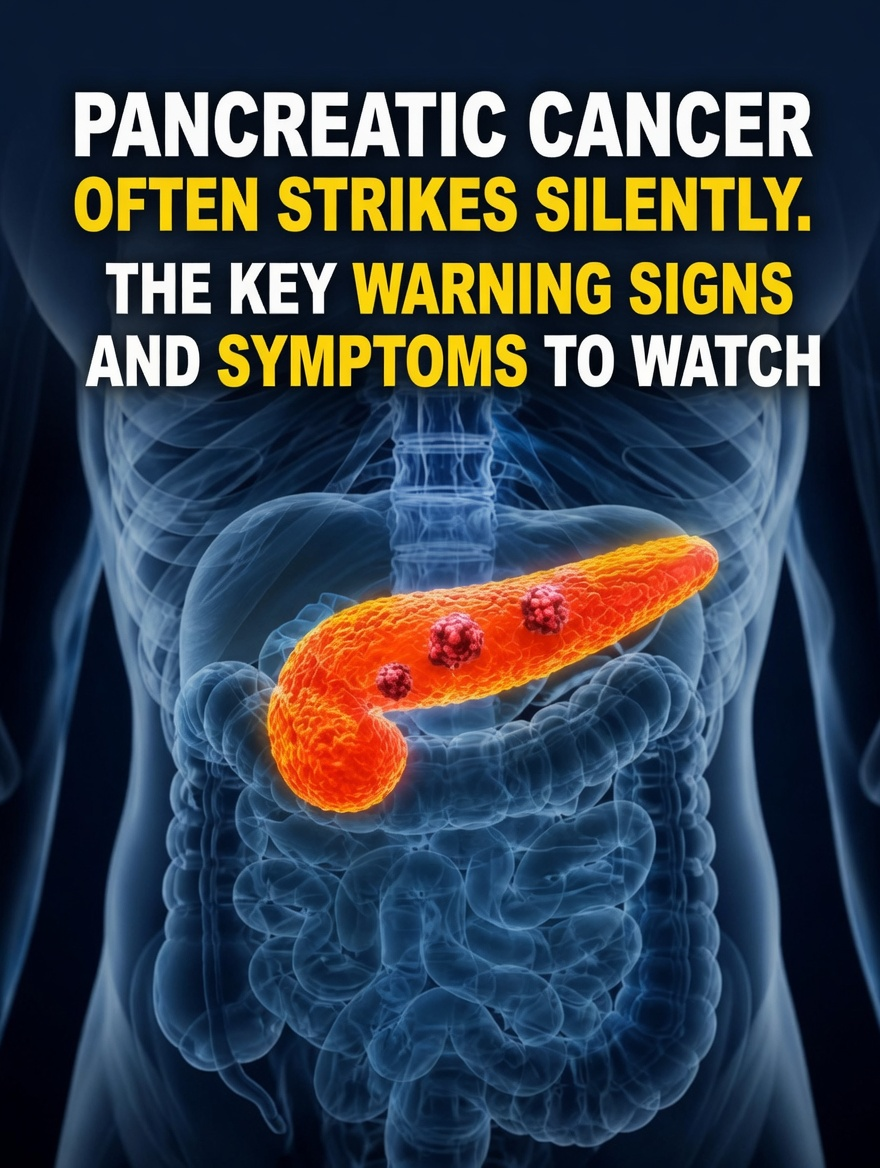
Pancreatic cancer has a reputation for being difficult to catch early, and that reputation comes from how quietly it often develops. The pancreas sits deep in the abdomen, and tumors there can grow for some time before they produce clear warnings. By the time many people notice something feels off, the disease has already advanced. That’s why paying attention to persistent changes in your body matters so much. This isn’t about living in fear, but about recognizing when certain symptoms deserve a closer look from a doctor rather than being brushed aside as stress, diet, or getting older.
One of the more common early complaints is a dull, persistent pain in the upper abdomen that sometimes radiates to the back. Unlike typical indigestion or muscle strain, this discomfort often stays constant and may worsen after eating or when lying flat. Some people find temporary relief by leaning forward. The location of the pancreas near major nerves and the spine explains why the pain can feel this way. Because it can come and go or feel mild at first, many people assume it’s nothing serious until it becomes more noticeable over weeks or months.
Another sign that stands out is jaundice, which causes yellowing of the skin and the whites of the eyes. It often comes with very dark urine, pale or clay-colored stools, and intense itching that doesn’t respond to regular creams. This happens when a tumor blocks the bile duct, preventing bilirubin from leaving the body normally. Jaundice can appear even before other symptoms feel dramatic, and it’s one of the few signs that sometimes leads to earlier detection. Anyone experiencing sudden yellowing along with these other changes should seek medical care promptly, as it can point to several serious issues that need quick evaluation.
Unexplained weight loss is another signal that frequently appears with pancreatic cancer. People may notice they’re losing weight even though they haven’t changed their eating habits or activity levels. This can happen because the pancreas isn’t producing enough digestive enzymes, making it harder for the body to absorb nutrients from food. Combined with a reduced appetite or feeling full quickly, it creates a situation where the body starts breaking down its own reserves. While many conditions can cause weight loss, losing several pounds without trying over a short period is worth discussing with a healthcare provider.
Digestive changes often accompany the weight loss. Some people experience ongoing bloating, nausea, or discomfort after meals. Stools may become greasy, pale, and unusually foul-smelling or difficult to flush. These issues arise when the tumor interferes with the pancreas’s ability to release enzymes that break down fats and other nutrients. What starts as occasional indigestion can gradually become a pattern that affects daily comfort and nutrition. Keeping track of these bowel changes and how long they last helps doctors piece together whether further testing is needed.
A sudden diagnosis of diabetes in someone who previously had normal blood sugar can also be connected to pancreatic changes. The pancreas produces insulin, so when a tumor affects the cells responsible for that hormone, blood sugar levels can rise unexpectedly. If you develop diabetes later in life without the usual risk factors like significant weight gain or family history, or if your existing diabetes becomes harder to manage, it’s reasonable to ask whether something else might be contributing. This doesn’t mean every new diabetes case is cancer-related, but it’s one more piece that doctors consider when symptoms cluster together.
Persistent fatigue that doesn’t improve with rest is another symptom people sometimes overlook. The body may be working harder to fight abnormal cell growth, or nutrient absorption problems may be leaving you running on empty. Some individuals also notice low-grade fevers, night sweats, or a general sense of not feeling well. These systemic effects can make everyday tasks feel much harder than before. Because fatigue has so many possible causes, it’s easy to attribute it to busy schedules or aging, yet when it arrives alongside other digestive or pain-related changes, it deserves attention.
Blood clots represent a less obvious but important warning sign. Some people develop deep vein thrombosis in the legs, with swelling, warmth, or redness that shouldn’t be ignored. Pancreatic cancer can increase clotting tendencies even before other symptoms become obvious. If a clot forms and travels to the lungs, it can cause more serious problems. Unexplained clotting, especially in someone without typical risk factors, sometimes prompts doctors to look deeper into underlying causes, including the possibility of cancer.
What makes these signs particularly tricky is that they often overlap with far more common and less serious conditions like acid reflux, gallstones, irritable bowel syndrome, or simple infections. That overlap is exactly why pancreatic cancer earns its “silent” label. The key is persistence and combination. A single symptom that comes and goes might not mean much, but several symptoms showing up together and lasting more than a couple of weeks should prompt a conversation with your doctor. Early evaluation doesn’t guarantee a specific diagnosis, but it can rule out problems or catch issues while more treatment options remain available.
Certain factors can raise someone’s overall risk and make it wise to stay especially alert. These include smoking, long-standing diabetes, chronic inflammation of the pancreas, obesity, and a family history of pancreatic or related cancers. Age also plays a role, with most cases appearing after 60. People with these risk factors don’t need to live anxiously, but they may benefit from being quicker to mention new or changing symptoms during regular check-ups. Knowing your personal risk profile helps you and your doctor decide when extra vigilance makes sense.
If you notice any of these patterns, the most helpful step is to schedule an appointment rather than waiting to see if things improve on their own. Be prepared to describe when symptoms started, how often they occur, and what makes them better or worse. Doctors may order blood tests, imaging, or other evaluations depending on what they hear. Many conditions that mimic these signs are treatable, and getting clarity brings peace of mind either way. The goal isn’t to self-diagnose but to use your body’s signals as useful information that deserves professional attention.
Research into pancreatic cancer continues to advance, with improving tools for earlier detection and more effective treatments on the horizon. While outcomes have historically been challenging because of late diagnosis, awareness of symptoms gives individuals a better chance to act while options are wider. Taking symptoms seriously doesn’t mean assuming the worst. It simply means respecting your body enough to investigate when something feels consistently off. Many people who catch health changes early go on to manage or overcome serious conditions successfully.
Paying attention to these signs is ultimately an act of self-care. Your body often sends quiet messages before it sends loud ones. When digestive changes, unexplained pain, sudden weight shifts, new diabetes, or unusual fatigue show up together and stick around, they’re worth bringing into the light with a trusted healthcare provider. Doing so doesn’t guarantee any particular outcome, but it puts you in the best position to understand what’s happening and take the next right steps. Listening carefully and acting thoughtfully remains one of the most practical things anyone can do for their long-term health.
Most Popular!
-
 Eggs, Cholesterol, and Timing: What Actually Matters for Most People
-
When a Partner Leaves With More Than a Suitcase: Protecting Yourself From Financial Betrayal
-
When Financial Support Meets Contempt: Recognizing Exploitation Inside a Marriage
-
Why Some Sensory Toys and Household “Hacks” Do Not Belong in the Microwave
-
When Grief Clouds Judgment: Misreading Silence and the Quiet Ways People Show Care
-
When One Partner Does All the Hosting: Recognizing Imbalance Before Resentment Takes Over
-
How Many Holes Are in a T-Shirt? What a Simple Puzzle Reveals About How We See
-
The Quiet Stories Inside Secondhand Objects: When a Thrift-Store Find Carries Someone Else’s History