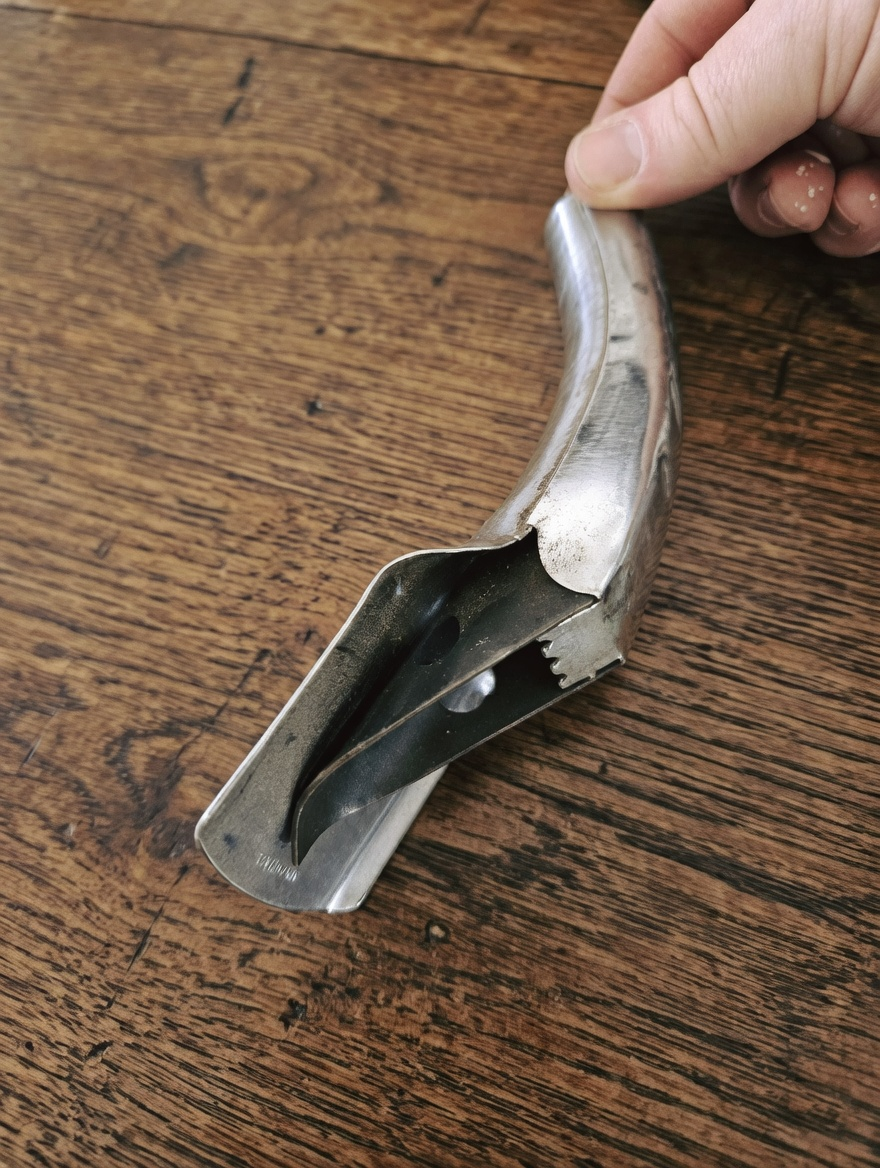
Last weekend, while helping my grandmother clear out her attic, I found a strange metal object tucked away in an old wooden crate. It was about eight inches long with a beautifully detailed hollow handle and a strange curved, pointed end that looked almost like a small spoon with a sharp tip. I turned it over in my hands, completely puzzled. It didn’t look like any modern kitchen tool I recognized. My grandmother smiled when she saw it and said, “That’s from a time when people actually knew how to make life easier in the kitchen.”
At first, I thought it might be some kind of antique ice cream scoop or a strange fruit corer. The hollow handle was intriguing — why would someone design a tool with an empty interior? I brought it home and spent the evening researching similar objects online. What I discovered completely changed how I viewed everyday cooking from generations past. This wasn’t just an old gadget. It was a clever, purpose-built tool that solved a very specific problem people faced before modern packaging and processed foods took over.
The tool turned out to be a vintage hollow-handled butter curler (sometimes called a butter pick or butter server). In the late 1800s and early 1900s, before butter came in convenient sticks or tubs, people bought large blocks of butter. This tool allowed the user to curl thin, elegant strips of butter that could be beautifully arranged on a serving dish. The hollow handle served a practical purpose — it kept the tool from warming up too quickly in your hand, preventing the butter from melting while you worked.
What fascinated me most was how thoughtful the design was. The hollow handle wasn’t decorative. It was functional engineering from an era when every tool had to earn its place in the kitchen drawer. By keeping the metal away from direct hand heat, the butter stayed firm and created those perfect decorative curls that made even simple meals feel special. Hostesses would use these to create beautiful butter presentations for dinner parties, adding a touch of elegance that we’ve mostly lost today.
My grandmother shared stories of watching her own mother use a similar tool on Sunday mornings. They would curl butter for fresh biscuits, cornbread, or special occasion meals. She told me how something as simple as nicely presented butter could make guests feel truly welcomed. In our fast-paced world of pre-packaged everything, we’ve traded these small touches of care for convenience. Finding this tool made me realize how much beauty and intention we’ve lost along the way.
I decided to try using it myself. After letting some good quality butter sit out just long enough to be workable, I gave the old tool a chance. The curls came out beautifully — delicate, elegant ribbons that looked like they belonged in a fancy restaurant. My kids were fascinated by it and asked a dozen questions about “the olden days.” It turned into a wonderful teaching moment about how previous generations approached daily life with creativity and care.
This forgotten kitchen tool represents something bigger than butter. It’s a symbol of a time when people took pride in presentation and understood that small details matter. The hollow handle wasn’t a flaw or mystery — it was smart design meant to solve a real problem. Finding it reminded me that our grandparents’ generation was incredibly resourceful. They created tools that were both practical and beautiful.
In today’s world of single-use plastics and disposable gadgets, discovering something so well-made and purposeful feels almost revolutionary. It made me want to slow down in my own kitchen and bring back some of that lost intention. I’ve started looking for other forgotten tools at flea markets and antique shops, each one telling its own story about how people used to live.
If you ever come across an old hollow-handled tool and can’t figure out what it is, don’t dismiss it as junk. It might be a clever solution to a problem we no longer have — or a beautiful reminder of a more thoughtful era. These objects connect us to the past in ways modern technology never could.
That simple butter curler now sits proudly on my kitchen counter. Every time I see it, I’m reminded that progress doesn’t always mean better. Sometimes the old ways had a charm and intelligence we’ve forgotten. My grandmother was right — it really was from a time when people knew how to make ordinary things feel special. And thanks to one small hollow-handled mystery, I’m trying to bring a little bit of that spirit back into my own home.
Most Popular!
-
 Eggs, Cholesterol, and Timing: What Actually Matters for Most People
-
When a Partner Leaves With More Than a Suitcase: Protecting Yourself From Financial Betrayal
-
When Financial Support Meets Contempt: Recognizing Exploitation Inside a Marriage
-
Why Some Sensory Toys and Household “Hacks” Do Not Belong in the Microwave
-
When Grief Clouds Judgment: Misreading Silence and the Quiet Ways People Show Care
-
When One Partner Does All the Hosting: Recognizing Imbalance Before Resentment Takes Over
-
How Many Holes Are in a T-Shirt? What a Simple Puzzle Reveals About How We See
-
The Quiet Stories Inside Secondhand Objects: When a Thrift-Store Find Carries Someone Else’s History







