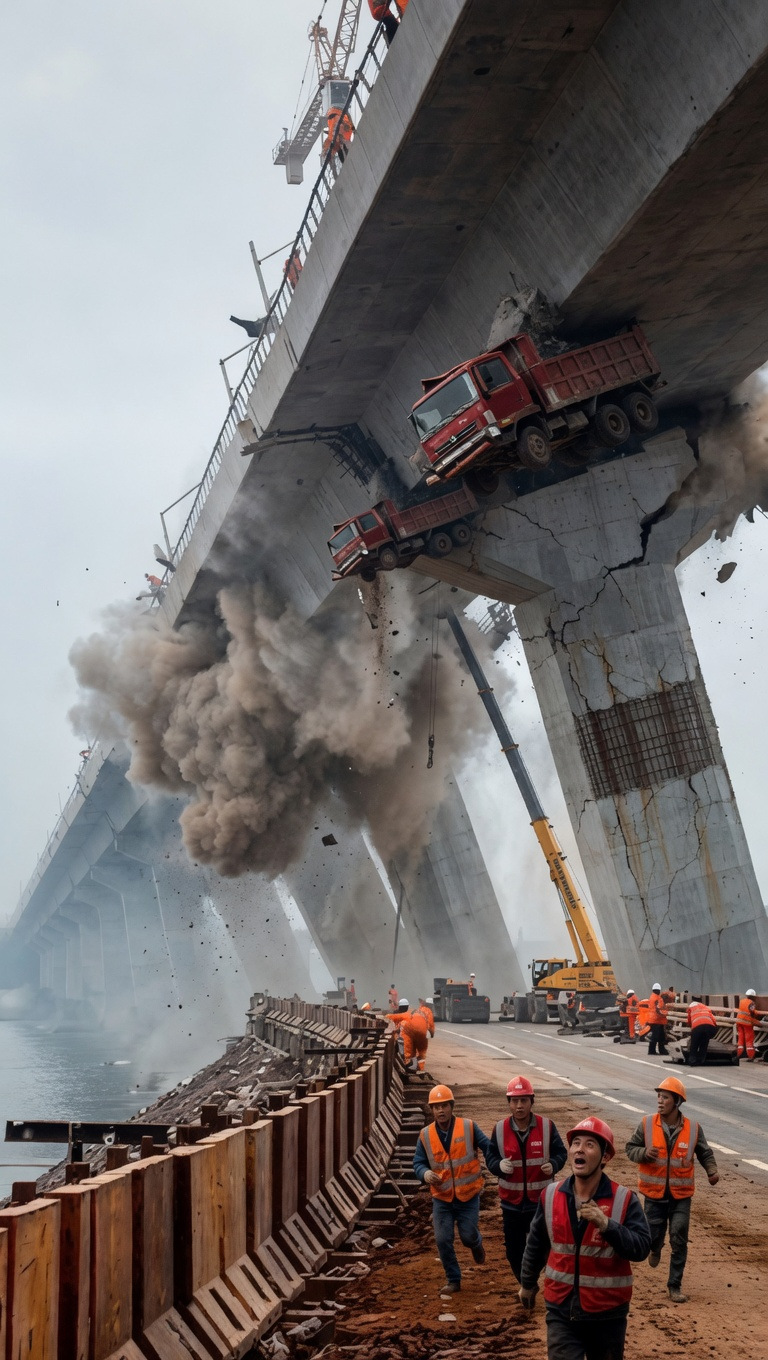
The ground didn’t just shake. It roared. In the early hours of the morning, a powerful 7.7 magnitude earthquake ripped through a densely populated region of Asia, catching millions of people completely off guard. Buildings swayed violently, roads cracked open, and entire communities were plunged into darkness as power lines snapped like twigs. What should have been an ordinary night turned into a desperate fight for survival, with aftershocks continuing to rattle nerves and complicate rescue operations long after the initial strike.
The epicenter struck in a seismically active zone where tectonic plates push against each other with relentless force. Scientists monitoring the event described it as a major thrust earthquake, the kind capable of releasing energy equivalent to hundreds of atomic bombs. In the hardest-hit areas, apartment blocks collapsed into piles of concrete and twisted rebar. Rural villages saw homes reduced to rubble in seconds. The death toll is still rising as crews dig through debris, but early reports already speak of dozens confirmed dead and hundreds more missing. The true scale of the tragedy may not be known for days.
Families were torn apart in an instant. One mother described clutching her two young children under a dining table as the walls around them crumbled. When the shaking finally stopped, she crawled through the dust to find neighbors calling out for help. Stories like hers are emerging by the hundreds — parents searching frantically for children who were at school, workers trapped in office buildings, and elderly residents unable to move quickly enough to escape falling structures. The human cost of this disaster is heartbreaking, and the psychological trauma will linger long after the physical wounds heal.
Emergency crews are working around the clock in incredibly difficult conditions. Aftershocks continue to jolt the region, making it dangerous to operate heavy machinery near unstable buildings. Rain has begun falling in some areas, turning rubble into slippery hazards and complicating searches for survivors. Rescue dogs are being deployed to sniff out signs of life, while volunteers and military teams carefully remove debris by hand in places where equipment can’t reach. Every hour counts. Voices calling from beneath collapsed homes give rescuers the strength to keep going, even as exhaustion sets in.
The international community has responded swiftly. Neighboring countries have offered search and rescue teams, medical supplies, and financial aid. Global organizations are mobilizing resources to provide temporary shelters, clean water, and food for displaced families. In an era where natural disasters can quickly overwhelm local systems, this show of solidarity offers a glimmer of hope amid the devastation. Yet the road to recovery will be long and expensive, with entire towns needing to be rebuilt and infrastructure repaired.
Geologists warn that this earthquake may have increased stress on nearby fault lines, raising the possibility of additional strong aftershocks or even a follow-up event. Residents are being urged to stay vigilant and avoid returning to damaged buildings until they are declared safe. In many places, people are sleeping outside or in makeshift tents, too afraid to go back indoors. The psychological impact on children especially is a growing concern, with counselors being sent to affected areas to help process the trauma.
Natural disasters of this magnitude remind us how small we are in the face of the Earth’s power. Asia sits along the Ring of Fire, a horseshoe-shaped zone where most of the world’s earthquakes and volcanic activity occur. While scientists can monitor seismic activity, predicting the exact timing and location of major quakes remains extremely difficult. This event serves as a sobering call for better preparedness, stronger building codes, and early warning systems that can give people precious seconds to find safety.
For those who survived, the coming days and weeks will test their resilience. Many have lost everything — homes, belongings, and in some cases, loved ones. Yet stories of courage are already emerging. Neighbors pulling strangers from rubble. Strangers sharing what little food and water they have. Communities coming together when governments are stretched thin. These acts of humanity shine brightly against the darkness of destruction.
As rescue operations continue and the world watches, our thoughts are with every person affected by this tragedy. The road to rebuilding will be difficult, but history has shown time and again that communities can rise from even the worst disasters when people unite. If you want to help, consider donating to reputable relief organizations working on the ground. Every contribution, no matter how small, can provide critical support to those who have lost so much.
The 7.7 magnitude earthquake that tore through Asia has left a scar on the region and on all of us who watched it unfold. But in the midst of loss, there is also hope — hope in the rescuers still digging, hope in the survivors sharing their stories, and hope in the human spirit that refuses to be broken. The coming days will bring more challenges, more tears, and more stories of both heartbreak and heroism. For now, we hold space for those still waiting to be found and for the families forever changed by this devastating night.
Most Popular!
-
 Eggs, Cholesterol, and Timing: What Actually Matters for Most People
-
When a Partner Leaves With More Than a Suitcase: Protecting Yourself From Financial Betrayal
-
When Financial Support Meets Contempt: Recognizing Exploitation Inside a Marriage
-
Why Some Sensory Toys and Household “Hacks” Do Not Belong in the Microwave
-
When Grief Clouds Judgment: Misreading Silence and the Quiet Ways People Show Care
-
When One Partner Does All the Hosting: Recognizing Imbalance Before Resentment Takes Over
-
How Many Holes Are in a T-Shirt? What a Simple Puzzle Reveals About How We See
-
The Quiet Stories Inside Secondhand Objects: When a Thrift-Store Find Carries Someone Else’s History