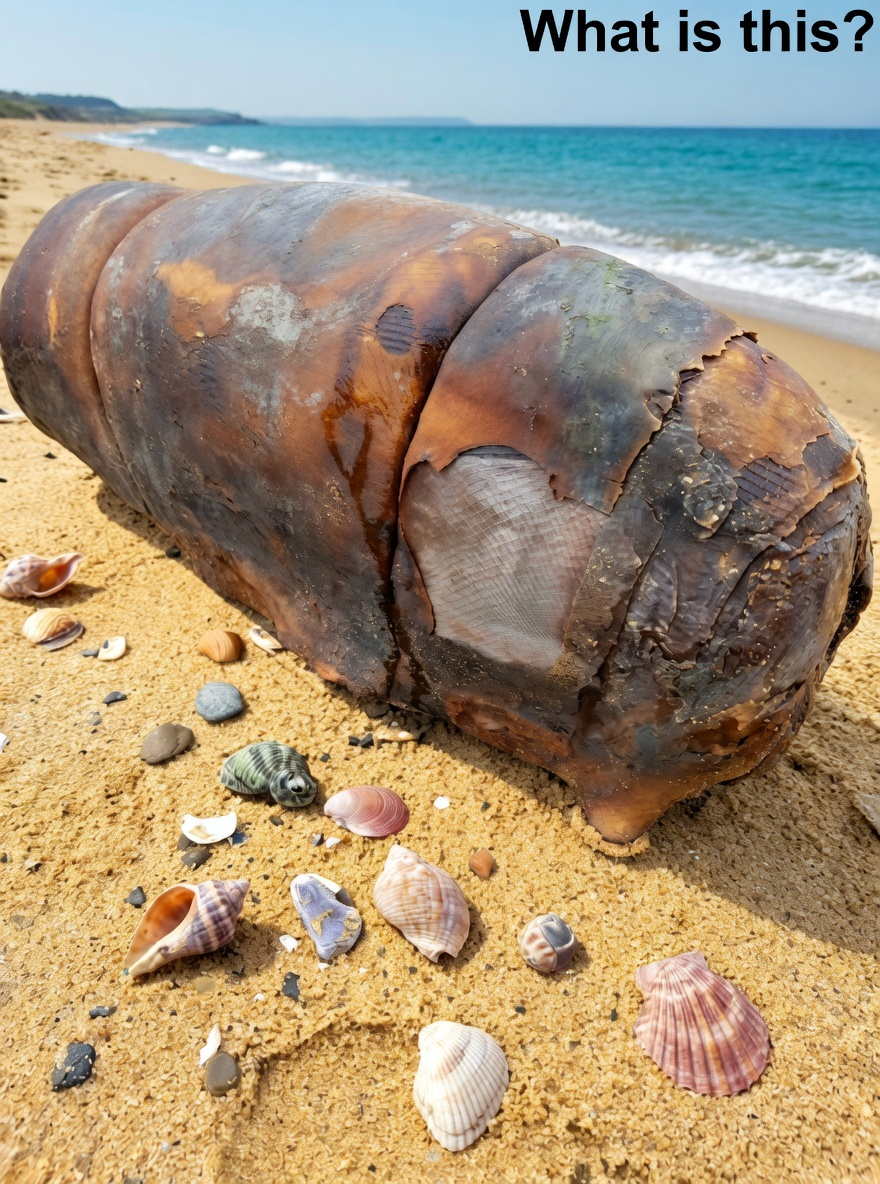
The beach was still quiet that morning, the kind of peaceful dawn where the only sounds are waves and seagulls. I walk this stretch of coast almost every day, clearing my head before the world wakes up. But on this particular Tuesday, something large and dark caught my eye near the tide line. At first I thought it was driftwood or a pile of seaweed. As I got closer, my stomach turned. Whatever it was, it looked like something out of a horror movie — twisted, leathery, with what appeared to be claws or tentacles splayed out in unnatural angles. I froze, phone in hand, debating whether to call someone or just run.
The smell hit me next. Not the usual salty ocean air, but something heavier, almost sweet and rotten. I covered my nose and stepped closer despite every instinct screaming at me to back away. The creature was about six feet long, partially buried in sand, its skin a mottled grayish-purple that looked both dead and alive at the same time. Strange ridges ran along its body, and what I first thought were eyes stared blankly toward the sky. I had never seen anything like it. My mind raced through every sea monster story I’d ever heard as a kid. For a split second, I genuinely wondered if I had stumbled upon something that science didn’t know about.
With shaking hands, I took photos and called the local marine rescue hotline. While I waited, I couldn’t stop staring. The longer I looked, the more details emerged — the way certain parts seemed swollen, the strange marks that looked almost like cuts or burns. When the rescue team arrived, their faces told me everything. This wasn’t some unknown deep-sea monster. It was something far more heartbreaking and familiar.
The creature was a dolphin. Or at least, it had been. What I found washed up on that quiet shore was the badly decomposed body of a young bottlenose dolphin, its natural graceful shape distorted by days in the water and the brutal effects of human pollution. The “claws” were actually fins twisted by rigor mortis and bloating. The “tentacles” were remains of fishing line and netting that had been wrapped around its body, cutting deep into its flesh. Those strange ridges were ribs showing through emaciated skin. The marine biologists explained that the animal had likely been entangled in ghost nets — discarded fishing gear that continues killing long after it’s lost — before finally washing ashore.
What followed was a sobering education I never wanted. They showed me the plastic bags, bottle caps, and microplastics found in the dolphin’s stomach. This beautiful, intelligent creature had slowly starved to death while its belly was full of our trash. The team gently carried the body away for a full necropsy, but the image of it lying there on the sand stayed with me for weeks. I kept seeing those clouded eyes and thinking about how many more are out there right now, suffering the same silent fate.
That single morning walk completely changed how I see the ocean and my own daily choices. I had always thought of myself as someone who cared about the environment. I recycled. I used reusable bags. But finding that dolphin forced me to confront how much more we all need to do. Every plastic straw, every forgotten grocery bag, every piece of packaging we toss without thinking eventually finds its way into the water. Marine animals mistake our trash for food. They get tangled in our waste. They suffer and die while we go about our lives unaware.
In the months since that day, I’ve thrown myself into local cleanup efforts and education programs. I’ve spoken at schools about what I saw and why it matters. The response has been overwhelming — parents reaching out to say their kids now refuse single-use plastics, teenagers organizing beach cleanups, entire communities becoming more mindful. One small, grisly discovery on a quiet beach has created ripples that continue spreading.
The marine rescue team later confirmed what I suspected. The dolphin was young, probably only a few years old, and showed no signs of natural causes. It was a victim of human carelessness. They named her Luna, and her story is now part of their educational materials, helping people understand the real cost of our disposable culture. Every time I walk that beach now, I carry a small bag for trash. It’s a tiny act, but it feels like honoring Luna’s memory.
If you’ve ever walked past a piece of trash on the beach or thrown something away without thinking about where it ends up, please let this story change you. The ocean isn’t an infinite garbage can. The creatures that call it home aren’t disposable. Every plastic item we use has a long afterlife that often ends in suffering we never see. The next time you’re tempted to skip the reusable bag or leave a plastic bottle behind, remember the image of something once graceful and alive, reduced to a grisly shape on the sand.
I still walk that beach almost every morning. The ocean looks the same, but I see it differently now. Every wave that washes in carries both beauty and warning. The creature that made my heart stop that day didn’t just change my perspective — it changed how I live. And if enough of us let it change us too, maybe fewer stories like Luna’s will end up washed up on our shores.
The ocean gives us so much. The least we can do is stop taking so much from it in return. One beach at a time. One choice at a time. One life saved at a time. Luna deserved better. So does every creature still swimming out there right now. The question is whether we’re finally ready to listen.
Most Popular!
-
 Eggs, Cholesterol, and Timing: What Actually Matters for Most People
-
When a Partner Leaves With More Than a Suitcase: Protecting Yourself From Financial Betrayal
-
When Financial Support Meets Contempt: Recognizing Exploitation Inside a Marriage
-
Why Some Sensory Toys and Household “Hacks” Do Not Belong in the Microwave
-
When Grief Clouds Judgment: Misreading Silence and the Quiet Ways People Show Care
-
When One Partner Does All the Hosting: Recognizing Imbalance Before Resentment Takes Over
-
How Many Holes Are in a T-Shirt? What a Simple Puzzle Reveals About How We See
-
The Quiet Stories Inside Secondhand Objects: When a Thrift-Store Find Carries Someone Else’s History