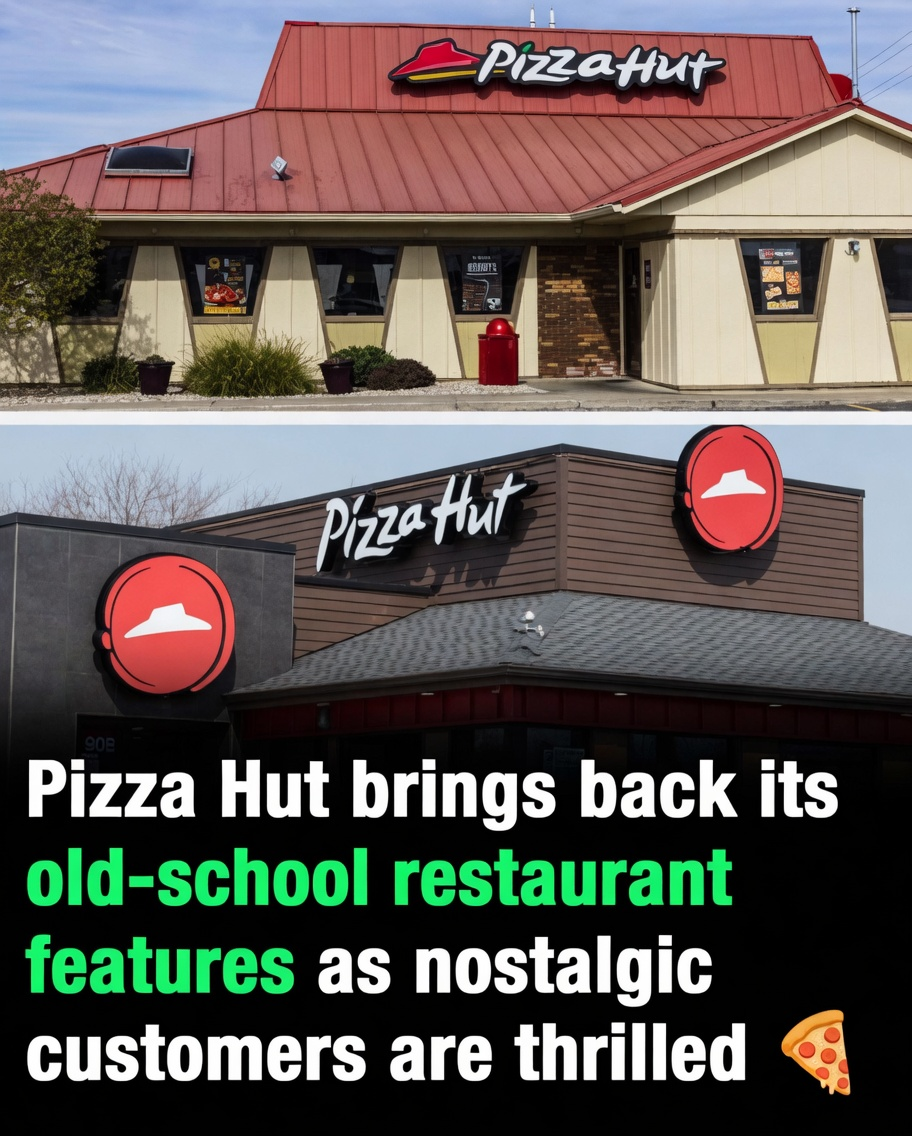
There’s a quiet movement happening across the country that has nothing to do with new menu items or viral TikTok trends. People are making pilgrimages — sometimes hours out of their way — to specific Pizza Hut locations that look like they stepped straight out of the 1980s or 90s. These aren’t ordinary restaurants. They’re time capsules with red-roofed buildings, vintage signage, old-school interiors, and that unmistakable nostalgic atmosphere that modern chains have largely abandoned. And if you want to experience them, you’d better go soon, because many are disappearing forever.
The retro Pizza Huts still standing are becoming rare treasures. Most locations have been updated over the years with sleek modern designs, touch-screen ordering, and generic corporate aesthetics. But a handful of older stores remain frozen in time — complete with wood-paneled walls, stained-glass lamps, and the classic buffet setup that defined family nights for generations. These locations have suddenly become destinations for people chasing childhood memories, photographers hunting vintage vibes, and families looking for an experience that feels authentic in a world of cookie-cutter restaurants.
What makes these spots so special isn’t just the aesthetics. It’s the feeling they evoke. Walking into one of these retro Pizza Huts is like stepping into a time machine. The smell of pizza baking in old deck ovens, the jukebox in the corner playing classic hits, and the warm, lived-in atmosphere transport you back to simpler times. Many visitors report feeling an unexpected wave of emotion — memories of birthday parties, first dates, or Friday night traditions with parents who are no longer here. In an increasingly digital and impersonal world, these restaurants offer something rare: genuine nostalgia you can taste.
The urgency comes from the reality that these locations are vanishing. Pizza Hut’s corporate parent has been quietly closing or remodeling older stores to match the current brand image. Some retro locations have already been converted into modern “Hut” prototypes or shut down entirely. Food historians and nostalgia enthusiasts warn that once these classic buildings are gone, an important piece of American dining culture disappears with them. That realization has created a surge of visitors determined to experience them before it’s too late.
Social media has amplified the trend dramatically. Posts featuring wood-paneled interiors, vintage menus, and that iconic red roof have gone viral, with hashtags like #RetroPizzaHut and #SaveTheRedRoof trending among food lovers and urban explorers. Families are planning road trips specifically to visit these locations. Some people are even collecting photos and memorabilia as a way of preserving the history before it’s lost. The restaurants themselves have noticed the increase in traffic, with some locations reporting record sales from people making special trips.
Beyond the nostalgia, there’s something deeper at play. In a fast-food landscape dominated by speed and convenience, these retro Pizza Huts represent a slower, more communal way of dining. You linger here. You talk across the table instead of staring at phones. Kids run around the old game area while parents actually relax. It’s a reminder that food experiences can be about more than calories and quick service — they can be about connection and memory.
If you’re planning to visit one of these special locations, there are a few things worth knowing. Many still serve the old Original Pan Pizza recipe that made the chain famous. Some locations have kept the iconic salad bar with the chilled pasta and dessert pizza options. Call ahead to confirm they’re still operating in retro mode, as remodels can happen suddenly. And consider going during off-peak hours to fully soak in the atmosphere without crowds.
The people running these remaining classic locations often have incredible stories. Some managers have worked there for decades and speak with genuine pride about preserving the original feel. Regular customers treat the restaurants like community living rooms. One elderly couple in Ohio visits their local retro Hut every Friday — a tradition that started on their first date in 1987. Stories like these are part of what makes these places worth protecting.
As more retro locations close or get modernized, the ones that remain become even more precious. They represent a piece of American culture that valued atmosphere as much as efficiency. For many, visiting these surviving Pizza Huts feels like saying goodbye to a beloved piece of childhood before it fades completely.
If you grew up going to Pizza Hut in its golden era, consider making the trip while you still can. Bring your kids or grandkids. Take photos. Order the pan pizza and actually sit and enjoy it. These restaurants won’t be around forever, and once they’re gone, something genuinely special will be lost. The retro Pizza Huts aren’t just places to eat — they’re living museums of how we used to gather, celebrate, and connect over something as simple as a shared pizza.
The clock is ticking on these red-roofed gems. The secret reason everyone is flocking to them isn’t just about the food or the nostalgia. It’s about capturing a feeling that’s becoming increasingly rare — the simple joy of stepping back in time before it disappears forever. Go while you still can. Your future self will thank you.
Most Popular!
-
 Eggs, Cholesterol, and Timing: What Actually Matters for Most People
-
When a Partner Leaves With More Than a Suitcase: Protecting Yourself From Financial Betrayal
-
When Financial Support Meets Contempt: Recognizing Exploitation Inside a Marriage
-
Why Some Sensory Toys and Household “Hacks” Do Not Belong in the Microwave
-
When Grief Clouds Judgment: Misreading Silence and the Quiet Ways People Show Care
-
When One Partner Does All the Hosting: Recognizing Imbalance Before Resentment Takes Over
-
How Many Holes Are in a T-Shirt? What a Simple Puzzle Reveals About How We See
-
The Quiet Stories Inside Secondhand Objects: When a Thrift-Store Find Carries Someone Else’s History