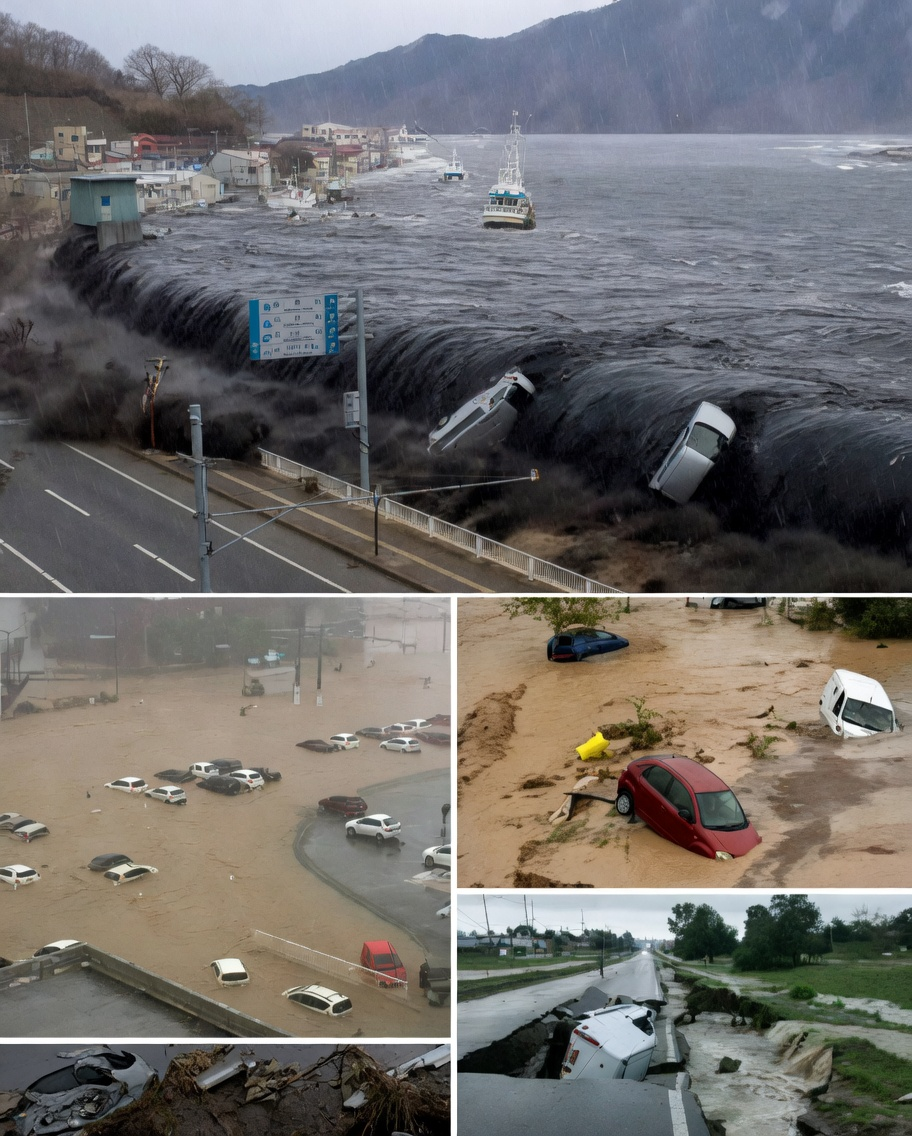
The ground beneath Alaska’s southern coastline didn’t just shake on that fateful morning — it roared. At 8.2 magnitude, the powerful earthquake struck with a force that sent shockwaves across the Pacific, triggering immediate emergency sirens and urgent evacuation orders for thousands of residents living in low-lying coastal communities. What began as a typical crisp day in the Last Frontier turned into one of the most alarming seismic events in recent memory, reminding everyone in the region just how powerful and unpredictable nature can be.
The quake’s epicenter was located offshore, not far from the Aleutian Islands, where the Pacific Plate continues its relentless push beneath the North American Plate. Seismologists described the event as a megathrust earthquake, the kind that has historically produced some of the strongest tremors ever recorded. Within seconds of the initial jolt, phones across Alaska lit up with official alerts. Sirens blared through fishing villages and small coastal towns, urging people to move to higher ground immediately. Many residents grabbed emergency go-bags they had prepared years earlier and headed inland, hearts pounding as they waited for the inevitable aftershocks.
Coastal evacuation orders went out rapidly for areas vulnerable to tsunamis. The National Tsunami Warning Center issued alerts within minutes, warning that waves generated by the quake could reach distant shores across the Pacific. Hawaii, California, and even parts of Japan and the Pacific islands were placed on watch. In Alaska itself, entire communities mobilized with remarkable calm and efficiency. Fishermen secured their boats, families helped elderly neighbors, and local volunteers directed traffic away from danger zones. The images coming out of the region showed both fear and incredible resilience — people looking out for one another in the face of a natural force far beyond human control.
For many longtime Alaskans, the earthquake brought back haunting memories of the 1964 Good Friday earthquake, which measured 9.2 and remains one of the most powerful ever recorded. That event reshaped coastlines, destroyed entire towns, and took hundreds of lives. While this 8.2 quake was slightly smaller, its impact was still devastating. Roads cracked, buildings swayed violently, and power outages plunged communities into darkness. Yet early reports suggest that strict building codes and years of earthquake preparedness drills helped limit the damage and, most importantly, save lives.
Scientists monitoring the event noted that the quake occurred in a seismically active zone where such events are expected but never routine. The aftershocks continued for hours, some strong enough to rattle nerves and prompt additional evacuations. Geologists warned that the risk of a larger follow-up event, while not guaranteed, could not be ruled out. This uncertainty kept emergency teams on high alert and coastal residents sleeping with one eye open for days afterward.
The Pacific-wide implications quickly became clear. Tsunami advisories stretched across thousands of miles of ocean. In Hawaii, beaches were cleared and harbors secured. California activated its emergency systems, reminding residents that distant earthquakes can still generate dangerous waves hours later. Even Japan, no stranger to seismic activity, monitored its own coastlines closely. The interconnected nature of the Pacific Ring of Fire was on full display, showing how one powerful event in Alaska could affect millions living thousands of miles away.
In the days following the quake, stories of heroism and community spirit began to emerge. Neighbors who barely knew each other worked together to clear debris. Local businesses opened their doors to those who had lost power or needed shelter. Children were kept occupied with impromptu games while their parents coordinated with rescue teams. These moments of human connection stood in stark contrast to the raw power of the earth that had shaken their world.
For those living in earthquake-prone regions, this event serves as a powerful reminder of the importance of preparation. Having an emergency kit with water, non-perishable food, medications, flashlights, and important documents is essential. Families should practice evacuation routes and know how to shut off gas lines if needed. Coastal residents in particular must understand tsunami risks and never assume that a quake far away won’t affect them. Technology like early warning systems and smartphone alerts have improved dramatically, but they work best when people know how to respond quickly and calmly.
As Alaska begins the long process of assessment and recovery, the rest of the Pacific continues to monitor the situation closely. Scientists emphasize that while this quake was significant, it also released built-up pressure along the fault line, potentially reducing the immediate risk of an even larger event. Still, no one is letting their guard down. The earth has a way of reminding us that we are never truly in control — we can only prepare, adapt, and support one another when disaster strikes.
The people of Alaska have faced harsh conditions and natural challenges for generations. Their strength, resourcefulness, and sense of community have always helped them endure. This earthquake, while frightening, will likely become another chapter in that resilient story. For now, the focus remains on safety, recovery, and gratitude that the damage wasn’t worse. The sirens have quieted, but the lessons remain loud and clear: respect the power of the earth, prepare for the unexpected, and never underestimate the importance of looking out for your neighbors when the ground begins to shake.
Most Popular!
-
 Eggs, Cholesterol, and Timing: What Actually Matters for Most People
-
When a Partner Leaves With More Than a Suitcase: Protecting Yourself From Financial Betrayal
-
When Financial Support Meets Contempt: Recognizing Exploitation Inside a Marriage
-
Why Some Sensory Toys and Household “Hacks” Do Not Belong in the Microwave
-
When Grief Clouds Judgment: Misreading Silence and the Quiet Ways People Show Care
-
When One Partner Does All the Hosting: Recognizing Imbalance Before Resentment Takes Over
-
How Many Holes Are in a T-Shirt? What a Simple Puzzle Reveals About How We See
-
The Quiet Stories Inside Secondhand Objects: When a Thrift-Store Find Carries Someone Else’s History