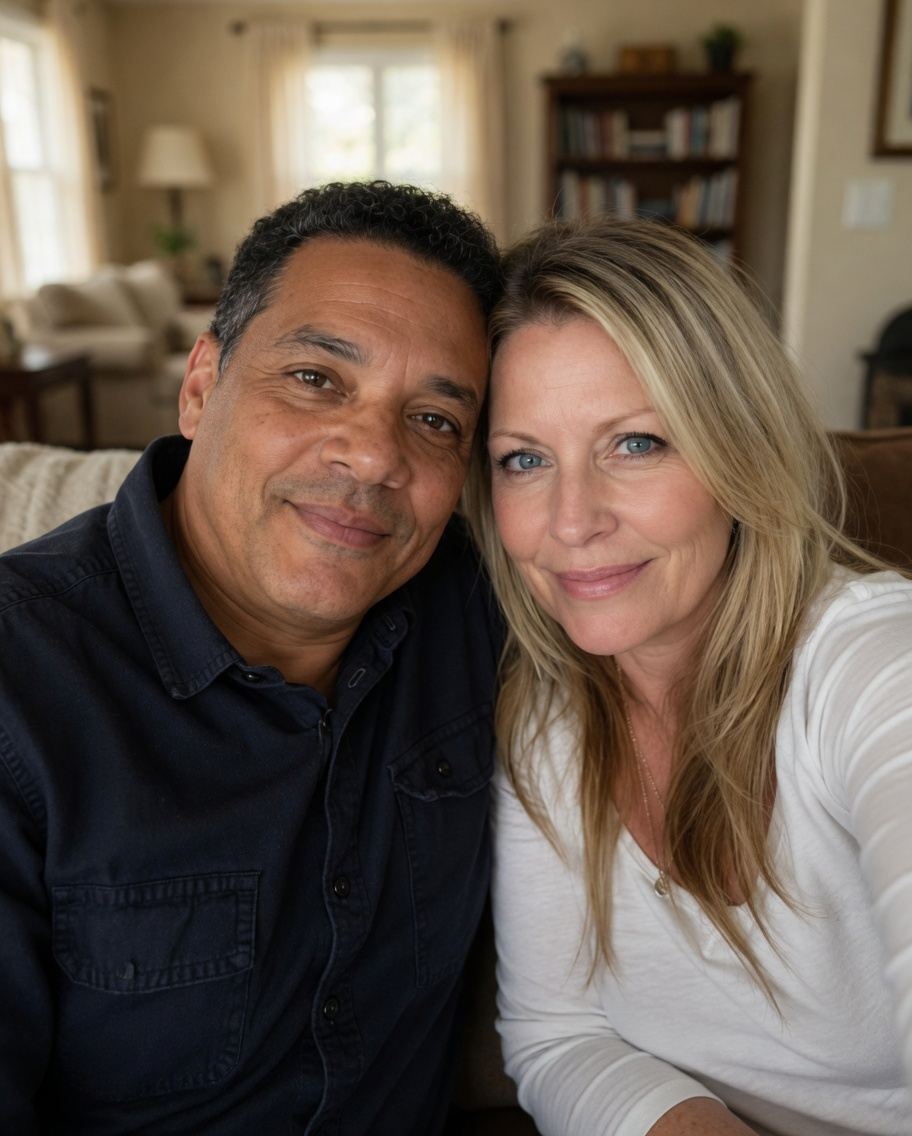
After twenty-five years of marriage, you think you know everything about the person sleeping beside you. The way they take their coffee, the songs they hum in the shower, the little routines that become the rhythm of your shared life. For me and my husband, Mark, those Saturday mornings had become sacred. He would wake up early, kiss my forehead, and head out for what he called his “guy time” — golf with friends, or so he said. I trusted him completely. Why wouldn’t I? He was the steady, reliable man who had built a life with me, raised our children, and stood by me through every challenge. Until the day I followed him and discovered that those Saturday mornings weren’t about golf at all.
It started with a small suspicion. Mark had been distant lately, quieter than usual, always checking his phone when he thought I wasn’t looking. Our youngest had just left for college, and the house felt emptier than ever. I told myself it was normal empty-nest adjustment. But when I noticed the golf clubs gathering dust in the garage and the new cologne he wore only on Saturdays, something didn’t sit right. After weeks of restless nights, I made a decision I never thought I’d have to make. On a crisp October morning, I waited until he left, then followed him in my car, heart pounding like a teenager sneaking out.
What I saw when he pulled into the parking lot of a nondescript building on the edge of town wasn’t a golf course. It was a community center. Mark didn’t go inside right away. He sat in his car for a long moment, then reached into the backseat and pulled out a small duffel bag. I watched from across the street as he walked through the doors, shoulders slightly slumped in a way I had never seen before. Curiosity and fear mixed together as I waited ten minutes before following him inside.
The scene inside shattered everything I thought I knew about the man I had married. Mark wasn’t playing golf or meeting friends. He was in a large room filled with folding chairs, standing at the front with a microphone in his hand. The banner behind him read “Saturday Morning Fathers’ Support Group.” As I slipped into the back row unnoticed, I listened as my husband — the strong, silent man who had always seemed unbreakable — shared his deepest struggles with a room full of strangers. He spoke about the pressure of providing for our family, the fear of growing older, the loneliness that had crept into our marriage after the kids left, and the guilt he carried for not being more present when they were young.
Tears streamed down my face as I listened. This wasn’t the arrogant, distant version of Mark I had started to resent. This was the vulnerable, honest man I had fallen in love with twenty-five years ago — the one who had been carrying burdens he never wanted to place on me. For months, he had been attending these meetings, trying to become a better husband and father while I assumed the worst. The cologne, the secrecy, the distance — it wasn’t another woman. It was his desperate attempt to work on himself so he could show up better for us.
When the meeting ended, I waited outside by his car. The look on his face when he saw me standing there was a mixture of shock, shame, and relief. We sat in the parking lot for hours, talking like we hadn’t talked in years. He admitted he had been terrified of becoming his own father — distant, critical, emotionally unavailable. The support group was his way of breaking that cycle before it was too late. He had been ashamed to tell me, fearing I would see him as weak. Instead, his silence had created the very distance he was trying to fix.
That conversation became the beginning of our second chance. We started couples counseling, rebuilt our connection with honest conversations, and made Saturday mornings our sacred time together instead of apart. Mark continued attending the support group, but now he came home and shared what he learned. Our marriage didn’t just survive — it grew deeper than it had been in decades. The man I thought was pulling away was actually trying to come closer, in the only way he knew how.
This experience taught me that the stories we tell ourselves about our partners can sometimes be more damaging than the truth. I had assumed the worst because it felt safer than facing the possibility that we had both grown distant. Mark’s secret Saturday mornings weren’t about betrayal. They were about healing. And in discovering that, we found our way back to each other.
If you’re in a long-term marriage and something feels off — the distance, the secrecy, the growing silence — please don’t assume the worst. Ask questions. Listen without judgment. And remember that sometimes the person you love is fighting battles you know nothing about. My husband’s support group didn’t just save him. It saved us. And for that, I will be grateful every single Saturday for the rest of our lives.
The man who disappeared every weekend for months wasn’t having an affair. He was becoming the husband and father he always wanted to be. And the woman who followed him that morning learned that sometimes the greatest love stories aren’t the ones without struggle. They’re the ones where two people choose to fight for each other, even when it means facing the uncomfortable truths they’ve been avoiding for years. Our marriage isn’t perfect, but it’s real. And after twenty-five years, that feels like the most beautiful thing of all.
Most Popular!
-
 Eggs, Cholesterol, and Timing: What Actually Matters for Most People
-
When a Partner Leaves With More Than a Suitcase: Protecting Yourself From Financial Betrayal
-
When Financial Support Meets Contempt: Recognizing Exploitation Inside a Marriage
-
Why Some Sensory Toys and Household “Hacks” Do Not Belong in the Microwave
-
When Grief Clouds Judgment: Misreading Silence and the Quiet Ways People Show Care
-
When One Partner Does All the Hosting: Recognizing Imbalance Before Resentment Takes Over
-
How Many Holes Are in a T-Shirt? What a Simple Puzzle Reveals About How We See
-
The Quiet Stories Inside Secondhand Objects: When a Thrift-Store Find Carries Someone Else’s History