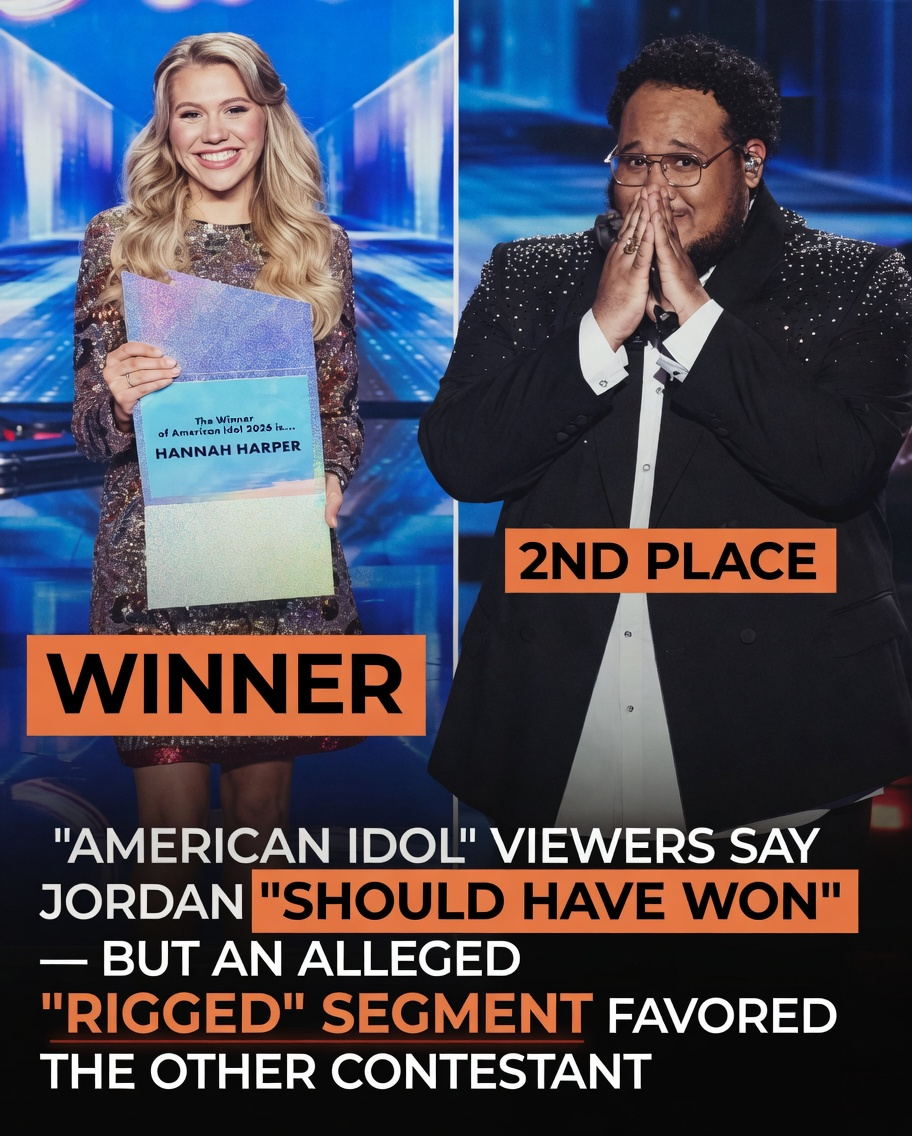
The three-hour American Idol Season 24 finale delivered high drama, star-studded performances, and an emotional rollercoaster that had viewers glued to their screens. But one moment in particular turned an exciting night into a full-blown social media firestorm. When fan-favorite Keyla Richardson was unexpectedly eliminated midway through the show, leaving Missouri country singer Hannah Harper and Tennessee worship leader Jordan McCullough as the final two, the internet exploded with accusations of rigging, unfair voting, and heartbreak.
Hannah Harper ultimately took home the Season 24 crown, becoming the first female country winner since Carrie Underwood in 2005. Her victory should have been a straightforward celebration of talent and perseverance. Instead, the conversation quickly shifted from congratulations to controversy. Many viewers believed Jordan McCullough had delivered stronger, more consistent performances throughout the season and especially in the finale. His soulful, heartfelt style connected deeply with audiences, and his elimination from the top spot left a bitter taste for thousands of loyal supporters.
The tension began building as soon as host Ryan Seacrest announced Keyla Richardson’s departure from the competition. A gifted music teacher from Florida known for her powerful gospel-infused vocals, Keyla had built a strong fan base with her emotional depth and stage presence. Her early exit felt abrupt to many, especially after standout performances that had judges Luke Bryan, Lionel Richie, and Carrie Underwood singing her praises all season. Social media lit up instantly with comments like “Keyla was robbed” and “This doesn’t make sense.”
Once the final two were set, the competition intensified. Both Hannah and Jordan delivered memorable performances, including emotional originals and powerful covers. Hannah leaned into her country roots and motherhood story, which had resonated since her audition. Jordan brought spiritual passion and vocal versatility that many felt gave him an edge. When Hannah was declared the winner, the divide among fans became crystal clear. While some celebrated her journey as a stay-at-home mom chasing her dreams, others argued that Jordan’s talent and consistency made him the more deserving champion.
This isn’t the first time American Idol has faced voting controversies, but the passion this season feels particularly intense. Fans pointed to social media voting mechanics, possible regional biases, and the show’s editing choices as reasons for their frustration. Hashtags like #JusticeForJordan and #RiggedIdol trended immediately after the results. Supporters of Hannah fired back, praising her authenticity and arguing that America simply voted for the artist they connected with most. The debate spilled across platforms, with longtime viewers sharing strong opinions about what the show represents in 2026.
What makes this finale’s backlash noteworthy is how it highlights deeper questions about talent competitions. Should popularity and relatability outweigh raw vocal ability? Does a contestant’s personal story influence votes more than their performances? Hannah’s narrative as a young mother balancing family and music clearly struck a chord with many voters. Jordan’s background as a worship director brought a different kind of emotional weight that resonated with another large segment of the audience. In the end, the results reflected America’s divided tastes rather than a clear consensus on who was “best.”
Despite the controversy, both finalists have bright futures ahead. Hannah’s win comes with a recording contract and major industry exposure that could launch her country career to new heights. Jordan, though disappointed, gained massive visibility and a dedicated fan base that will likely support his music for years to come. Keyla Richardson also earned respect and opportunities from her strong run. These outcomes remind us that reaching the Idol finale is already a huge achievement in itself.
The judges stayed mostly neutral in post-show interviews, praising all three top contestants and emphasizing how talented this season’s group was overall. Carrie Underwood, herself a former Idol winner, offered particularly warm congratulations to Hannah while acknowledging the high level of competition. Their measured responses contrasted sharply with the passionate fan reactions online, showing the gap that often exists between industry professionals and passionate viewers.
This season proved once again why American Idol remains compelling television after more than two decades. It doesn’t just showcase singing talent — it puts human stories, emotions, and public voting power front and center. The unexpected elimination and resulting debate have kept people talking long after the credits rolled. Whether you agree with the final result or not, the conversations it sparked about fairness, talent, and audience influence are valuable.
For many longtime fans, moments like this are part of what makes the show special. The passion, the arguments, and the emotional investment show how deeply audiences care. While some may feel disappointed this year, others are inspired by Hannah’s underdog journey. Both perspectives have merit, and that healthy tension keeps the Idol franchise alive and relevant.
As the dust settles on Season 24, one thing is certain: American Idol still knows how to create unforgettable television. The shocking elimination, the heated debates, and the crowning of a new winner have given fans plenty to discuss until next season. Whoever you were rooting for, the talent on display this year was undeniable, and the conversations it started will likely influence how we view future seasons.
In the end, music competitions like American Idol are about more than just who takes home the trophy. They’re about dreams, resilience, and the power of a single voice to move millions. This finale delivered all of that — and a healthy dose of controversy to keep us talking for weeks to come.
Most Popular!
-
 The Ultimate Wedding Revenge: When the Mother Who Abandoned Her Six Daughters Showed Up with Her Millionaire Boss, the Bride Opened a Box That Destroyed Lives Forever
-
The Beach Shaming Disaster: What My 8-Year-Old Said to the Prying Stranger Left Everyone Speechless
-
My Husband Abandoned Me With Twin Babies for a Luxury Fishing Trip — When He Returned, I Had Already Packed His Bags
-
The Three-Dollar Miracle: How a Dust-Covered Vase Revealed a Heartbreaking Decades-Old Secret
-
The $80,000 Battle to Erase a Birthmark: Why One Mother Risked Everything for Her Daughter’s Future
-
The Silent Thief: Why Millions of Men Are Living with a Time Bomb They Can’t See
-
The Final Curtain Falls: Beloved Sanford and Son Legend Hal Williams Gone at 91
-
Found at a Yard Sale: This “Useless” Vintage Contraption Is Actually a Forgotten Piece of Human History