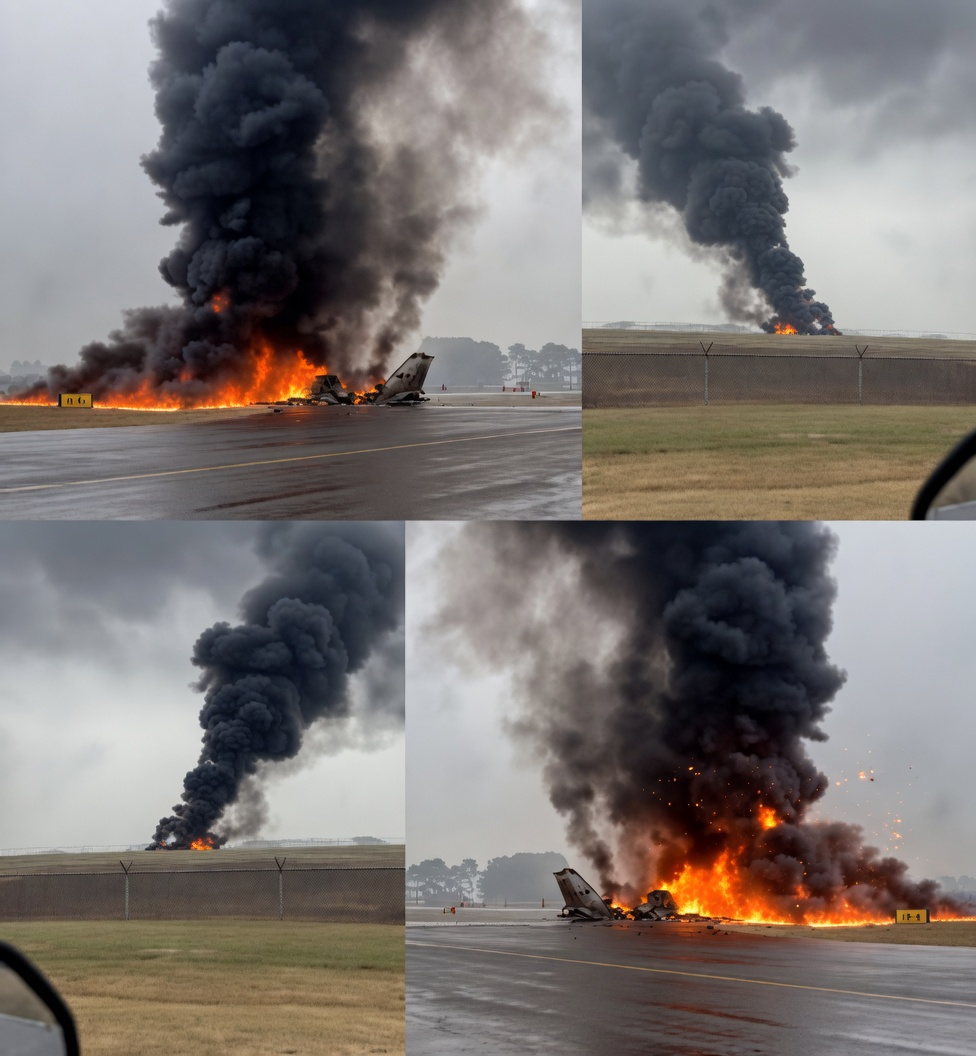
The world woke up to devastating news that has sent shockwaves through the global aviation community and beyond. A London-bound Air India flight carrying 244 passengers and crew members crashed violently just minutes after departing from Ahmedabad, India. What should have been a routine international journey turned into one of the most catastrophic commercial air disasters in recent years, with thick black smoke and raging fires dominating the crash site as rescue teams raced against time to find any signs of life.
This heartbreaking incident involved a Boeing 787 Dreamliner, a modern wide-body jet known for its advanced technology and strong safety record. The aircraft lifted off from Sardar Vallabhbhai Patel International Airport around 1:38 p.m. local time on what was supposed to be a direct flight to London’s Gatwick Airport. Eyewitnesses described a terrifying scene as the plane suddenly lost altitude and plummeted into a densely populated residential area near the airport, slamming into buildings and igniting massive fires that engulfed the wreckage. The impact was so severe that emergency crews faced intense heat and hazardous conditions while searching through twisted metal and debris.
Initial reports indicate that the majority of those on board — including passengers from India, the UK, Canada, and Portugal — are feared to have perished in the crash. Rescue operations have been incredibly challenging due to the fiery aftermath and the location in a built-up neighborhood. Firefighters battled blazes for hours while medical teams established triage areas nearby. Hospitals in the region were placed on maximum alert, preparing for any potential survivors, though hopes have sadly diminished as time passed. Families gathered at airports in both India and the UK, clinging to phones and waiting for any update from authorities.
Aviation experts are already examining several possible factors that could have led to this sudden and tragic event. Mechanical issues, bird strikes, or even external factors like weather anomalies are under early review, though no official cause has been confirmed yet. The Boeing 787 has an excellent overall safety history, making this incident particularly puzzling and concerning for the industry. Investigators from India’s Directorate General of Civil Aviation, along with international experts from Boeing and global safety bodies, will conduct a thorough probe that could take months or even years to complete.
This disaster hits especially hard because it involves people from multiple countries, turning it into an international tragedy. Many passengers were likely families heading home, business travelers, or tourists excited for new adventures. The diverse nationalities onboard — with a large number of Indian citizens and British nationals — have prompted condolences from world leaders, including statements from the Indian Prime Minister and UK officials. Social media has been flooded with messages of grief, support for the families, and calls for stricter aviation safety measures worldwide.
The response on the ground showcased both the bravery of first responders and the harsh realities of such accidents. Rescue teams worked through flames and smoke, using specialized equipment to sift through the site while structural engineers assessed unstable wreckage. Time was the enemy here, as every passing hour reduced the already slim chances of finding survivors. Local residents who witnessed the crash described scenes of chaos, with some rushing to help before official teams arrived. The community’s quick mobilization highlighted human compassion amid unimaginable loss.
Beyond the immediate human cost, this event raises serious questions about airport procedures, aircraft maintenance, and emergency preparedness in high-density areas near flight paths. Ahmedabad’s airport serves as a major hub, and incidents like this often lead to reviews of flight corridors and urban planning around aviation facilities. Airlines and regulators worldwide are likely monitoring developments closely, knowing that public confidence in air travel can be shaken by high-profile crashes even when statistics show flying remains one of the safest modes of transportation.
For the families affected, the pain is unimaginable. Waiting for confirmation of loved ones’ fates, arranging travel to India, and facing the bureaucratic processes that follow such disasters adds layers of anguish to an already overwhelming grief. Support networks, including counseling services and government assistance programs, have been activated to help those left behind navigate the difficult days and months ahead. Memorials are already being planned in multiple countries as people come together to honor the victims.
This tragedy also serves as a stark reminder of the vulnerabilities in modern aviation despite technological advances. While rare, when disasters occur they capture global attention and drive important changes. Past incidents have led to improvements in black box technology, pilot training, and aircraft design. In the wake of this crash, there will undoubtedly be renewed focus on pilot fatigue, engine reliability, and emergency evacuation protocols. Aviation remains statistically safer than driving, but each loss prompts a collective push to make it even safer.
As rescue efforts wind down and the investigation intensifies, the world watches with heavy hearts. The images of smoke rising over Ahmedabad will stay with many for a long time, symbolizing not just a single flight’s fate but the fragility of life and the bonds that connect us all across borders. Airlines have begun reaching out to affected families, offering support and transparency as details emerge.
In times like these, communities often find strength in unity. People share stories of the victims, celebrate their lives, and demand answers that might prevent future heartbreak. While nothing can undo the loss of so many innocent lives, the global outpouring of solidarity offers a small comfort to those mourning. The full story behind this devastating crash will unfold gradually, but for now, the focus remains on honoring the victims and supporting their loved ones through the darkest of times.
Aviation disasters like this one leave lasting scars on the industry and society. They remind us to appreciate every safe journey we take and to push for continuous improvements in safety standards. As investigators piece together the final moments of this flight, the hope is that lessons learned will protect future passengers and crews from similar fates. Our thoughts remain with everyone impacted by this unimaginable loss.
Most Popular!
-
 The Ultimate Wedding Revenge: When the Mother Who Abandoned Her Six Daughters Showed Up with Her Millionaire Boss, the Bride Opened a Box That Destroyed Lives Forever
-
The Beach Shaming Disaster: What My 8-Year-Old Said to the Prying Stranger Left Everyone Speechless
-
My Husband Abandoned Me With Twin Babies for a Luxury Fishing Trip — When He Returned, I Had Already Packed His Bags
-
The Three-Dollar Miracle: How a Dust-Covered Vase Revealed a Heartbreaking Decades-Old Secret
-
The $80,000 Battle to Erase a Birthmark: Why One Mother Risked Everything for Her Daughter’s Future
-
The Silent Thief: Why Millions of Men Are Living with a Time Bomb They Can’t See
-
The Final Curtain Falls: Beloved Sanford and Son Legend Hal Williams Gone at 91
-
Found at a Yard Sale: This “Useless” Vintage Contraption Is Actually a Forgotten Piece of Human History