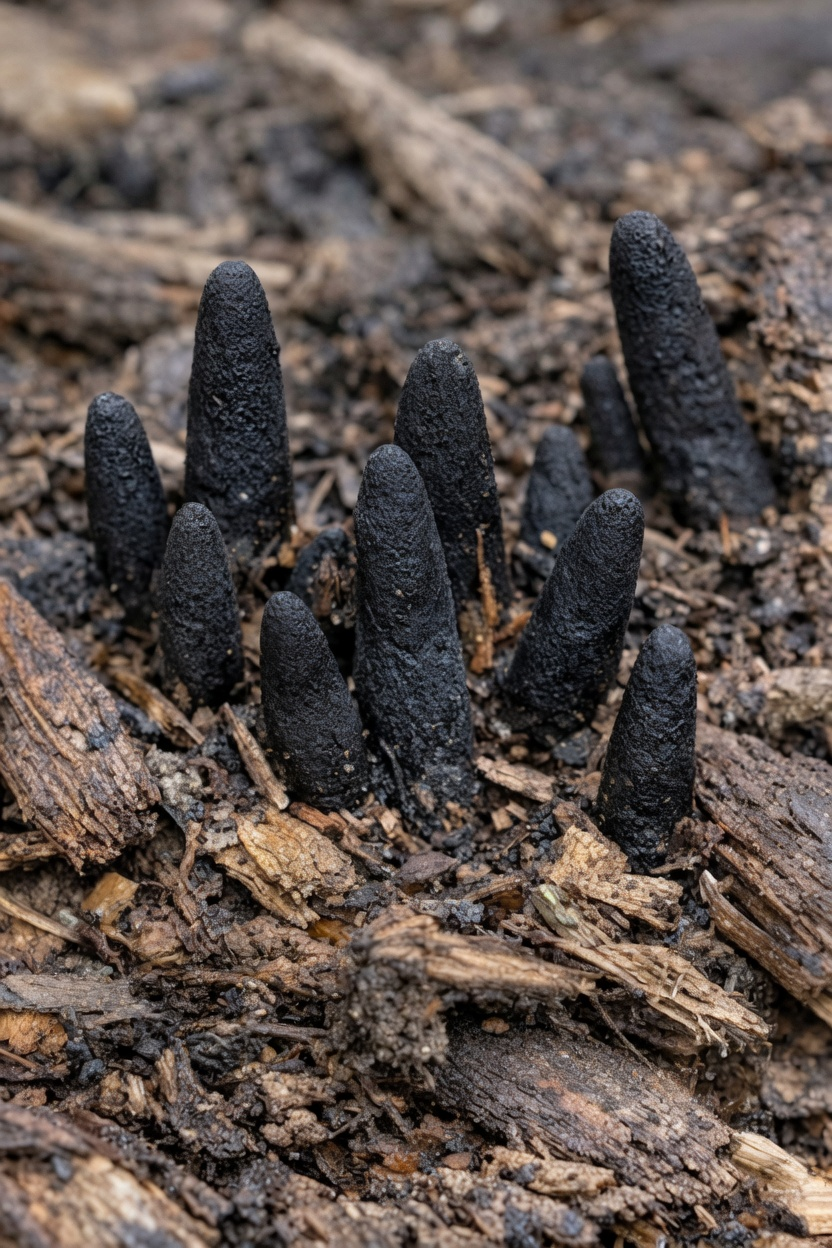
You step into your backyard on a crisp morning, coffee in hand, ready to admire your carefully tended garden. Then you see them — black, twisted, finger-like growths pushing up through the mulch like something out of a horror movie. They look like decaying zombie hands reaching from the grave. Your first instinct is panic. Is your garden infected? Are your plants doomed? Before you grab the shovel and start digging, take a breath. Those creepy black “fingers” are almost certainly a common and mostly harmless fungus known as Xylaria polymorpha, better known by its chilling nickname: dead man’s fingers. Far from a garden apocalypse, they’re a natural part of the decomposition process and usually a sign that your soil is doing exactly what it’s supposed to do.
What Exactly Are These Zombie Fingers?
Xylaria polymorpha is a type of fungus in the Xylariaceae family. It grows on decaying wood, stumps, and buried roots, which is why it often appears in mulched garden beds. The “fingers” are actually the fruiting bodies (reproductive structures) of the fungus. When young, they may appear pale or bluish, but as they mature they turn black, tough, and finger-shaped, sometimes branching like a hand. They can grow up to 10 centimeters tall and often appear in clusters, giving that unmistakable undead look that makes gardeners do a double-take.
The fungus isn’t a parasite on living plants. It feeds on dead organic matter — old tree roots, wood chips in your mulch, or buried branches. This makes it a saprobe (a decomposer), playing a vital role in breaking down material and returning nutrients to the soil. In healthy garden ecosystems, these fungi are part of the natural recycling crew.
Why Do They Suddenly Appear in Your Mulch?
Several conditions encourage dead man’s fingers to show up:
- Fresh wood mulch — Many commercial mulches contain wood chips that still have plenty of lignin and cellulose for the fungus to feast on.
- Buried roots or stumps — If you’ve recently removed a tree or shrub, invisible root fragments underground provide the perfect food source.
- Moist, shaded conditions — These fungi love damp, shaded spots with good organic content.
- Warm temperatures — They tend to emerge in late summer through fall when soil temperatures are still warm but nights are cooler.
Seeing them doesn’t mean your soil is “bad.” In many cases, it means your mulch is doing its job — breaking down and enriching the earth beneath it.
Are They Dangerous to Your Plants or Pets?
The good news: dead man’s fingers are generally harmless to living plants. They don’t attack healthy roots or spread disease to your flowers, vegetables, or shrubs. They’re focused on dead wood. However, in very rare cases, large colonies can indicate excessive buried organic matter that might temporarily tie up nitrogen as it decomposes. If your plants look pale or stunted nearby, a light application of nitrogen-rich fertilizer can help.
For pets and humans, the fungus is not considered highly toxic, but it’s best to discourage curious dogs or cats from chewing on them. The texture is tough and woody, so most animals lose interest quickly. Still, it’s wise to remove visible fruiting bodies if you have pets that like to dig or nibble in the garden.
How to Get Rid of Them (If You Really Want To)
Most experts recommend leaving them alone if they’re not bothering you. They’re temporary and part of a healthy ecosystem. But if the zombie-finger aesthetic is ruining your garden vibe, here’s how to manage them:
- Remove the fruiting bodies by hand (wear gloves). This won’t kill the fungus but reduces the spooky look and spore spread.
- Improve air circulation and reduce excess moisture around the area.
- Turn or replace the mulch to disrupt the fungus’s environment.
- Add beneficial microbes through compost tea or mycorrhizal inoculants to encourage competition from friendlier soil organisms.
Avoid harsh chemical fungicides. They can harm the beneficial fungi and bacteria that keep your soil alive and healthy.
The Ecological Role Most Gardeners Overlook
Before you declare war on these black fingers, consider their contribution. Fungi like Xylaria polymorpha are essential decomposers. They break down tough woody material that bacteria struggle with, releasing carbon, nitrogen, and other nutrients back into the soil. Without them, gardens would be buried under layers of undecomposed wood chips. They also help suppress some harmful pathogens by competing for resources in the soil food web.
In a balanced garden, these fungi indicate active, living soil. Their presence often means your mulch is working as nature intended — slowly feeding the earth beneath it.
When You Should Actually Worry
While dead man’s fingers are usually benign, excessive or repeated outbreaks in the same spot might signal:
- Too much woody material buried too deeply
- Poor drainage creating constantly wet conditions
- Compacted soil limiting oxygen flow
In those cases, improving soil structure with aeration, adding organic matter, and mixing in coarser materials can help restore balance.
Turning Zombie Fingers Into Garden Wisdom
Instead of panicking when you see those black protrusions, try shifting your perspective. They’re a reminder that your garden is a living, breathing ecosystem — not a sterile showroom. Many experienced gardeners actually welcome them as a sign of active decomposition and soil health.
If you want to embrace the weirdness, consider photographing them for garden journals or sharing them on social media with the hashtag #GardenZombies. You might be surprised how many fellow gardeners have encountered the same phenomenon and turned it into a fun conversation starter.
Final Thoughts: Don’t Fear the Fingers
The grotesque black zombie fingers emerging from your garden mulch are neither alien invaders nor garden killers. They’re a natural, fascinating part of the decomposition cycle that has been happening in forests and gardens for millions of years. While they may look like something from a horror movie, they’re actually performing quiet, essential work beneath the surface.
Next time you spot them, take a closer look. Appreciate the intricate structure. Remember the hidden work they’re doing to enrich your soil. Then decide whether to leave them as nature’s recyclers or gently remove them for aesthetic reasons. Either way, there’s no need to panic.
Your garden isn’t haunted. It’s just doing what healthy gardens do — breaking down the old to make room for the new. And those creepy black fingers? They’re proof that life (and death) in the garden is working exactly as it should.
Have you ever found mysterious growths in your mulch or garden beds? What did they look like and how did you handle them? Share your stories in the comments below — you might help another gardener turn panic into understanding.
Most Popular!
-
 The Shocking New Details Behind Brad Pitt’s Private Romance That Has Completely Stunned Fans
-
The Mind-Blowing Underground Origins of the Most Dangerous and Unpredictable Rock Legend in History
-
The Strange Humming Beneath Our New House Turned Out to Be Something No One Could Have Imagined
-
The Absolute Insane Backyard Prank That Sent My Nosy Neighbors Packing for Good
-
The Hidden Backyard Superfood That Is Seven Times More Powerful Than Kale
-
The Secret Four-Ingredient Frozen Strawberry Fluff That Will Make You Completely Forget About Traditional Ice Cream
-
The Tragic Downfall of a Hollywood Goddess Whose Legendary Beauty Completely Vanished
-
She Backed Out of Her Family Home in Secret and Left This Brutal Note on the Dresser