Some kids build Lego castles or spend hours on video games. My son Noah built wheelchairs for stray dogs. At just 12 years old, he spent his afternoons in our garage welding scrap metal, cutting foam padding, and testing tiny wheels until they rolled smoothly across the driveway. What started as a school project about empathy turned into a quiet mission that touched dozens of injured animals in our neighborhood. I was so proud of him I could barely contain it. Then one morning, everything he had worked so hard to build was destroyed — smashed beyond repair by the one person we never expected. But what happened after we posted a single video changed not just our family, but the heart of the woman who tried to stop him.
Noah’s journey began after he found a stray dog limping near the park. The poor animal had lost the use of its back legs after being hit by a car. Instead of walking away, Noah carried the dog home, cleaned its wounds, and spent the next week researching how to help. He discovered organizations that made custom wheelchairs for disabled pets, but the costs were far beyond what a 12-year-old could afford. So he did what any determined kid with a big heart would do — he taught himself basic engineering using YouTube tutorials and old parts from my husband’s workshop.
His first wheelchair was crude but functional. The dog, who we named Lucky, went from dragging himself across the grass to zooming around with pure joy. Word spread quickly in our tight-knit community. Soon, Noah was getting calls about other injured strays. He worked after school and on weekends, turning our garage into a makeshift workshop filled with metal scraps, foam, straps, and wheels of every size. Each chair was personalized — some with bright colors, others with extra padding for older dogs. The look on the animals’ faces when they took their first independent steps again made every late night worth it.
Then came Mrs. Hargrove.
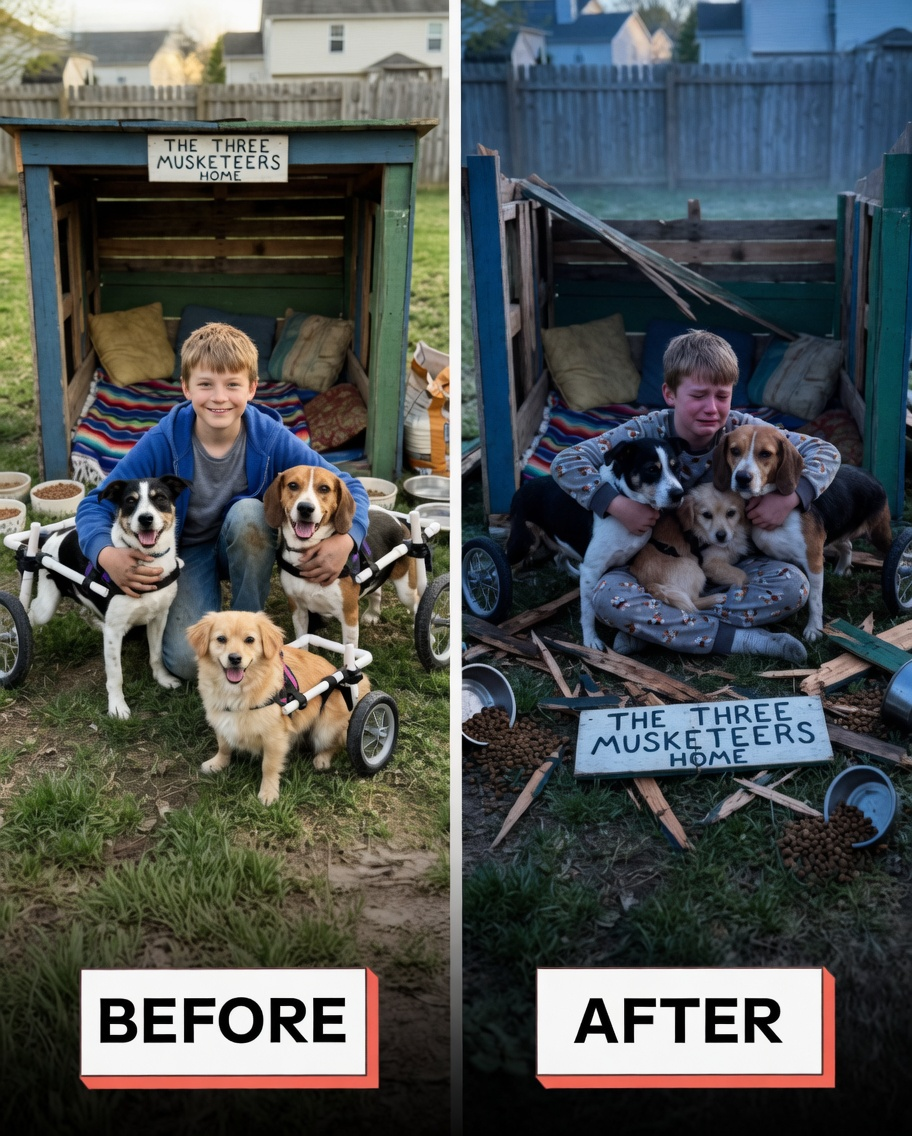
Our neighbor had always been difficult. She complained about everything from our lawn to the sound of Noah’s tools in the garage. She had lived alone for years and seemed to view any sign of life or joy as a personal inconvenience. One Saturday morning while we were at the store, she took matters into her own hands. She marched into our open garage, grabbed a sledgehammer from the wall, and destroyed every single wheelchair Noah had built. Frames bent. Wheels smashed. Months of work reduced to twisted metal and tears.
When we returned home and Noah saw the wreckage, he didn’t scream or cry at first. He just stood there in silence, staring at the pieces of his hard work scattered across the concrete. That quiet heartbreak hurt worse than any tantrum could have. I held him while he finally broke down, whispering that some people are just mean and we couldn’t let them stop us from doing good. But inside, I was furious. This wasn’t just vandalism. It was an attack on a child’s kindness.
Instead of immediately calling the police, I did something that felt both reckless and right. I filmed the destruction, sat down with Noah, and recorded a short video together. We didn’t rant or name names. We simply showed the smashed wheelchairs, explained what Noah had been doing for the stray dogs, and asked viewers to share if they believed kindness should be protected. I posted it on social media with no expectation of much reach. Within hours, it exploded.
The video reached animal lovers, engineers, parents, and even celebrities. Donations poured in for new materials. Local businesses offered workshop space. A welding instructor volunteered to teach Noah advanced techniques. But the most surprising response came from Mrs. Hargrove herself. After the video went viral and her identity was quietly discovered by neighbors, she showed up at our door the next evening with tears in her eyes.
What she revealed next left us speechless.
Mrs. Hargrove had lost her own dog years earlier — a beloved golden retriever who had been paralyzed in an accident. She had tried everything to help him, including building a makeshift cart that ultimately failed. When her dog passed away, something inside her broke. Seeing Noah’s successful wheelchairs brought back all the pain and helplessness she had felt. Instead of feeling inspired, she felt angry that a child had succeeded where she had failed. In a moment of deep grief and resentment, she destroyed his work.
Her apology wasn’t perfect, but it was genuine. She offered to help rebuild the wheelchairs and even donated money for better tools and materials. Over the following weeks, something beautiful happened. Mrs. Hargrove started spending time in our garage with Noah. She shared stories about her dog. She learned new skills alongside him. The angry neighbor who once complained about everything slowly transformed into a mentor and friend. The project that she had tried to destroy became the very thing that brought her back to life.
Today, Noah’s wheelchair project has grown far beyond our garage. With Mrs. Hargrove’s help and community support, they’ve built and donated over 50 custom wheelchairs for injured animals across the state. Noah and his unlikely partner have been featured in local news and even started a small nonprofit. The boy who was devastated by vandalism now teaches other kids that kindness can come from the most unexpected places.
This experience taught our family something profound: sometimes the people who hurt us the most are carrying pain we can’t see. Mrs. Hargrove wasn’t just a mean neighbor. She was a grieving woman who had lost her best friend and didn’t know how to process it. Noah’s forgiveness and willingness to let her help healed something in her that years of isolation never could.
If your child has a big dream or a kind heart that the world tries to crush, protect it fiercely — but also leave room for the possibility that even the harshest critics might one day become allies. Sometimes the greatest lessons come from the people who challenge us the most.
Noah still builds wheelchairs every weekend. Mrs. Hargrove still complains about the noise, but now it’s followed by a smile and a plate of fresh cookies. And I’ve learned that the most beautiful stories often begin with the messiest chapters.
Kindness isn’t always easy. Sometimes it’s met with destruction. But if you keep showing up with an open heart, even the coldest hearts can eventually warm. Noah taught me that. And Mrs. Hargrove reminded me that no one is beyond redemption — not even the neighbor who once tried to break your spirit.
Have you ever witnessed a moment where someone’s act of kindness changed an angry heart? Share your story in the comments below. Stories like Noah’s remind us that hope and compassion can heal even the deepest wounds.
Most Popular!
-
 Altar of Betrayal: My Sister Stole My Groom and My Wedding Dress — But I Left Her With a Debt That Will Haunt Her Forever
-
From Ruined Jacket to Masterpiece: How My Sister and I Turned Bullying Into Our Greatest Symbol of Strength
-
Middle East Meltdown: Why US Officials Are Urging Americans to Reconsider Travel Amid Dramatic Military Escalation
-
The Butter Battle Finally Settled: Why You’ve Been Storing Your Favorite Kitchen Staple All Wrong (And the Secret to Perfect Toast Every Single Time)
-
I Ate at Cracker Barrel for Years – Then I Finally Noticed These Hidden Details That Changed Everything
-
I Raised My Late Fiancée’s 10 Kids Alone for 12 Years – Then My Daughter Told Me the Truth About Her Mother and It Changed Everything
-
I Fed the Meanest Old Man on My Street for Years – When He Died, His Will Exposed a Secret That Shocked Everyone
-
“We Cannot Keep Her,” My Husband Said During Our Baby’s First Bath – What I Saw Next Changed Everything