The request came on a quiet Sunday afternoon in late spring. My daughter Emily stood in my kitchen, twisting her hands nervously, and asked if she and her fiancé could hold their wedding on the family farm. It had been in our family for four generations — the same land my great-grandfather had cleared with his own hands, the same barn where my parents had danced at their own wedding, the same fields where my grandchildren still ran and laughed during summer visits.
Emily’s eyes filled with tears as she spoke. She said she wanted to honor our family history. She said it would save them tens of thousands of dollars. She said it would be the most meaningful day of her life. I hesitated. The farm was not just property to me — it was my retirement plan, my safety net, the one asset I had carefully protected for decades so I could help my grandchildren with college and first homes. But I saw the hope in her face, and I said yes.
The wedding was everything she had dreamed of. Three hundred guests. A white tent glowing with string lights. My late husband’s favorite roses lining the aisle. Emily looked radiant walking toward her fiancé beneath the old oak tree where I had married her father forty-two years earlier. I watched from the front row, tears in my eyes, believing I had made the right decision. That night, as the last guests left and the caterers packed up, Emily hugged me tightly and whispered, “Thank you, Mom. This was perfect.”
I went to bed exhausted but happy, thinking the hardest part was over.
The next morning, I stepped outside at sunrise and stopped cold.
The beautiful farm I had tended for decades was destroyed.
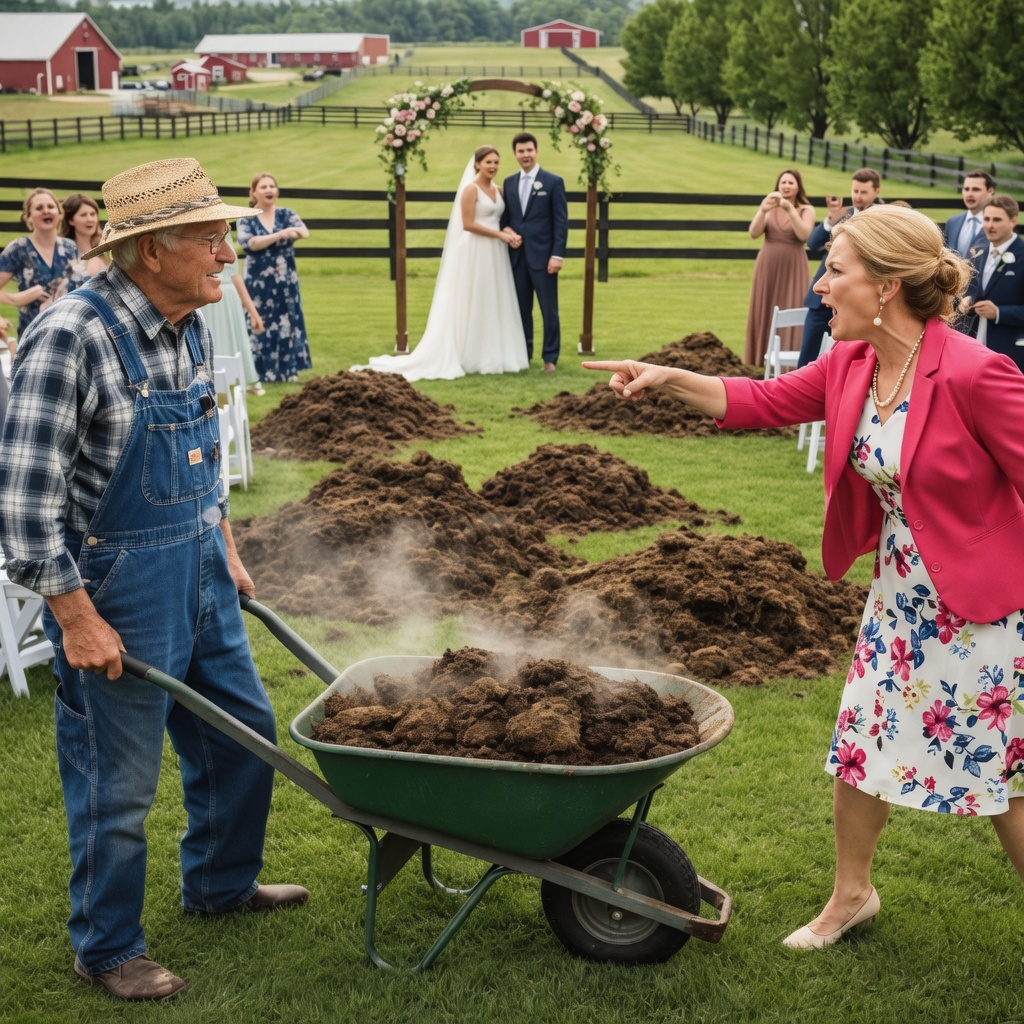
Heavy equipment from the wedding company had torn deep ruts across the hay fields. The old barn — the same one my great-grandfather built — had a massive hole in the roof where they had hung chandeliers without permission. The septic system was overwhelmed and leaking. Trash and broken glass littered the yard. And worst of all, the wedding planner had left a bill for $47,000 in “additional damages and cleanup” — a bill that, according to the contract Emily had signed without telling me, made me personally liable.
I stood there in my nightgown, barefoot in the dew, and felt something inside me break.
When I confronted Emily later that morning, she didn’t apologize. She became defensive. She said I was overreacting. She said the damage wasn’t that bad. She said her new husband’s family had already spent enough and couldn’t afford to help. Then she dropped the real bombshell: she and her husband had been planning to sell the farm all along. They had been quietly talking to developers for months. The wedding had been their way of getting one last beautiful memory before they turned the land into luxury homes.
I felt like I couldn’t breathe.
For thirty-eight years I had protected this farm. I had turned down multiple offers from developers. I had worked extra jobs after my husband died to keep the taxes paid. I had skipped vacations, driven the same old truck, and carefully stretched my teacher’s pension so I could leave something meaningful for my grandchildren. And now my own daughter — the child I had raised with love and sacrifice — had tried to sell it out from under me while smiling in her wedding dress.
The next weeks were a nightmare of lawyers, contractors, and painful conversations. I had to use a significant portion of my retirement savings to repair the barn, restore the fields, and pay the unexpected bills. The home equity I had spent decades building took a serious hit. I had to postpone helping my oldest granddaughter with her college tuition. The financial damage was real and lasting.
But the emotional damage was worse.
Emily and I barely spoke for six months. When we finally had the conversation that changed everything, she admitted she had felt entitled to the farm because “it would eventually be hers anyway.” She had seen it as her inheritance rather than something I had worked my entire life to protect. She had never understood the quiet sacrifices I had made — the years of careful saving, the decisions to put her needs above my own comfort, the way I had guarded that land like it was sacred.
I made a decision that day that I have never regretted.
I updated my will and placed the farm into an irrevocable trust that could never be sold without the unanimous consent of my three grandchildren. I created clear rules: the land could only be used for family purposes or conservation. It could never be developed. And I sat my grandchildren down and told them the entire story — not to turn them against their mother, but to teach them what real legacy looks like.
The practical lesson in this story is one every grandparent needs to hear. Family land, retirement savings, and home equity are not automatically “theirs” just because they are family. They are assets we have spent decades protecting, and they deserve to be treated with respect and clear boundaries. Many grandparents make the mistake of assuming their children will honor their wishes without ever having the conversation. We assume love is enough. But love without clear agreements, legal protections, and honest communication can quietly destroy everything we have worked to build.
Emily eventually apologized. She and her husband are still married, though their relationship with me remains strained. My grandchildren, however, now understand the value of what I protected. They visit the farm often. They help me maintain the barn their great-great-grandfather built. And they know that one day, this land will be theirs — not because they are entitled to it, but because I chose to entrust it to them with clear rules and open eyes.
The quiet truth behind the morning after my daughter’s wedding is this: sometimes the people we love most can become the greatest threat to the legacy we want to leave behind. Protecting retirement savings and home equity requires more than just smart financial decisions. It requires boundaries, documentation, and the courage to have difficult conversations before it’s too late.
As you finish reading this, ask yourself: what family asset or tradition have you been protecting for decades? Have you clearly communicated your wishes to your adult children? Have you put legal protections in place so your grandchildren — not just your children — are the ones who ultimately benefit from your sacrifices?
Sometimes the most loving thing we can do is say no — or at the very least, make sure everyone understands exactly what “yes” really means. My farm survived. My retirement savings took a hit but recovered. And my grandchildren now have a legacy that is protected, documented, and deeply understood.
That morning after the wedding nearly broke me. But it also taught me the most important lesson of my life: love without boundaries is not love at all. It is a slow leak that can quietly drain everything we have spent a lifetime building.
Most Popular!
-
 The Secret Wedding of the Century: Ryan Seacrest’s Shocking Engagement Reveal That Has Hollywood Trembling
-
The Secret Language of Your Cat: Why That Persistent Head Butt Might Actually Be a Life-Altering Declaration
-
The Million-Dollar Secret: My Ex-Fiancé’s Mother Sabotaged My Life But a 20-Year-Old Trust Proved She Didn’t Own My Future
-
The House Stealing Trap: My Husband and Mother-in-Law Thought I Was Their Perfect Mark Until I Revealed My Secret
-
The Unforgivable Betrayal: Why This Father’s Choice to End His Own Son’s Life Has Destroyed a Community
-
The Great Erasure: Brad Pitt’s Worst Nightmare Comes True as His Last Son Finally Abandons the Family Name
-
The Final Curtain Call: The Heartbreaking Truth Behind Daytime TV Legend Phil Donahue’s Passing
-
The Silent Killer on Your Breakfast Table: Are You Eating Your Way to a Diabetic Crisis?