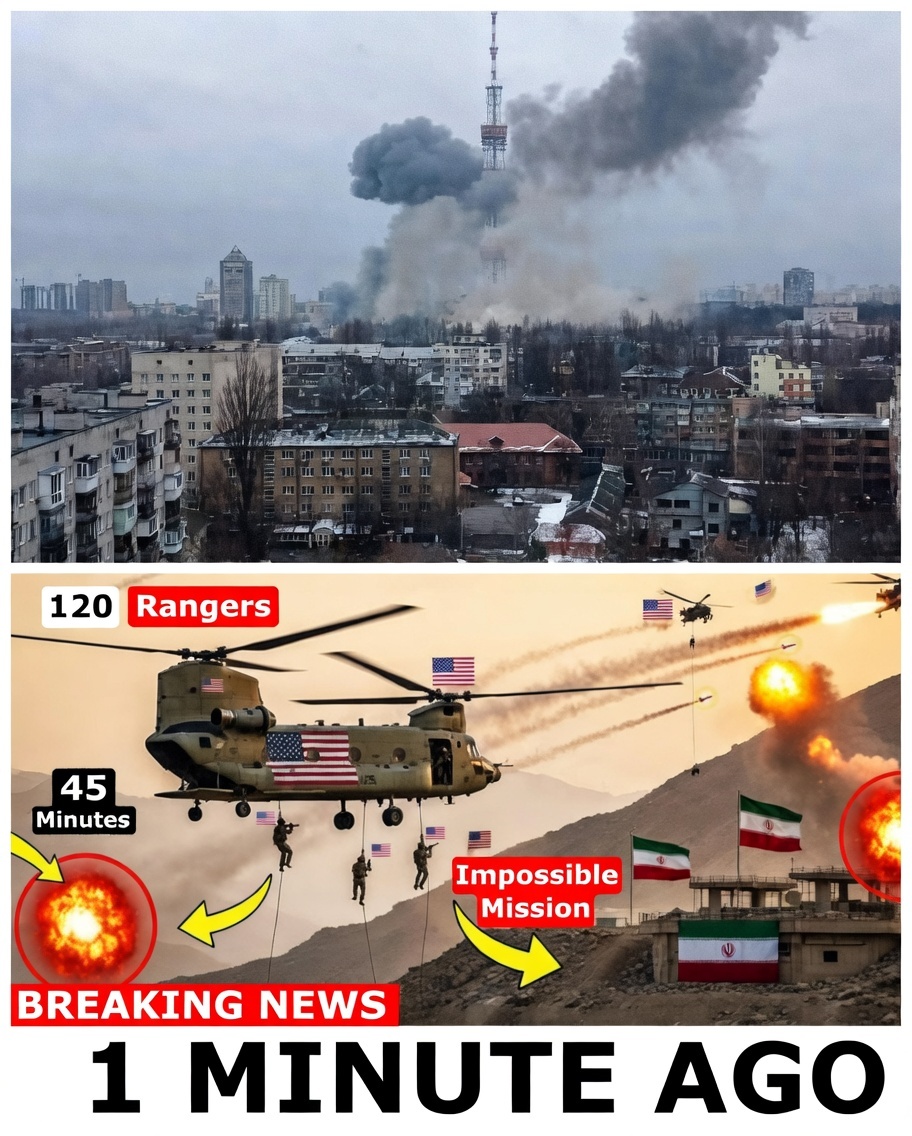
Special operations missions are built on precision—seconds matter, contingencies are drilled until they become instinct, and failure is not an option. But war has a way of laughing at plans. In this fictional account of a classified Ranger assault deep in a remote, ice-locked mountain range, what was meant to be a 45-minute surgical strike became a brutal, claustrophobic fight for survival against the enemy, the environment, and time itself. This story, while imagined, draws from the real pressures, tactics, and raw humanity that define the world of elite special forces.
The objective was clear: infiltrate a heavily fortified subterranean facility carved into the side of a 14,000-foot peak. Intelligence indicated high-value targets inside—enemy commanders coordinating cross-border operations. The window was narrow: 45 minutes from insertion to extraction before satellite coverage shifted and air support would be impossible. The team—12 seasoned Rangers, call sign Reaper—inserted via high-altitude low-opening (HALO) jump at 0200 hours. They landed silently on a glacier shelf 2,000 feet above the target entrance, then began a controlled descent through razor winds and near-vertical ice.
The first 12 minutes went textbook. They breached the outer perimeter undetected, neutralized two sentries with suppressed weapons, and slipped into the access tunnel. Inside, the air was thick with the smell of diesel and damp rock. Headlamps cut narrow beams through total darkness. The lead element moved fast, clearing rooms, securing corridors. They reached the central chamber at the 28-minute mark—right on schedule.
Then everything collapsed.
A hidden pressure plate triggered an avalanche charge. Tons of ice and rock poured down the main tunnel behind them, sealing the primary exit. Communications cut instantly—rock blocked the signal. The secondary exfil route was now 800 meters of vertical ice and enemy-controlled terrain. They were trapped underground with hostiles who now knew exactly where they were.
The firefight erupted in seconds. The enemy poured from side passages—automatic weapons chattering in the confined space, ricochets screaming off stone walls. The Rangers returned fire with disciplined bursts, falling back to a defensible choke point. Two Rangers were hit almost immediately—one in the leg, one in the shoulder. They dragged their wounded brothers behind cover while the rest laid down suppressive fire. Grenades bounced off walls, filling the tunnel with smoke and shrapnel.
At the 35-minute mark, Reaper’s team leader made the call: blow the inner vault and grab what intel they could, then fight their way to the surface. They stacked explosives on the reinforced door. The blast shook the mountain, collapsing part of the ceiling and burying two enemy fighters. Inside the vault they found servers, documents, and a laptop—proof of high-level coordination. They grabbed what they could carry and started moving.
The next ten minutes were pure hell. The tunnel was collapsing behind them. The wounded were slowing the pace. Enemy reinforcements were closing from multiple directions. They reached the secondary shaft—an old ventilation tunnel too narrow for two men abreast. They climbed single-file, pulling the injured up on ropes, while the rest held the line below. Bullets sparked off rock inches from their heads. One Ranger took a round to the plate carrier—knocked him flat but didn’t penetrate. He got up cursing and kept firing.
At the 44-minute mark they emerged onto the glacier shelf. The wind was howling at 60 knots, visibility near zero. Extraction was still six minutes away—if the helo could even fly in this storm. They formed a defensive perimeter, wounded in the center, and waited. The enemy was closing fast from below.
At exactly 45:03, rotor blades cut through the gale. The Black Hawk appeared like a ghost out of the whiteout, door gunners laying down fire. The Rangers loaded the wounded first, then piled in. The bird lifted off as enemy rounds pinged off the fuselage. They cleared the ridge at 45:47—two minutes over mission time, but alive.
Back at base, the debrief was quiet. They had the intel. They had their brothers. They had paid in blood—two critical, three walking wounded. The team leader wrote in his after-action report: “Mission success. Cost acceptable. Would do it again. ”
In reality, these men don’t talk much about the cost. They carry it in silence—the weight of decisions made in seconds, the faces of brothers they pulled out, the ones they couldn’t. The 45 minutes become a story told in fragments over coffee or late-night beers, never the full version. Because some things are too heavy to say out loud.
For those who’ve served, or loved someone who did, stories like this aren’t just fiction—they’re echoes of real nights in real places where time runs out and courage is all that’s left. They remind us that freedom isn’t free, and the men and women who pay the price rarely ask for thanks. They just do the job.
To the Rangers, past and present: thank you. 45 minutes can feel like forever. You make it back anyway. And the rest of us get to sleep a little safer because of it.