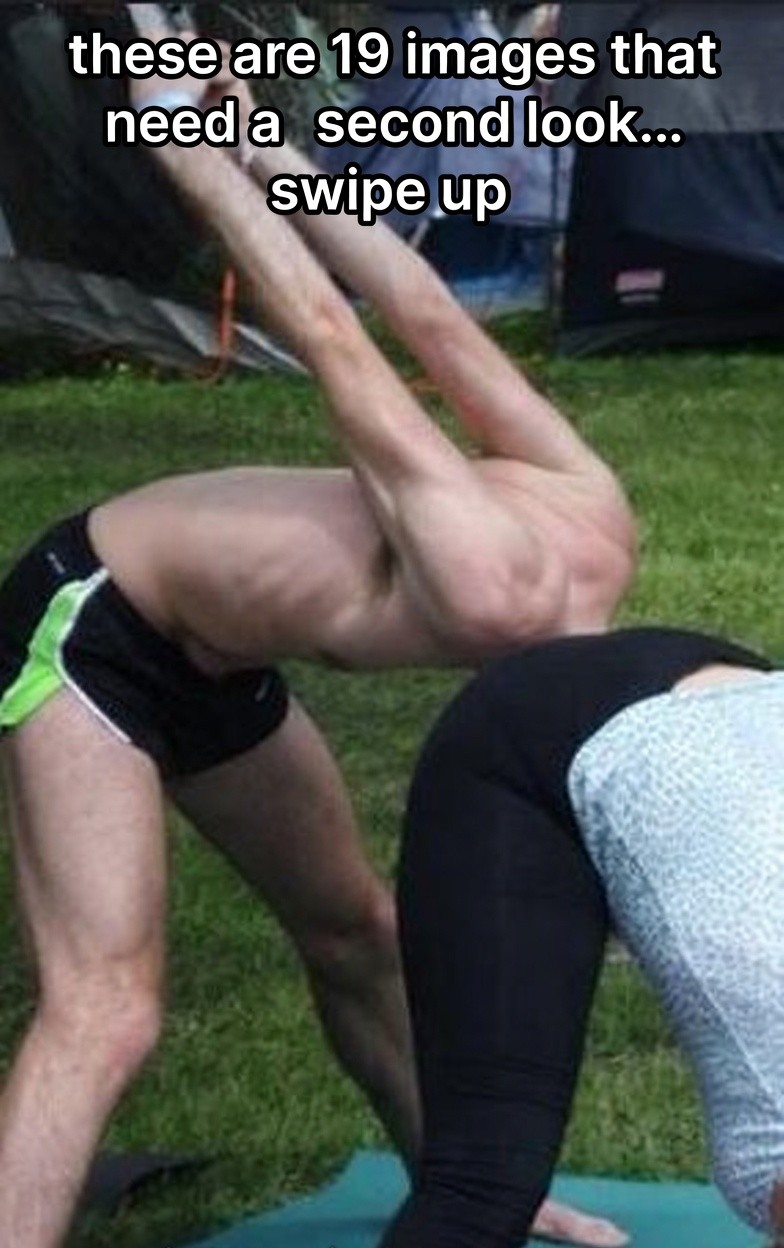
You stare at the image and think you see a simple vase. Then you look again and suddenly two faces appear staring back at you. That moment of double-take is exactly why optical illusions have fascinated people for centuries. They trick your brain into seeing something that isn’t really there—or missing something that is.
The Brain’s Clever Tricks
Your brain is wired to make quick assumptions based on patterns, shadows, and perspective. When an image breaks those rules, it creates a delightful confusion. These 19 illusions take advantage of how your eyes and brain work together to create moments that make you question what you’re really seeing.
Classic Illusions That Still Surprise
The famous Rubin’s Vase is one of the most shared illusions. At first glance you see a white vase. Look closer and two black profiles of faces emerge. This back-and-forth switching shows how your brain can only focus on one interpretation at a time.
The Rotating Wheels That Aren’t Moving
Several illusions feature circles that appear to spin even though the image is completely static. Your eyes pick up on subtle contrast differences and the brain fills in motion that isn’t there. It’s a powerful reminder of how easily we can be fooled by our own perception.
Hidden Images in Plain Sight
Some of the most impressive illusions hide entire scenes or objects inside what looks like random patterns or simple shapes. You might see nothing but dots until you relax your eyes or step back. Suddenly a 3D image or a familiar face pops out.
The Impossible Objects That Defy Logic
Artists like M.C. Escher inspired many modern illusions that create impossible structures. Stairs that seem to go up and down forever, or objects that can’t exist in real space. These challenge your brain’s understanding of depth and geometry.
Color Illusions That Change What You See
Some illusions make you question colors themselves. Squares that look different shades but are actually the same color. Or dots that appear to change hue depending on the background. They prove that color is not absolute but relative to what surrounds it.
The Power of Perspective and Size
Many illusions play with scale and perspective. A small object can look enormous or a straight line can appear bent simply because of how other elements are arranged. These tricks show how much your brain relies on context.
Why These Illusions Still Captivate Us
In a world full of high-definition photos and videos, these simple images still have the power to stop us in our tracks. They remind us that seeing is not always believing and that our perception can be beautifully unreliable.
The Fun of Sharing the Second Look
People love sharing these illusions because they create instant conversation. You show the image to a friend and watch their face change as they see something new. It becomes a shared moment of wonder and discovery.
The Deeper Lesson Behind the Illusions
Beyond the fun, these 19 illusions teach us humility about our own senses. They show that even when we think we’re seeing the full picture, there’s often more happening than we realize. Sometimes you really do need that second look.
As you scroll through these mind-bending images today, ask yourself: what else in your life might look completely different if you only took the time to look again?